Furnace Repair
Gas furnace & heating system repair in Meridian, ID.
See detailsFurnaces, boilers, heat pumps and radiant floors, with combustion safety checked on every gas appliance we open. Because a heating fault and a safety fault can look identical from outside.
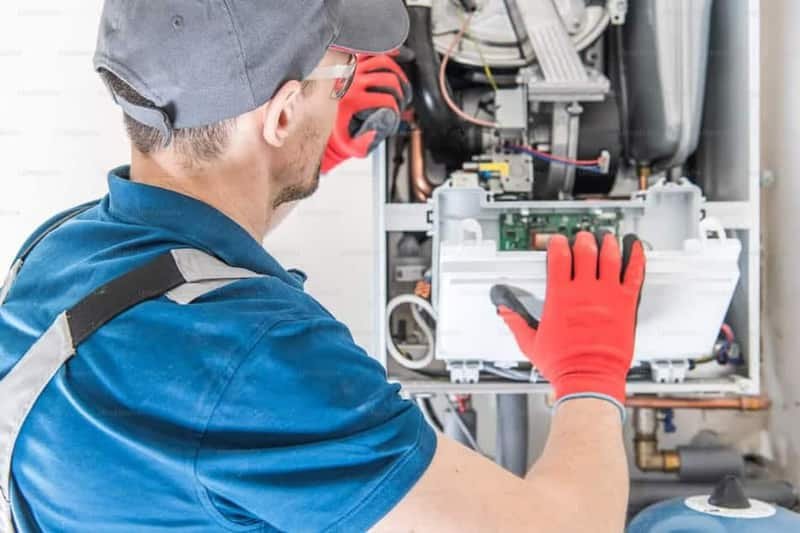
On a gas furnace, four faults account for the large majority. A dirty flame sensor, where the burner lights then shuts off after a few seconds. A failed hot surface ignitor, where the start sequence runs but nothing lights. A clogged filter, restricting airflow until the unit overheats and trips its high limit. And on high efficiency furnaces, a blocked condensate drain backing water into a safety switch.
All four are inexpensive repairs. What matters is that whoever fixes it also checks the heat exchanger, because that is the barrier between combustion gases and the air circulating through your house.
Heating in the Treasure Valley is a real but not extreme demand. Treasure Valley winters routinely drop into the low twenties overnight in January, while July afternoons average near 92 degrees, so the same house has to survive hard freezes and high desert heat in the same year. That produces long, steady heating seasons rather than short brutal ones, which means equipment here accumulates wear through runtime hours rather than through extreme stress.
It also means this is a climate where heat pumps genuinely work. A season that lives mostly in the twenties and thirties sits comfortably inside the range where modern heat pumps operate efficiently, and dual fuel systems pairing a heat pump with a gas furnace are worth evaluating whenever both heating and cooling are being replaced together.
The one thing we treat as non-negotiable is combustion safety. Any gas appliance we open gets its heat exchanger inspected, its flame quality checked and its draft verified. A furnace that heats the house perfectly can still have a cracked heat exchanger, and there is no symptom a homeowner would notice.
Schedule service anywhere from Star to Mountain Home.
Call (614) 756-0643Six heating services covering forced air, hydronic and heat pump systems, plus the safety testing that belongs alongside all of them.
Gas furnace & heating system repair in Meridian, ID.
See detailsFurnace and heating system installation in Meridian, Idaho.
See detailsBoiler repair, service and installation in Meridian, Idaho.
See detailsHeat pump service in Meridian, ID — repair, maintenance & installation.
See detailsRadiant floor heating installation and repair in Meridian, Idaho.
See detailsCarbon monoxide testing and combustion analysis in Meridian, Idaho.
See detailsAsk for an upfront price before any work starts.
Call (614) 756-0643
Two local factors affect gas heating in this valley and both are routinely overlooked.
Elevation. The Treasure Valley sits at meaningful altitude, with Boise around 2,700 feet and Mountain Home higher again. Thinner air changes the air-to-fuel ratio in gas combustion, and manufacturers publish high-altitude instructions for equipment installed above roughly 2,000 feet, which can include derating the input and changing burner orifices. Applied correctly, it is invisible. Skipped, it produces poor combustion, sooting, nuisance lockouts and elevated carbon monoxide production. We check it on equipment we did not install.
Winter inversions. The Treasure Valley sits under temperature inversions through much of the winter, which traps carbon monoxide and fine particulates close to the ground. An inversion puts a lid on the valley, and the same still conditions that concentrate pollutants outdoors do nothing to help an appliance that is already struggling to vent properly.
Neither of these is a reason for alarm. Both are reasons that annual combustion testing is worth more here than a generic maintenance checklist.
Source: Idaho DEQ regional air quality
Same day and next day appointments are available across the valley.
Call (614) 756-0643Four ways to heat a Treasure Valley home, each suited to different situations.
| System | How it heats | Best suited to |
|---|---|---|
| Gas furnace | Burns natural gas, distributes warm air through ductwork | The valley default. Fast, powerful, shares ducts with cooling. Furnace service |
| Heat pump | Moves heat from outside air, reverses to cool in summer | Efficient through most of this climate. Pairs with a furnace as dual fuel. Heat pumps |
| Boiler and hydronic | Heats water circulated to radiators or floor loops | Older Boise homes and custom builds. Quiet, even, no draughts. Boilers |
| Radiant floor | Warm water through tubing in or under the floor | Slabs, basements, shops and new construction. Radiant heating |
For a valley home replacing both heating and cooling at once, dual fuel is worth running the numbers on: heat pump efficiency through the long mild shoulder seasons, gas heat when it genuinely gets cold.
Book a licensed Meridian technician for this job.
Call (614) 756-0643No heat in winter is treated as a priority call.
No heat at all, heat that does not last, noises, or a unit that keeps locking out. Each points somewhere different.
Genuinely worth doing before we arrive. A clogged filter causes a real share of no-heat calls and costs nothing to rule out.
Reading what the control board reports and measuring temperature rise, rather than swapping parts until something works.
You hear what failed, why, and what it costs, and you approve it before we proceed.
The fault fixed, and the heat exchanger, combustion and draft verified while the unit is open.
Get this looked at before it turns into a bigger repair.
Call (614) 756-0643“No heat” and “not enough heat” point to different services, and telling them apart before booking saves a wasted visit.
Total no-heat calls almost always mean furnace repair: an ignition fault, a safety lockout, or a tripped high limit switch. Weak or uneven heat is a different problem, usually airflow, duct design or sizing, and it is not fixed by servicing the furnace harder. Noises, short cycling and rising bills each point somewhere different again.
If the system will not start at all, that is furnace repair territory: a dirty flame sensor, a failed ignitor, or a control board fault. If it runs but the house never quite gets warm, especially in specific rooms, the furnace itself is frequently fine and the problem is duct sizing or a system that is undersized for the square footage.
If you are choosing between heating systems entirely, rather than repairing one, that is a bigger decision: heat pumps suit this climate’s long mild stretches, boilers suit older Boise homes already plumbed for hydronic heat, and radiant floors suit new construction and basements. None of them is a straightforward upgrade path from another without real evaluation.
Request a visit and we will confirm your appointment window.
Call (614) 756-0643Three factors explain most of the spread in heating repair and replacement cost. Part versus system is the first: a flame sensor or capacitor is inexpensive, while a cracked heat exchanger or a failed control board on an old unit tips the conversation toward replacement.
Fuel type and venting is the second. A straightforward gas furnace swap in an existing venting configuration is simpler than converting between fuel types, or than a high-efficiency furnace needing new condensate and intake/exhaust venting where none existed.
System type is the third. Hydronic and boiler work generally costs more per hour than forced air, both because fewer technicians are genuinely comfortable with it and because diagnosis takes longer when pressure and circulation are involved rather than just airflow.

Talk to a technician who works on Treasure Valley homes every day.
Call (614) 756-0643Autumn, before the season, is genuinely the best time for furnace maintenance. It is when a marginal flame sensor or a weak ignitor gets found and fixed for the cost of a maintenance call rather than an emergency call during the year’s first cold snap. Waiting until the first freeze to test a furnace that has not run since March is a common and avoidable mistake.
Anyone replacing heating and cooling together should time the decision around evaluating both at once, since a dual fuel system or a matched heat pump and air handler is a single decision rather than two sequential ones. Spring and autumn, when neither system is under load, are the calmest times to have that conversation.
Have a licensed tech diagnose it and quote the repair up front.
Call (614) 756-0643| Heating job | Other trade involved | Why it matters |
|---|---|---|
| Heat pump or dual fuel install | Electrical capacity | The outdoor unit and any supplemental heat strip both add electrical load that has to be confirmed, not assumed |
| Combi boiler | Water treatment | A recurring boiler fault is frequently a hard water problem behind a heating symptom |
| Standby generator for winter outages | Gas and electrical | Keeping heat running through an outage needs both a sized gas supply and a transfer switch |
| Radiant floor system | Plumbing layout | Tubing runs and manifold placement need to be coordinated with the rest of the home’s plumbing |
This is the practical case for a single company covering heating, plumbing and electrical: these combinations come up often enough that splitting them between contractors just adds a coordination step.
Schedule service anywhere from Star to Mountain Home.
Call (614) 756-0643Genuinely worth trying first: checking and replacing the air filter, confirming the thermostat has power and correct settings, checking that a furnace switch (often looking like a light switch near the unit) has not been bumped off, and checking the breaker or fuse feeding the furnace. All four are free, safe, and responsible for a real share of no-heat calls.
Not worth attempting: anything involving the gas valve, the heat exchanger, the control board, or the flue and venting. Combustion equipment carries a real safety dimension, carbon monoxide chief among them, and there is no visual check a homeowner can perform that substitutes for combustion analysis. If a carbon monoxide alarm sounds, that is never a diagnose-it-yourself situation regardless of how minor it seems.
Hydronic and boiler systems sit further toward the professional end even than gas furnaces, because pressure, circulation and expansion tank behaviour are not intuitive from the outside, and a wrong guess (like repeatedly bleeding a system with a failing expansion tank) can mask the real fault for a long time.
Ask for an upfront price before any work starts.
Call (614) 756-0643Most of these are worth acting on the same day rather than waiting for the next symptom to appear.
Same day and next day appointments are available across the valley.
Call (614) 756-0643Higher efficiency furnace ratings help, but in our experience the bigger and cheaper efficiency gains in most valley homes come from three things that have nothing to do with the furnace’s rated efficiency at all: sealing obvious duct leaks, replacing a filter on schedule so the system is not fighting restricted airflow, and making sure the thermostat setback schedule actually matches how the house is used. A high-efficiency furnace fighting leaky ducts underperforms a mid-efficiency furnace with a tight, well-designed duct system.
For homes considering a heat pump or dual fuel system specifically for efficiency reasons, the honest evaluation includes the electrical panel’s spare capacity, the home’s existing ductwork, and realistic wintertime performance expectations for this specific climate, not just the manufacturer’s headline efficiency number.
Book a licensed Meridian technician for this job.
Call (614) 756-0643We cover Ada, Canyon and Elmore counties. Every town below has its own page with the local detail that matters there.
Heating work varies across the valley mostly by housing era. Older Boise homes are noticeably more likely to have boilers and cast iron radiators, and hydronic faults get misdiagnosed regularly because forced air dominates the region. Meridian, Eagle, Star and Kuna are overwhelmingly forced air gas, with a large cohort of original furnaces now reaching replacement age together.
Mountain Home adds elevation, which makes correct high-altitude setup on gas equipment more consequential there than anywhere else we cover.
Get this looked at before it turns into a bigger repair.
Call (614) 756-0643Annually for a gas furnace, ideally in autumn before the heating season. The central reason is the heat exchanger inspection, which checks the barrier separating combustion gases from the air circulating through your house. A crack in it can put carbon monoxide into your living space, and there is no symptom a homeowner would reliably notice. Everything else on a maintenance visit, cleaning the flame sensor, checking airflow, testing safety switches, is useful but secondary to that.
Almost certainly a dirty flame sensor. It is a thin metal rod sitting in the burner flame that carries a very small current through the ionised gas, which is how the control board confirms the burner actually lit. Oxide builds on it over time and interrupts that signal, so the board concludes there is no flame and closes the gas valve as a safety measure. The furnace is working exactly as designed on bad information, and cleaning the sensor is a quick, inexpensive fix.
In the Treasure Valley, yes, and better than people expect. Winters here typically sit in the twenties overnight and rarely drop below ten degrees, which is comfortably within the range where modern heat pumps operate efficiently. Capacity does decline as it gets colder, which is why dual fuel systems, pairing a heat pump with a gas furnace that takes over in a genuine cold snap, are the most common recommendation for homes that already have gas service.
Yes. Thinner air at elevation changes the air-to-fuel ratio in gas combustion, and manufacturers publish high-altitude instructions for equipment installed above roughly 2,000 feet, which can include derating the input and changing burner orifices. Boise sits around 2,700 feet and Mountain Home higher again. Done correctly it is invisible. Skipped, it produces poor combustion, sooting, nuisance lockouts and elevated carbon monoxide, which is why we check it on equipment we did not install.
It is not something a homeowner can reliably determine, which is exactly why it is inspected professionally each year. Warning indicators include a carbon monoxide alarm sounding, yellow or lazy burner flames rather than crisp blue, soot around the furnace, and household members experiencing headaches or nausea that improve when they leave the house. A technician inspects visually and can use combustion analysis to detect the signature of a breach. We do not condemn heat exchangers without showing you the evidence, because that is one of the most common ways people are sold furnaces they did not need.
It depends on what failed rather than on age alone. Wear parts such as flame sensors, ignitors and capacitors are worth repairing at almost any age. A cracked heat exchanger on an out-of-warranty furnace means replacement, because it is a safety failure with no repair. A major component failure on a unit over about fifteen to twenty years old, or repeated failures across a single season, both point toward replacement. We will lay out the numbers rather than deciding for you.
Yes, and both come up more in Boise and in custom homes around Eagle than elsewhere in the valley. Because forced air dominates the region, there are fewer technicians genuinely comfortable with hydronic systems, and faults get misdiagnosed as a result. The classic example is a relief valve that keeps discharging being replaced repeatedly when the actual fault is a failed expansion tank. Hydronic diagnosis starts with pressure and circulation rather than with the burner.
Almost always duct design or a closed or undersized supply run to that room, rather than a fault with the furnace itself. Rooms furthest from the furnace, above garages, or with large window area are the usual suspects. Balancing dampers, adding a return, or resizing a single duct run is typically a smaller and cheaper fix than replacing the furnace to push more total air through a system that already delivers enough heat everywhere else.
Sometimes, and the honest answer depends on age and repair history rather than a fixed rule. A furnace in the last few years of its typical life that has had two significant repairs in one season is a reasonable candidate for planned replacement on your own schedule, rather than waiting for a January failure that forces the decision during the coldest week of the year. We will lay out the repair cost against a realistic replacement estimate rather than pushing either option.
The filter, the thermostat’s power and settings, the furnace’s own power switch (which can look like a light switch mounted near the unit and gets bumped off more often than people expect), and the breaker or fuse feeding it. All four are free to check and account for a real share of no-heat calls, but anything involving the gas valve, ignition system or heat exchanger should be left to a technician.
A set outdoor temperature threshold, chosen during setup, tells the system when to switch from the heat pump to the gas furnace. Above that threshold the heat pump runs, since it is more efficient through the valley’s long mild stretches. Below it, the furnace takes over, since heat pump capacity and efficiency both decline as outdoor temperature drops. The threshold can be tuned based on utility rates and comfort preference.
A maintenance visit is preventive: cleaning, testing safety devices, checking combustion and airflow, and catching a marginal component before it fails outright. A repair visit responds to an already-failed or already-failing part. The value of maintenance is that most of what gets found there is inexpensive to fix in advance and considerably more disruptive to fix as an emergency once it fails during the coldest week of the year.
Yes, and in most valley homes they already do. A gas furnace and a central air conditioner typically share the same air handler, ductwork and thermostat, with the furnace providing heat in winter and the indoor coil paired with the outdoor condenser providing cooling in summer. This is also why duct problems tend to affect both heating and cooling comfort in the same rooms rather than just one or the other.
They can help with comfort and scheduling, particularly on dual fuel systems where a smart thermostat can manage the switch point between heat pump and furnace more precisely than a basic model. They do not fix an underlying mechanical fault, and a thermostat cannot compensate for restricted airflow, a failing ignitor, or an undersized duct run.
Ask for an upfront price before any work starts.
Call (614) 756-0643No heat calls prioritised all winter across the Treasure Valley. If a carbon monoxide alarm is sounding, get everyone outside and call the fire service first.