Radiant heating
The floor heating systems most residential boilers in this valley actually serve.
Learn moreBoilers are less common than furnaces in this valley, which means fewer technicians who genuinely know hydronic systems. Pressure, air and circulation are where most faults actually live.
Boiler faults divide into three families, and knowing which you have narrows it immediately.
Pressure problems. A hydronic system runs at a set pressure, typically around 12 to 15 psi cold for a residential system. Too low and circulation fails, particularly upstairs. Too high and the relief valve discharges. Low pressure usually means a leak somewhere or a failed expansion tank.
Air in the system. Air pockets block circulation the same way an airlock blocks a pipe. Radiators or loops that stay cold while others heat is the classic sign, and bleeding is the classic fix.
Circulation and controls. A failed circulator pump, a stuck zone valve or a faulty aquastat means the boiler may fire perfectly and still deliver no heat where you want it.
A boiler heats water rather than air, then circulates it through radiators, baseboard convectors or radiant floor loops. There is no ductwork, no blower and no forced air movement, which is why hydronic heat feels different: steadier, quieter and without the draughts and dust circulation of a forced air system.
The trade-off is that the system is a sealed pressurised loop, and everything about diagnosing it revolves around that loop’s condition.
The expansion tank is the component most often missed. As water heats it expands, and the expansion tank absorbs that volume change through a pressurised bladder. When the bladder fails, the system has nowhere to put the expansion, so pressure climbs on every heating cycle and the relief valve discharges. Homeowners are then told the relief valve is faulty, and it is replaced, and the problem continues. It is the hydronic equivalent of the thermal expansion issue on water heaters.
The circulator pump moves water through the loops. When it fails, the boiler still fires and the water still heats, but nothing arrives at the radiators. A boiler that gets hot while the house stays cold is a circulation problem, not a combustion problem.
Zone valves and controls direct heat to different parts of the house. A stuck zone valve produces the very specific symptom of one area of the house never heating while others work perfectly.
Have a licensed tech diagnose it and quote the repair up front.
Call (614) 756-0643Hydronic symptoms are usually quite specific, which makes them useful diagnostic information.
Schedule service anywhere from Star to Mountain Home.
Call (614) 756-0643Diagnosis on a hydronic system starts with pressure and circulation, not with the burner.

On a repair visit we check system pressure cold and hot, test the expansion tank, verify the circulator is actually moving water, check zone valve operation and confirm the controls are calling correctly. Only then do we look at the combustion side, because a boiler that fires fine is telling you the problem is elsewhere.
On annual service, the work covers combustion and safety checks similar to a furnace, plus the hydronic-specific items: pressure verification, expansion tank charge, circulator condition, bleeding air from the system, and inspecting for the slow leaks that show up as gradually falling pressure.
Combi boilers, which provide both space heating and domestic hot water from one appliance, deserve a specific note in this valley. The domestic hot water side runs house water through a heat exchanger, and with local water hardness that exchanger scales up exactly like a tankless water heater. Declining hot water flow from a combi boiler is very often scale, and descaling is the answer, though a water softener ahead of the boiler slows how fast it comes back.
On replacement, sizing matters as much as it does with a furnace, and the same rule applies: calculate, do not copy. Older boilers were frequently very oversized, and modern condensing boilers are at their most efficient running long and low.
Ask for an upfront price before any work starts.
Call (614) 756-0643The main decision is efficiency level and whether the boiler also handles domestic hot water.
| Type | What it does | Considerations |
|---|---|---|
| Conventional (non-condensing) | Heats water for the heating loops only | Simpler and less expensive, but meaningfully less efficient than condensing equipment |
| Condensing boiler | Extracts additional heat from flue gases before venting | Considerably more efficient. Needs a condensate drain and different venting. Best paired with low temperature emitters |
| Combi boiler | Provides both space heating and domestic hot water from one unit | Saves space by eliminating the water heater. The hot water heat exchanger needs descaling in hard water |
| Boiler with indirect tank | Boiler heats a separate insulated storage tank for domestic hot water | Better for households with high simultaneous hot water demand than a combi |
Condensing boilers achieve their rated efficiency by returning water cool enough to condense the flue gases. Paired with high temperature cast iron radiators sized for an old system, they may rarely reach condensing mode, so the emitters matter as much as the boiler.
Same day and next day appointments are available across the valley.
Call (614) 756-0643No heat calls are prioritised through the heating season.
No heat, partial heat, pressure problems, noise, or no hot water on a combi. Hydronic symptoms are specific and genuinely narrow the diagnosis.
Pressure cold and hot, expansion tank, circulator and zone valves, before looking at the burner.
You hear what failed and why, with the cost agreed before the repair proceeds.
The fault addressed, plus combustion and safety checks while the unit is open.
Every zone confirmed heating, pressure correct hot and cold, and air purged.
Book a licensed Meridian technician for this job.
Call (614) 756-0643Forced air gas furnaces dominate this valley, so boilers are a minority system here. That has a practical consequence for homeowners: there are noticeably fewer technicians who genuinely understand hydronic systems, and hydronic faults get misdiagnosed as a result. Replacing a relief valve that is discharging because of a failed expansion tank is the classic example.
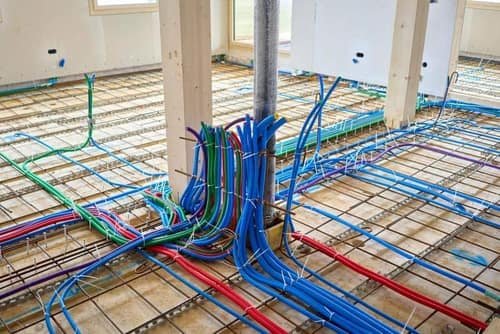
Where we do find boilers, it is usually one of three situations. Older Boise homes, particularly in the established neighbourhoods, sometimes retain original hydronic systems with cast iron radiators. Custom and higher end homes across Eagle, north Meridian and the foothills often specify hydronic heating, frequently with radiant floors. And shops, garages and outbuildings across the valley’s rural fringe are commonly heated by boilers driving radiant slab loops.
Two local factors matter. Water hardness affects combi boilers directly, because the domestic hot water heat exchanger scales exactly as a tankless unit does. City of Meridian water averages about 7 grains per gallon, with independent testing putting parts of the system closer to 8.4 grains per gallon. And elevation affects combustion setup on any gas appliance here, boilers included.
Source: City of Meridian water FAQ
Get this looked at before it turns into a bigger repair.
Call (614) 756-0643Priced after diagnosis and agreed before work starts, as with every job.
Request a visit and we will confirm your appointment window.
Call (614) 756-0643Hydronic systems tend to fail gradually rather than suddenly, which means there is usually a window to catch a problem before it becomes a no-heat call.
Talk to a technician who works on Treasure Valley homes every day.
Call (614) 756-0643Boilers are more forgiving than forced air furnaces about missed maintenance in the short term, which is exactly why problems tend to be caught later here than they should be.
Because boilers are a minority system in this valley, they are also more likely to go a full season without attention simply because no one is thinking about them the way they think about a furnace filter. Treating the annual service as a fixed calendar item rather than a reactive call is the single biggest factor in avoiding a mid-winter failure.
Have a licensed tech diagnose it and quote the repair up front.
Call (614) 756-0643Because forced air dominates this valley, not every HVAC technician who is excellent with furnaces is equally comfortable with a boiler loop.
It is also worth asking how a company prices boiler work relative to furnace work. Near-boiler piping, venting and controls genuinely take longer to do properly than a comparable furnace swap, and a quote that treats the two as interchangeable is often a sign the company has not thought through what a boiler installation actually involves. A hydronic system rewards patience during installation in a way forced air does not, because errors in piping or control wiring tend to surface as intermittent faults months later rather than as an immediate failure.
Schedule service anywhere from Star to Mountain Home.
Call (614) 756-0643Homes with a boiler for space heating sometimes also have a standard water heater for domestic hot water, and it is worth understanding when that separation makes sense versus consolidating into a combi or indirect system.
A standalone gas or electric water heater alongside a boiler is the simplest and most common arrangement, and it means the two systems fail independently of each other. If the boiler needs service, hot water in the kitchen and bathrooms is unaffected, and vice versa.
A combi boiler consolidates both into one appliance, which saves space by eliminating a separate tank, but it means any fault with the single unit affects both heating and hot water at once. It also means the domestic hot water side is exposed to local water hardness through its internal heat exchanger, the same way a tankless water heater is.
An indirect tank, a separate insulated storage tank heated by the boiler loop rather than by its own burner, is a middle ground: one heat source, but hot water storage that is not disrupted by whatever the space heating side is doing at that moment, and generally better suited to households with high simultaneous hot water demand than a combi.
Ask for an upfront price before any work starts.
Call (614) 756-0643Falling pressure means water is leaving the sealed loop, so there is either a leak somewhere in the system or the expansion tank has failed. Leaks can be very small and may only show as corrosion or a mineral crust at a fitting rather than visible water. Topping the system up repeatedly masks the problem while it continues, and adding fresh water to a hydronic system introduces oxygen, which accelerates internal corrosion. It is worth having the cause found rather than living with a top-up routine.
In most cases the relief valve is doing exactly what it should, and the real fault is a failed expansion tank. As water heats it expands, and the expansion tank absorbs that volume through a pressurised bladder. When the bladder fails, pressure climbs on every heating cycle until the relief valve opens to protect the system. Replacing the relief valve without testing the expansion tank is a very common mistake, and the discharge simply continues afterwards.
Usually air trapped in the system, which blocks circulation the way an airlock blocks a pipe. Air rises, so it tends to collect in upper floor radiators and high points in the loops. Bleeding the affected radiators normally resolves it. If bleeding does not help, the next suspects are a stuck zone valve, which would affect a whole area rather than individual radiators, or a circulator that is not producing enough flow to reach the far end of the system.
Annually, before the heating season. A boiler service covers the combustion and safety checks any gas appliance needs, plus the hydronic-specific items: system pressure cold and hot, expansion tank charge, circulator condition, bleeding air, and checking for the slow leaks that show up as gradually falling pressure. Catching a failing expansion tank at a service visit is considerably cheaper than discovering it through a discharging relief valve in January.
If the heating still works but hot water does not, the usual suspects are the diverter valve, which switches the boiler between heating and hot water duty, or the domestic hot water heat exchanger. In this valley the heat exchanger is the more likely culprit over time, because it runs household water through narrow passages at high temperature, which is exactly the condition that causes scale to form. With local water hardness, combi heat exchangers scale up much as tankless water heaters do, and descaling restores the flow.
They are different rather than better. Hydronic heat is steadier and quieter, with no draughts or forced air movement, which many people find more comfortable, and it pairs naturally with radiant floors. Forced air systems have the advantage of sharing ductwork with air conditioning and filtration, which is a substantial practical benefit in a climate with hot summers like this one. In this valley, forced air dominates largely because of the cooling season.
Yes. Radiant floor systems are hydronic systems, so the boiler, circulators, manifolds, zone valves and controls are all the same territory. Radiant slab systems have their own characteristics, particularly around response time and water temperature control, and they usually run at lower temperatures than radiator systems. You can read more on our radiant heating page.
A well-maintained boiler commonly reaches twenty years or more of service, longer in many cases than a typical furnace, partly because there is no blower motor working continuously and partly because a sealed hydronic loop is a comparatively gentle environment for the equipment. Longevity depends heavily on water quality and maintenance history, since a system that has been repeatedly topped up with fresh water accumulates internal corrosion faster than one that has been properly sealed and serviced.
It is possible but rarely simple, since it generally means installing ductwork into a house that was never built with any, along with a furnace or air handler and a new air distribution design. It is a substantially larger project than either boiler repair or boiler replacement. Most homeowners with an existing hydronic system are better served by maintaining or upgrading it, particularly if it serves radiant floors, since hydronic heat and radiant flooring are difficult to replicate with forced air.
A rumbling or kettling sound, similar to a kettle coming to a boil, usually indicates scale or sediment buildup on the heat exchanger surface, which causes localized overheating and steam pockets. It is more common in conventional boilers with harder feed water and tends to develop gradually. It is worth having checked rather than ignored, since the same overheating that causes the noise also stresses the heat exchanger over time.
Schedule service anywhere from Star to Mountain Home.
Call (614) 756-0643Hydronic diagnosis that starts with pressure, expansion and circulation rather than assuming the burner is at fault. Serving Meridian, Boise, Eagle and the surrounding valley.