Plumbing
Water heaters, drains, sewer lines, leaks, gas lines and whole-home repiping.
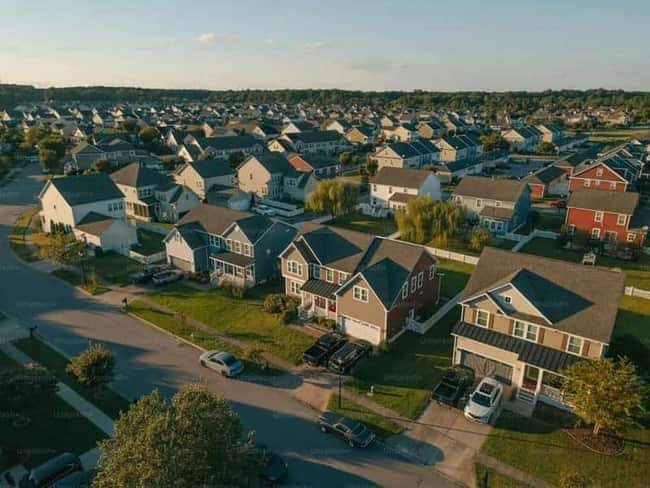
See plumbing servicesStar has gone from a small river town to one of the valley’s fastest growing communities. Most of the housing is new, most of the surrounding land is not.
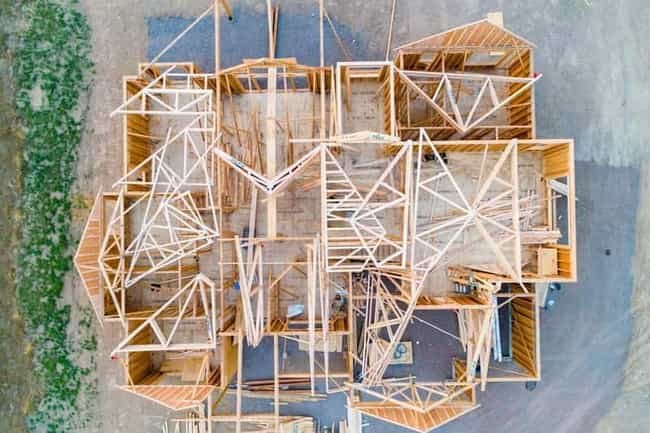
Because so much of Star’s housing is recent, we see very little of the material failure that dominates older Boise and Nampa. Almost nothing here has galvanized supply pipe or clay sewer laterals.
Instead the work falls into three groups. Adding capacity the builder did not anticipate: EV chargers, shop subpanels, outdoor kitchens and hot tubs. Comfort problems that came with the house, particularly bonus rooms over garages that are never the right temperature and upstairs floors that run hot in summer. Rural property systems, since the land around Star is still largely agricultural, meaning private wells, outbuildings and backup power.
There is also the seasonal water table, which affects new subdivisions built on former irrigated farmland exactly as it does in Kuna.
Meridian Plumbing is a licensed plumber in Star, Idaho, and this page covers what plumbing, heating, cooling and electrical work actually looks like here.
Star sits on the Boise River in western Ada County, and it has grown from a small town into one of the valley’s boomtown communities in a short period. Ada County is now home to roughly 589,500 people and Canyon County to about 287,260, and the fastest growth is happening in the smaller towns rather than the established cities.
The practical result is a town where most homes are recent enough that nothing has aged out, surrounded by land that has been farmed for generations.
In the subdivisions, the plumbing and electrical are modern and sound. What we do there is add what the original design did not include. Builders finish houses to a specification, and that specification rarely anticipates an electric vehicle, a shop full of tools, an outdoor kitchen or a hot tub. Each of those is a load question, and load questions are answered by calculation rather than by assumption.
There is also a recurring comfort issue. Two storey homes and bonus rooms over garages are common in newer valley construction, and both are reliably harder to condition than the rest of the house. Bonus rooms in particular sit above an unconditioned garage with a large roof area above and duct runs at the far end of the system. The honest answer is usually a ductless mini split rather than trying to rebalance the entire house to fix one room.
On the rural land, the picture is the familiar one: private wells, septic, outbuildings, irrigation and a genuine need for backup power.
Ask for an upfront price before any work starts.
Call (614) 756-0643Capacity additions for the new subdivisions, well and outbuilding work for the rural land, and heating and cooling across both.
Water heaters, drains, sewer lines, leaks, gas lines and whole-home repiping.
See plumbing servicesFurnaces, boilers, heat pumps, radiant floors and carbon monoxide safety testing.
See heating servicesAC install and repair, mini splits, air handlers, evaporator coils and filters.
See cooling servicesBreaker panels, outlets and switches, EV chargers, generators, smoke detectors.
See electrical servicesSame day and next day appointments are available across the valley.
Call (614) 756-0643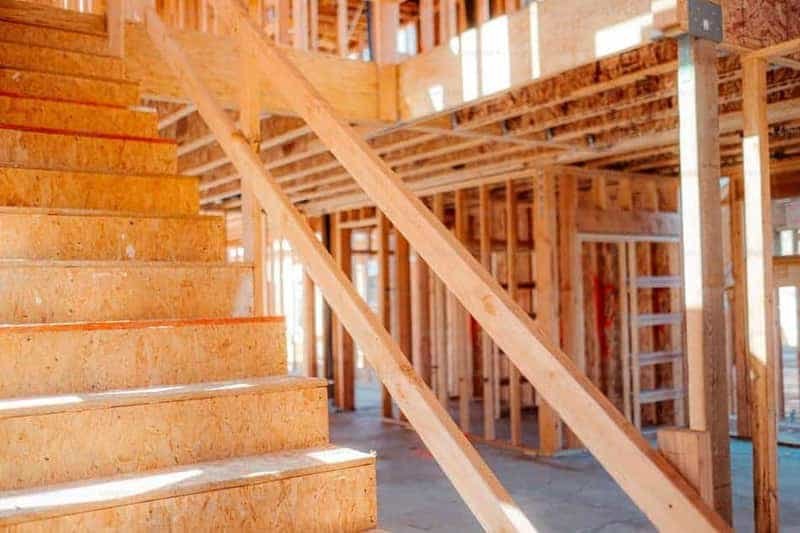
There is a common assumption that a new house needs nothing, and it is mostly true for the first several years. But new construction has its own characteristic issues, and they are different from the failures older homes produce.
Comfort problems built in from day one. Duct systems in fast-built homes are frequently undersized or poorly balanced, which shows up as rooms that never reach temperature, an upstairs that runs hot in summer, and a bonus room that is unusable at both ends of the year. These are not failures, they are design limitations, and the way to find out is to measure static pressure rather than assume the equipment is at fault. Fitting a bigger air conditioner to a duct system that cannot deliver the air is a way to spend money without solving anything.
Capacity that stops short of what people actually want. Builders finish to specification, and specifications rarely include an EV charger circuit, a shop subpanel, a gas stub for an outdoor kitchen, or a hot tub circuit. All of those are straightforward to add and all of them start with a load calculation.
Construction dust. In an area with active building, dust loads air filters extremely quickly and it is abrasive. Homes in newly developing parts of Star should expect to change filters considerably more often than the packaging suggests.
Seasonal groundwater. Subdivisions built on former irrigated farmland see the shallow water table rise with irrigation season, which produces damp or wet crawl spaces in late spring in houses that were completely dry through winter.
Book a licensed Meridian technician for this job.
Call (614) 756-0643Star’s subdivisions are on municipal services while much of the surrounding land is on private wells, and the two need entirely different approaches.
On municipal water, the practical issue is hardness. Across the Treasure Valley hardness runs roughly 6 to 15 grains per gallon, and anything above 8 is considered hard water by the standard scale. That is what scales your water heater, clouds your glassware and wears out faucet cartridges early. A softener addresses it; filters do not, because filtration and softening are different machines solving different problems.
On a private well, the household is its own water utility and testing is entirely the owner’s responsibility. Around Star the concerns are the usual Treasure Valley set: hardness that frequently runs above municipal levels, iron that produces orange staining, sediment, and nitrate on ground with a long agricultural history. Southwest District Health has flagged areas of Canyon County where private wells test above the EPA’s 10 mg/L limit for nitrate, a legacy of decades of agricultural land use. The same underlying cause applies to farmed ground across this part of the valley.
Irrigation deserves a specific mention in Star because so many properties here have substantial irrigation systems, whether municipal pressurised irrigation in the subdivisions or private systems on rural land. Irrigation leaks are the most common explanation for an unexplained water bill by a wide margin, and they are easy to miss because the ground is supposed to be wet. Isolating irrigation is the first step in any water usage investigation, not the last.
Source: Idaho water hardness by city
| Situation | The usual finding | The usual answer |
|---|---|---|
| High water bill, subdivision home | Irrigation running longer than assumed, or an underground irrigation leak | Isolate irrigation and watch the meter before assuming a house leak |
| Scale on fixtures, city water | Hardness in the municipal supply | A correctly sized water softener |
| Orange staining, private well | Dissolved iron, common in this aquifer | Iron-specific filtration media sized to the concentration |
| Well never tested | Unknown, which is the problem | Annual laboratory test covering nitrate, bacteria, iron and hardness |
| Crawl space wet in spring | Seasonal water table from irrigation recharge | Sump pump with discharge routed well away from the foundation |
| No water during a power cut | Electric well pump with no backup | Standby generator or a portable through a proper interlock |
In Star, the first question on almost any water problem is whether it is the house or the irrigation. Answering that free of charge saves a lot of unnecessary investigation.
Get this looked at before it turns into a bigger repair.
Call (614) 756-0643
Idaho enforces the Uniform Plumbing Code rather than the International Plumbing Code, and the electrical side runs on the National Electrical Code, both administered through the Idaho Division of Occupational and Professional Licenses.
The City of Star handles permitting inside its own boundary, while the surrounding rural land, including most of the farmland the town continues to expand into, falls under Ada County’s building department. Because Star’s built-up area has been growing quickly, it is worth confirming which jurisdiction applies before assuming, particularly for a property near the current edge of town.
Most of what we permit here is capacity work rather than repair: EV charger circuits, outbuilding subpanels, gas runs for outdoor kitchens, and the occasional generator installation. Each of those needs a permit whether the underlying system is old or new.
Source: Idaho DOPL plumbing board
Request a visit and we will confirm your appointment window.
Call (614) 756-0643The single most common comfort complaint we hear in Star is a bonus room over the garage that is never the right temperature, and the second most common request is power for a shop or an outdoor kitchen that the builder never wired.
Both are a direct consequence of how quickly this town has built out. A house finished to a standard specification rarely gets its duct system perfectly balanced for an odd-shaped bonus room, and it never anticipates the specific outbuilding or outdoor kitchen a particular owner wants five years later.
Neither problem means anything is wrong with the house. Both are solved by adding a purpose-built system, a mini split or a dedicated circuit, rather than trying to force the original design to do a job it was never sized for.
Talk to a technician who works on Treasure Valley homes every day.
Call (614) 756-0643We cover Star in town and out across the surrounding rural areas of western Ada County.
ZIP codes covered: 83669. Star sits in Ada County, Idaho.
Star’s growth has been rapid enough that the built-up area keeps expanding into what was farmland, and we cover both sides of that boundary. In the subdivisions the work is capacity and comfort. On the rural land it is wells, outbuildings, irrigation and resilience.
Shops and outbuildings are a particularly common request around Star. Doing them properly means a subpanel at the building with its own grounding electrode system rather than a feed borrowed from the house, and heating them properly means either a radiant slab if the concrete has not been poured or a mini split if it has.

Have a licensed tech diagnose it and quote the repair up front.
Call (614) 756-0643If the job involves a shop or outbuilding, mention it when you call. Those need a different assessment from work inside the house.
Describe the problem and the address. Knowing you are in Star lets us route the nearest available technician rather than the next one on a list.
You get a window rather than a vague promise about the afternoon, and we contact you if anything changes.
The technician works out what is actually wrong before quoting, rather than pricing from a description over the phone.
Nothing proceeds until you have seen the cost. If we find a second problem, you hear about it before we act on it.
We complete the job, test it, clean up, and show you what was done and anything worth keeping an eye on.
Schedule service anywhere from Star to Mountain Home.
Call (614) 756-0643Burst pipes, sewer backups, no heat and no cooling are prioritised across Star as everywhere else we cover.
On rural properties the well pump situation applies: a pump failure or a power outage means no water at all, which is a different order of problem from a fault on a municipal supply.
One thing worth knowing in newer housing: because the systems are modern and sound, a genuine failure in a newer Star home is more likely to be something specific and fixable than a symptom of general deterioration. That tends to make diagnosis faster and repairs cheaper, which is one of the few advantages of a young house when something does go wrong.
Ask for an upfront price before any work starts.
Call (614) 756-0643All 32 services below are available in Star. Each page explains what actually goes wrong, how it gets diagnosed and what changes the price.
Same day and next day appointments are available across the valley.
Call (614) 756-0643We work across Ada, Canyon and Elmore counties. If you are just outside Star, ask anyway, because coverage depends more on the day’s schedule than on a hard boundary.
Every trade we cover in Star is available in each of those towns too. Browse the complete list of services, or go straight to plumbing, heating, cooling or electrical. To understand how we diagnose and price work before starting, see how we work.
Book a licensed Meridian technician for this job.
Call (614) 756-0643This is the most common comfort complaint in newer valley housing and it has a straightforward answer. Bonus rooms over garages sit above an unconditioned space, usually with a large roof area above and duct runs at the far end of the system, so they are reliably too hot in summer and too cold in winter. Rebalancing the whole house to fix one room rarely works well. A ductless mini split solves it directly as an independent system with its own thermostat, and it heats as well as cools.
Almost certainly, and newer Star homes are well suited to it: 200 amp services, attached garages, and often a panel in the garage itself. The right starting point is a load calculation, not an assumption that you need a service upgrade. Plenty of homes accommodate a Level 2 charger with no upgrade at all, and where capacity is tight a load management device costs a fraction of upgrading the service. Get the calculation before accepting a panel upgrade quote.
With a subpanel at the building, fed from the house by an appropriately sized feeder, with its own grounding electrode system. That is the correct approach and it is what the code requires for a detached structure. What it should not be is an extension cord habit or a single circuit borrowed from the garage, which is what these buildings often start with and which becomes a problem the moment you add a compressor, a welder or a freezer. Heating is a separate question, usually answered by a radiant slab or a mini split.
Seasonal groundwater rather than a construction defect. Star’s subdivisions are built on ground that was irrigated farmland, and when the canals and laterals charge for the growing season the shallow water table rises. A house that was completely dry through winter can be damp or wet by June. The timing is the diagnostic clue, because a plumbing leak does not follow the irrigation calendar. A sump pump with correctly routed discharge is the standard answer.
If you are on municipal water, probably, because Treasure Valley water is hard and hardness is what scales your water heater, clouds your glassware and wears out faucet cartridges early. If you are on a private well, test first, because well hardness varies considerably property to property and frequently runs above municipal levels. Either way it is worth being clear that a softener and a filter are different machines: softeners remove hardness, filters remove particles, taste and specific contaminants.
Yes, across western Ada County. Rural properties around Star typically bring private wells, septic systems, outbuildings and substantial irrigation, and they benefit from a more self-sufficient setup: water treatment matched to their own test results, backup power for the well pump, and outbuildings fed properly. Mention the location when you call so we can schedule travel realistically.
More often than the packaging suggests, and check rather than following a schedule. Construction dust is heavy and abrasive, and in an area with active building nearby it loads filters remarkably fast. Hold the filter up to a light: if you cannot see light through it, it is overdue. A restricted filter freezes evaporator coils in summer and overheats heat exchangers in winter, so this genuinely matters beyond air quality.
It depends on whether the address falls inside Star’s municipal boundary or the surrounding Ada County land the town continues to expand into. The City of Star permits work inside city limits; Ada County’s building department handles everything outside it. Because the boundary has moved quickly as Star has grown, we confirm which applies before filing rather than assuming based on the general area.
It sits above an unconditioned space, typically has more roof area exposed to the sun than the rooms below, and is usually fed by the duct run furthest from the air handler. All three work against it at once, which is why it runs hot in summer and cold in winter even though the rest of the house is fine. A dedicated ductless mini split solves it directly rather than trying to rebalance a duct system that was never going to serve that room well.
Yes, and that is the correct approach rather than a workaround. A subpanel installed at the shop, fed by an appropriately sized cable from the house panel and given its own grounding electrode system, is what code requires for a detached structure and it is what actually holds up under real shop loads like welders and compressors. An extension cord or a single borrowed circuit is a temporary habit that becomes a hazard the moment the shop gets busy.
Yes, and it has the same cause as in Kuna. Star’s newer subdivisions sit on ground that was irrigated farmland, and the shallow water table across this part of the valley rises once the canals and laterals charge for the growing season. A crawl space that is dry all winter and damp or wet from late spring is very often this rather than a plumbing leak, and a sump pump with a properly routed discharge is the standard answer.
Same day and next day appointments are available across the valley.
Call (614) 756-0643Capacity work, comfort fixes, outbuilding subpanels and rural well systems across Star and western Ada County.