Water heater repair and installation
The appliance a softener protects most. Scale is the main reason tanks fail early here.
Learn moreScale on the shower head is the visible part. The expensive part is what the same minerals are doing inside your water heater, your dishwasher and every valve in the house.
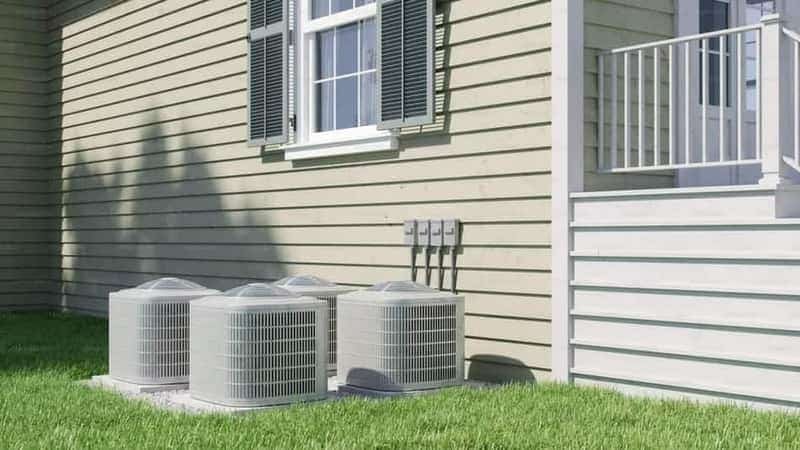
City of Meridian water averages about 7 grains per gallon, with independent testing putting parts of the system closer to 8.4 grains per gallon. Anything at or above 7 grains per gallon is classed as hard, and Across the Treasure Valley hardness runs roughly 6 to 15 grains per gallon, and anything above 8 is considered hard water by the standard scale.
In practice that means nearly every home across this service area is dealing with genuine hardness. It is why fixtures scale, why glassware comes out cloudy, why soap will not lather and, most expensively, why water heaters here tend to fail toward the short end of their expected life.
Hard water is not a health problem. Calcium and magnesium are harmless to drink. It is an equipment and maintenance problem, and the costs are spread thinly enough across the house that most people never add them up.
Inside the water heater, dissolved minerals come out of solution when heated and settle as scale on the tank floor, directly above the burner. That layer insulates the water from the heat source, so the burner runs longer for the same result, and it is the source of the popping and rumbling that so many Meridian homeowners describe.
Inside a tankless unit the same process happens in a much narrower passage, which is why annual descaling is mandatory here rather than optional.
At every fixture, scale builds in aerators, shower heads and the ceramic cartridges inside faucet handles. That is why faucets in this valley start dripping years before they should.
In appliances, dishwashers leave a permanent film on glassware and washing machines need more detergent for the same result. Soap reacts with hardness minerals instead of lathering, which is why you use more of everything.
Schedule service anywhere from Star to Mountain Home.
Call (614) 756-0643Most Treasure Valley homes will recognise several of these. They all trace back to the same cause.
Ask for an upfront price before any work starts.
Call (614) 756-0643Undersized softeners regenerate constantly and waste salt. Oversized ones sit idle and let the resin bed go stale. Sizing is the whole job.
A softener is rated in grains of hardness removed between regenerations. Sizing it correctly means multiplying your measured hardness by your household’s daily water use, then choosing a unit that regenerates on a sensible cycle. That is arithmetic, not guesswork, and it is why we ask about hardness and household size before recommending anything.
The installation point matters as much as the unit. A softener goes on the main line after any sediment filtration and before the water heater, so that the heater and every fixture downstream are protected.
One detail worth deciding deliberately: outdoor spigots and irrigation. There is no benefit to softening water going onto a lawn, and softened water uses salt. Where the plumbing allows, we keep outside taps on the hard line.
On repairs, the most common faults are a control valve that has stopped initiating regeneration, a brine line blockage, a salt bridge where the salt has crusted over and stopped dissolving, and a resin bed that has reached the end of its life. Each has a different fix and only one of them means replacing the unit.
Same day and next day appointments are available across the valley.
Call (614) 756-0643The marketing around ‘salt-free softeners’ is misleading, so it is worth being precise about what each type does.
| Type | What it does | Honest assessment |
|---|---|---|
| Ion exchange (salt based) | Actually removes calcium and magnesium by exchanging them for sodium on a resin bed | The only type that genuinely softens water. Needs salt and a drain, and delivers the full benefit |
| Salt-free conditioner | Alters mineral crystal structure so it is less likely to stick, but leaves hardness in the water | Can reduce scale buildup. It is a conditioner, not a softener. Water will still test hard and glassware will still spot |
| Dual tank | Two resin tanks alternate so softened water is available even during regeneration | Worth it for large households or where hardness is at the top of the local range |
| Twin tank with metered control | Regenerates based on measured water use rather than a timer | More efficient with salt and water than a timer-based unit. Our usual recommendation |
If someone sells you a salt-free system as a softener, the honest description is a scale conditioner. It has legitimate uses, particularly where a drain is unavailable or salt discharge is restricted, but it will not stop your glassware spotting.
Book a licensed Meridian technician for this job.
Call (614) 756-0643Straightforward, and it starts with a number rather than a sales pitch.
From your city water report or a direct test. Wells vary far more than municipal supplies and are always tested directly.
Hardness multiplied by household usage gives the grain capacity needed for a sensible regeneration cycle.
Equipment, installation, drain routing and any plumbing changes, priced before anything starts.
Fitted on the main line with a bypass, drain routed correctly, control programmed to your hardness.
Salt type, how much and how often, what a salt bridge looks like and how to avoid one.
Get this looked at before it turns into a bigger repair.
Call (614) 756-0643Meridian draws its drinking water from roughly 25 municipal wells between 400 and 800 feet deep, tapping three separate aquifers, and runs it through advanced treatment facilities that strip naturally occurring iron and manganese before chlorination. Municipal treatment removes iron and manganese and disinfects the supply, but softening is not part of municipal treatment anywhere in this valley. The hardness that comes out of the aquifer arrives at your tap.
Across the Treasure Valley hardness runs roughly 6 to 15 grains per gallon, and anything above 8 is considered hard water by the standard scale. Boise blends surface water from the Boise River at Lucky Peak with groundwater from a network of wells, so hardness varies by neighborhood depending on which wells feed your pressure zone.
Private wells outside the city limits, around Kuna, Star, Middleton and rural Canyon county, frequently test harder still, and they vary from property to property in a way municipal supplies do not. On a well, a direct test is the only meaningful starting point.
There is one more local factor worth knowing. Meridian has grown more than 260 percent from its year-2000 population and is now Idaho’s second largest city, with about 60 percent of its housing units built after 2000. An enormous number of Meridian homes were built with builder-grade water heaters and fixtures in the same few years, in water this hard, with no softening. That combination is exactly why we see so many early water heater replacements across the same neighbourhoods.
Source: Idaho water hardness by city
Request a visit and we will confirm your appointment window.
Call (614) 756-0643Two numbers matter: what it costs to install, and what it costs to run. We are clear about both, because a cheap unit that regenerates inefficiently costs more over five years than a properly sized one.
Talk to a technician who works on Treasure Valley homes every day.
Call (614) 756-0643Have a licensed tech diagnose it and quote the repair up front.
Call (614) 756-0643A properly sized recommendation should reference an actual hardness number, either from the city water report or a direct test, alongside your household size and daily usage. If a quote arrives without ever asking those two questions, the sizing is a guess, and a guessed softener either wastes salt regenerating too often or lets hard water through between cycles.
Schedule service anywhere from Star to Mountain Home.
Call (614) 756-0643| What you see | Likely cause | Worth trying yourself? |
|---|---|---|
| Water suddenly feels hard again | Salt bridge, or the tank has run empty | Check the salt level and break up any crust across the top. If it persists, call |
| Softener cycling far more than usual | A leaking fixture running up water use, or a control valve fault | Check for a running toilet or dripping tap first, then call if the cycling continues |
| Resin or beads appearing at fixtures | Resin bed breaking down, or a cracked distributor tube | No. This usually means resin replacement or a valve repair |
| No water flow through the unit | Bypass valve left open, or a control valve stuck | Check the bypass valve position. If it is already in service mode, call |
Ask for an upfront price before any work starts.
Call (614) 756-0643The unit’s grain capacity is only part of the number. A metered, on-demand control that regenerates based on actual water use costs somewhat more than a basic timer-based control, but it uses noticeably less salt and water over time, and it tends to keep the resin bed in better condition because it is not regenerating on a fixed schedule regardless of need.
Plumbing access matters just as much. A softener installed on a main line that already has a convenient straight run and a nearby drain for the regeneration discharge is a quick job. A main line buried in a finished wall, or a home with no drain within reasonable reach of the install location, adds plumbing work to route around those obstacles.
If you want outdoor spigots kept on hard water, which we generally recommend, that sometimes requires a small amount of additional piping to separate the two supplies, and it is worth pricing at installation rather than retrofitting later.
Same day and next day appointments are available across the valley.
Call (614) 756-0643The City of Meridian reports an average hardness of about 7 grains per gallon, and independent testing has put parts of the system nearer 8.4 grains per gallon. Across the wider Treasure Valley the range runs from roughly 6 to 15 grains per gallon depending on the source. Since 7 grains is the threshold for hard water and 8 and above is firmly in the hard category, essentially every home in this service area is dealing with genuine hardness.
No, and the name is misleading. A salt-free system is a scale conditioner. It changes the crystal structure of the minerals so they are less inclined to stick to surfaces, but it does not remove them, and your water will still test hard. Glassware will still spot and soap will still struggle to lather. Only ion exchange, which uses salt, actually removes calcium and magnesium. Conditioners have legitimate uses where there is no drain available or salt discharge is restricted, but they are not equivalent.
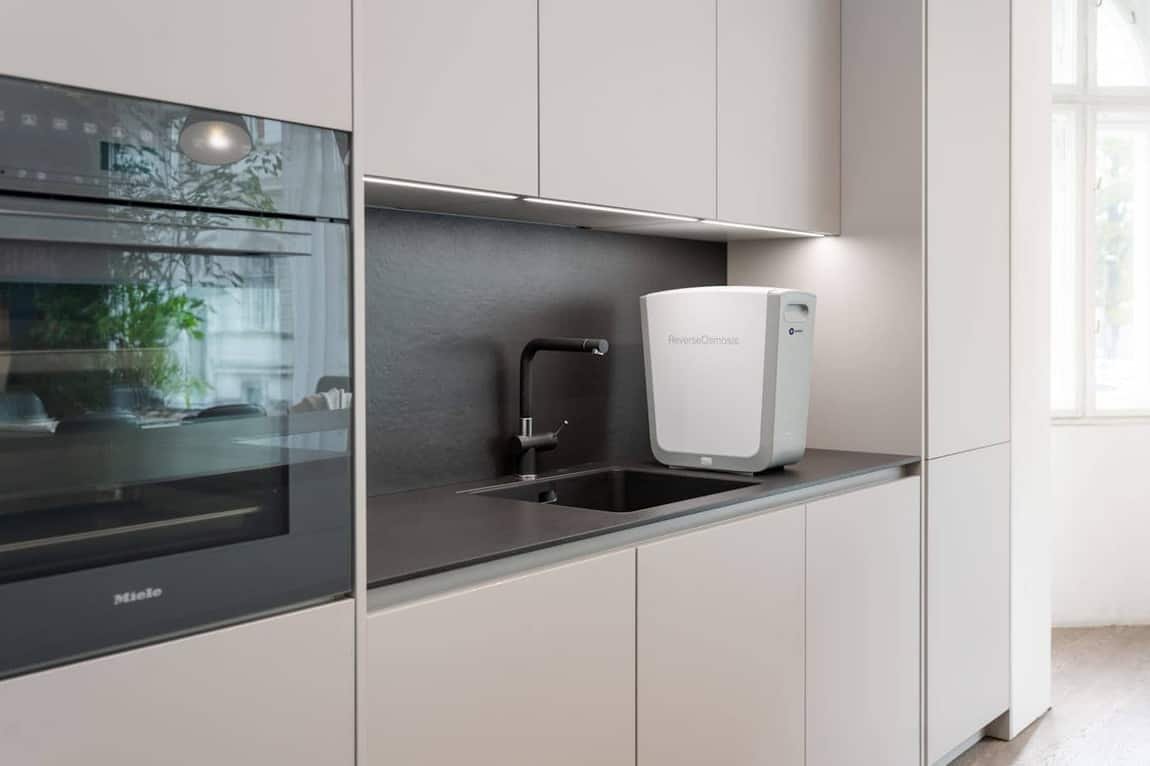
No. Ion exchange swaps calcium and magnesium for a small amount of sodium, and the quantity is proportional to how hard the water was to begin with. At Treasure Valley hardness levels the added sodium is modest and is not detectable as a salty taste. If you are on a sodium-restricted diet, potassium chloride can be used in place of sodium chloride, or a reverse osmosis system at the kitchen tap handles the drinking water separately.
On the main water line where it enters the house, positioned after any sediment filtration and before the water heater. That order matters: sediment filtration protects the softener resin, and installing before the heater is what protects the heater from scale. Where the plumbing allows, we also keep outdoor spigots and irrigation on the hard line, because there is no benefit to softening water going onto a lawn and it saves salt.
It depends on your hardness, your water use and how the unit regenerates. A metered softener that regenerates based on actual water consumption uses noticeably less salt than a timer-based unit that regenerates on a schedule whether it needs to or not. Most households check the brine tank monthly. The thing to watch for is a salt bridge, a hard crust that forms across the top of the salt and leaves an empty space beneath, which stops the unit regenerating properly even though the tank looks full.
The usual suspects, in order: a salt bridge stopping the brine from forming, a control valve that is no longer initiating regeneration, a blocked or kinked brine line, and finally a resin bed that has reached the end of its useful life. Only the last of those means replacing the unit. Softeners are generally repairable, so it is worth having one diagnosed before assuming it needs replacing.
Yes, if hardness is your complaint. Filters and softeners solve different problems. A filter removes particles, chlorine, iron and other contaminants. A softener removes calcium and magnesium hardness. No standard filter will stop scale forming on your shower head or inside your water heater. Plenty of homes here run both, with filtration handling taste and sediment and softening handling scale.
The control valve and other mechanical parts commonly run ten to fifteen years, while the resin bed itself can last considerably longer if the unit is sized correctly and maintained. A softener that is undersized for the household regenerates far more often than it should, which shortens the working life of every moving part.
It is a hardened crust that forms across the surface of the salt in the brine tank, leaving a hollow space underneath. The tank looks full from above, but the unit cannot draw brine to regenerate properly, so hardness starts passing through even though nobody has noticed a problem yet. Breaking it up gently restores normal operation.
Yes. An oversized unit sits idle for long stretches between regenerations, and standing water in an idle resin bed and brine tank is not ideal. The better target is a unit that regenerates on a sensible, fairly regular cycle based on your actual household usage, not the largest capacity available.
The added sodium in softened water can build up in soil over repeated watering and is generally not recommended for plants. This is one of the practical reasons to keep outdoor spigots and irrigation lines on the hard water side wherever the plumbing allows it.
Yes, and it is common on Treasure Valley wells, but well water often needs additional treatment alongside softening, particularly for iron and sediment, which can foul a softener’s resin bed if left untreated ahead of it. Testing the well first tells us whether softening alone is sufficient or whether pre-filtration should come first in the sequence.
It varies by unit size and control type, but a metered, on-demand control uses meaningfully less than a timer-based system regenerating on a fixed schedule regardless of actual need. This is one of the practical arguments for choosing a metered control even though it costs a little more upfront.
Sodium chloride pellets are the standard, least expensive option. Potassium chloride works identically but avoids adding sodium, which matters for households managing sodium intake, at a higher ongoing cost. Solar salt and rock salt are both usable but tend to leave more sediment in the brine tank over time than a purpose-made pellet product.
Ask for an upfront price before any work starts.
Call (614) 756-0643We size a softener on your actual hardness and household use, and install it where it protects the whole house. Serving Meridian, Boise, Nampa, Caldwell and the surrounding valley.