Tankless water heaters
The appliance most likely to need a gas line upgrade, because of its high peak demand.
Learn moreGas work is the one area of plumbing where there is no acceptable margin for error. Every line we install or repair is pressure tested before it goes into service.
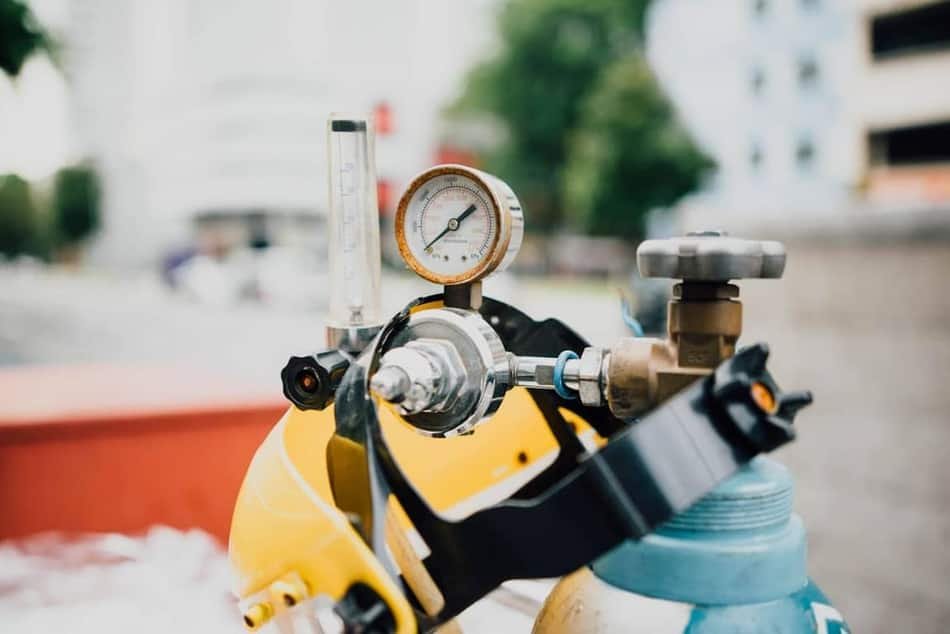
Leave the building immediately. Do not switch anything on or off, including light switches, and do not use your phone inside. Electrical switching creates the exact spark an ignitable gas mixture is waiting for.
Once you are outside and away from the building, call your gas utility’s emergency line or 911 from there. Do not go back in for any reason until the utility says it is safe. Utilities respond to reported gas odours as an emergency and there is no charge for being cautious.
Once the utility has made the situation safe, that is the point at which a licensed plumber repairs the line and pressure tests it before it goes back into service.
Gas piping is licensed work in Idaho for a straightforward reason: the consequences of getting it wrong are fire, explosion and carbon monoxide. It is regulated under the same framework as the rest of plumbing, administered through the Idaho Division of Occupational and Professional Licenses.
Repairs cover corroded sections, failed fittings, damaged buried lines and connections that have loosened. Corrosion is the common one on older steel pipe, particularly where a line passes through a slab or runs underground.
New installation is the larger share of what we do, and most of it is driven by adding something. A gas range in a kitchen that has only ever had electric. A gas dryer. A firepit or outdoor kitchen on the patio. A standby generator. A pool or spa heater. Each of these adds load to a system that was sized for what the house had when it was built.
Sizing is where most of the engineering sits. Every appliance has a BTU demand, and the pipe has to be large enough to deliver the total simultaneous demand at adequate pressure, accounting for the length of the run and every fitting along the way. Adding a high-demand appliance to an undersized line does not usually produce a dramatic failure. It produces appliances that underperform, which is why the problem often goes unnoticed for years.
Talk to a technician who works on Treasure Valley homes every day.
Call (614) 756-0643The first item on this list is an emergency. Leave the building first and call from outside.
Have a licensed tech diagnose it and quote the repair up front.
Call (614) 756-0643Four things happen on every gas job, without exception.
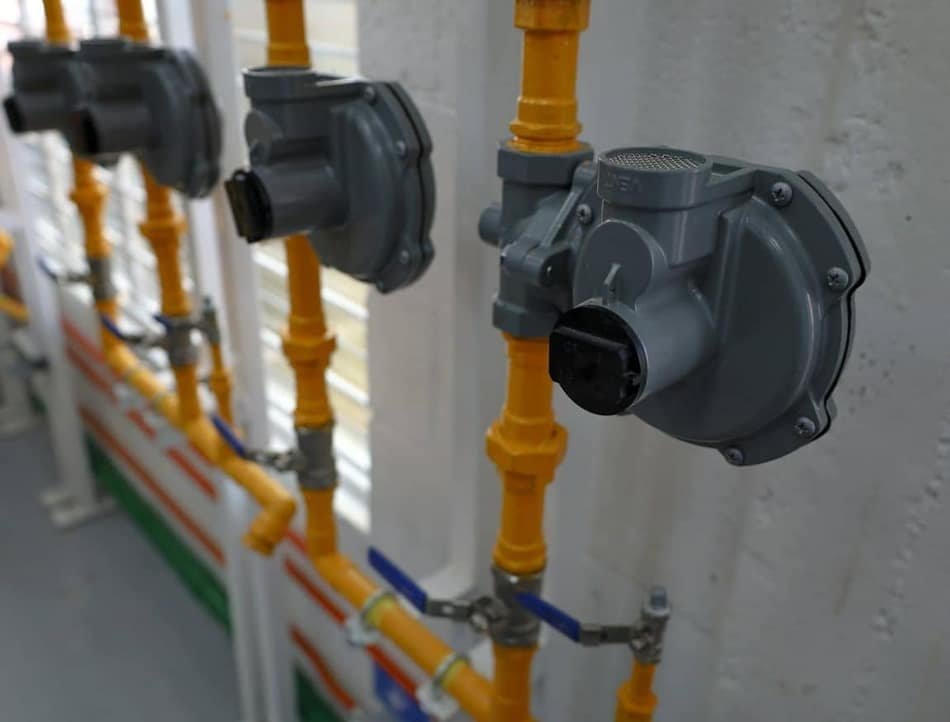
Load calculation first. Before any pipe is run, we total the BTU demand of every appliance the line will serve, then size the pipe for the full run length and fitting count. This is the step that gets skipped on cheap work, and it is the reason people end up with a range that will not hold a high flame while the water heater is running.
Correct materials. Black steel, corrugated stainless tubing and polyethylene for buried runs each have their place and their restrictions. Corrugated stainless in particular has specific bonding requirements under the electrical code, which is a detail that gets missed surprisingly often and matters for lightning-induced damage.
Pressure testing. Every new or repaired line is isolated and held under test pressure, and the pressure has to hold. Not a soap bubble check on the visible joints, an actual documented pressure test of the section.
Permits and inspection. Gas work is permitted work in the jurisdictions we serve. We pull the permit and schedule the inspection.
Schedule service anywhere from Star to Mountain Home.
Call (614) 756-0643Material choice is dictated by where the pipe runs and what the code allows, not by preference.
| Material | Typical use | Key considerations |
|---|---|---|
| Black steel pipe | The traditional standard for interior gas distribution | Durable and widely accepted. Threaded joints, heavier to work with, and it can corrode where it passes through masonry or soil |
| Corrugated stainless steel tubing | Flexible interior runs, especially in retrofit work through finished spaces | Fast to install through existing framing. Has specific electrical bonding requirements that must be followed |
| Polyethylene | Buried exterior runs to detached structures, generators and outdoor kitchens | Made for direct burial and will not corrode. Must transition to an approved material above ground |
| Copper | Restricted, and dependent on local amendments | Permitted only in some jurisdictions and only in certain conditions. We check local requirements rather than assume |
Idaho enforces the Uniform Plumbing Code, and individual cities publish their own amendments on top of state code. We work to whichever applies to your address.
Ask for an upfront price before any work starts.
Call (614) 756-0643If you have a suspected leak, stop reading and call from outside the building first.
A leak, a new appliance, an outdoor kitchen or a generator. Emergencies are handled differently from planned installations.
We look at your meter, existing line sizes and total appliance demand, then determine what the new work needs.
You see the price before work starts. We pull the permit where your jurisdiction requires one.
Correct material for the location, properly supported, with shutoffs where the code requires them.
The line is held under test pressure, the inspection is scheduled, and the system is only put into service once it passes.
Same day and next day appointments are available across the valley.
Call (614) 756-0643Natural gas service across southern Idaho is supplied by Intermountain Gas, which serves several hundred thousand customers across the region. If your home is inside the service territory and already has a meter, adding appliances is usually a matter of confirming your existing line and meter can carry the additional load.
Meridian has grown more than 260 percent from its year-2000 population and is now Idaho’s second largest city, with about 60 percent of its housing units built after 2000. That has a direct consequence for gas work. Homes built during the valley’s growth years were piped for the appliances they were sold with, typically a furnace, a water heater and often a range. Everything added since, and outdoor living in particular, is load the original design never accounted for.
Outdoor gas is the single most common request we get here. The valley’s long dry summers and cool evenings make patios genuinely usable most of the year, and firepits, outdoor kitchens and patio heaters have gone from luxury to standard in newer neighbourhoods around Eagle, Star and north Meridian.
Idaho enforces the Uniform Plumbing Code rather than the International Plumbing Code, and the electrical side runs on the National Electrical Code, both administered through the Idaho Division of Occupational and Professional Licenses.
Source: Idaho DOPL plumbing board
Book a licensed Meridian technician for this job.
Call (614) 756-0643Quoted after assessment, agreed before work starts. Gas jobs vary enormously depending on the run.
Get this looked at before it turns into a bigger repair.
Call (614) 756-0643Request a visit and we will confirm your appointment window.
Call (614) 756-0643An Idaho journeyman plumber has to log 8,000 hours of supervised work plus 576 classroom hours before sitting the state exam, and a plumbing contractor licence additionally requires journeyman experience and a compliance bond. That level of training is specifically why gas work is licensed rather than left to general handyman work. Ask to see a license number, confirm a permit will be pulled where required, and ask directly whether the line will be pressure tested and documented before it goes into service. A contractor who is vague on any of those three points is not the right choice for gas work.
Source: Idaho DOPL licensing requirements
Talk to a technician who works on Treasure Valley homes every day.
Call (614) 756-0643| What you notice | Likely cause | What to do |
|---|---|---|
| Rotten egg smell or hissing | A leak | Leave the building immediately, then call the utility from outside |
| Yellow, lazy flame instead of crisp blue | Incomplete combustion, producing carbon monoxide | Have the appliance serviced before using it again |
| Appliance underperforming, especially several at once | Undersized gas line for the total demand | Have a whole-system load calculation done rather than replacing the appliance |
| Rising gas bills with no change in habits | A small leak somewhere in the system | Have the system pressure tested |
| Dead patch of grass along a buried line route | Possible underground leak | Call for a locate and inspection |
Have a licensed tech diagnose it and quote the repair up front.
Call (614) 756-0643Distance and route are the dominant factors by a wide margin. A stub-out a few feet from an existing line near the meter is a modest job. A run to a detached structure, an outdoor kitchen on the far side of a property, or a standby generator pad well away from the house, involves considerably more pipe, more labor and, if it has to be buried, excavation and an approved burial-rated material.
Whether the work can be routed through open, accessible space such as an unfinished basement, attic or crawl space, versus having to be fished through finished walls and ceilings, changes both the time required and the amount of patching afterward. Finished-space routing is inherently slower and more careful work.
Finally, capacity upgrades at the source matter. If adding a new appliance pushes total demand past what the existing line or meter can deliver, the fix might be as simple as upsizing one section of pipe, or it might mean coordinating with the utility on the meter itself, which is a different scale of project entirely.
Schedule service anywhere from Star to Mountain Home.
Call (614) 756-0643Leave immediately and take everyone with you. Do not operate any electrical switch on the way out, including light switches, and do not use your phone inside the building. Once you are outside and clear of the property, call your gas utility’s emergency number or 911. Do not go back inside until the utility tells you it is safe. There is no charge for reporting a suspected leak, and utilities treat these calls as emergencies.
In the jurisdictions we serve, gas piping work requires a permit and an inspection. Idaho enforces the Uniform Plumbing Code through the Division of Occupational and Professional Licenses, and cities in the valley add their own requirements on top. We pull the permit and schedule the inspection as part of the job. Permit fees are set by the city or county and passed through at cost.
Gas piping is licensed work in Idaho, and for good reason. Beyond the legal position, an unpermitted gas line that has not been pressure tested is a genuine hazard to everyone in the building, and it will almost certainly cause problems with insurance and at the point of sale. This is one area where doing it yourself is not a reasonable risk to take.
The main variable is the distance from the existing supply and whether the run can go through accessible space or has to be buried or routed through finished areas. A stub-out close to the meter is a modest job. A run to the far side of a property, buried, with a new tee off an upsized supply, is a much larger one. We quote after looking at the route.
It is calculated rather than guessed. Every gas appliance has a BTU rating, and the pipe has to deliver the total simultaneous demand at adequate pressure over the actual length of the run, accounting for every fitting. Adding a high-demand appliance such as a tankless water heater to a line sized for a conventional tank is the classic error, and the symptom is not a dramatic failure but appliances that quietly underperform.
There is no universal schedule for residential gas piping, but there are sensible trigger points: whenever you add or replace a gas appliance, if you notice any of the warning signs on this page, before buying a home, and after any significant excavation on the property. Appliance-level combustion checks are a different matter and should happen annually as part of heating maintenance.
Yes. A standby generator needs both a properly sized gas supply and the electrical work to connect it through a transfer switch. The gas side is usually a substantial load that has to be accounted for in the whole-house calculation, and the run is often buried out to where the generator sits. We handle both sides of that job.
Once the affected section is located, most residential leak repairs are completed within a few hours, including the required pressure test afterward. Locating a leak on a buried line can take longer than the repair itself, particularly if it is not near an obvious surface indicator such as dead vegetation.
Black steel is threaded, rigid, and has been the traditional standard for decades. Corrugated stainless steel tubing is flexible and considerably faster to run through existing framing on a retrofit, but it comes with specific bonding requirements to protect against electrical faults, including lightning-related damage, that must be followed exactly.
Yes, before any excavation, regardless of how minor it seems. Buried gas lines are not always as deep as people assume, and a locate request identifies utility lines before a shovel or auger finds them the hard way. This applies to fence posts, tree planting and irrigation work, not just major projects.
Usually, yes, provided the existing line and meter have enough spare capacity for the additional appliance. That is exactly what the load calculation determines. If capacity is not there, the practical options are upsizing the specific run or, less often, upsizing from the meter itself.
The meter has a rated capacity printed on it, and comparing that against the total simultaneous BTU demand of every existing plus proposed appliance tells us whether it has headroom. This is exactly the calculation we run before recommending any new gas work, rather than assuming an older meter has spare capacity.
The piping principles are similar, but propane runs at different pressures and requires different regulators and, in many cases, different orifice sizing at the appliance. Homes outside natural gas service territory on propane need a technician familiar with the specific requirements of that fuel.
The section being tested is isolated from the gas supply, pressurized with air or inert gas to a level specified by code, and monitored for a set period to confirm the pressure holds without dropping. A drop indicates a leak somewhere in that section, which then has to be found and corrected before the test is repeated and the line is approved for service.
Flexible appliance connectors are generally a lower-durability component than the fixed piping around them, and manufacturers commonly recommend replacement on a several-year cycle or whenever an appliance is moved or reconnected. A connector showing kinks, corrosion or wear should be replaced regardless of age.
Yes, attics are a common and acceptable routing space for gas piping in most jurisdictions, provided the material, support spacing and protection from physical damage meet code. It is often one of the more practical paths for reaching a second floor or a roof-mounted appliance without opening finished walls.
Have a licensed tech diagnose it and quote the repair up front.
Call (614) 756-0643Licensed installation and repair, sized properly and pressure tested before it goes into service. If you can smell gas right now, leave the building and call your utility from outside first.