Breaker panels and upgrades
The panel that feeds every circuit, and where AFCI protection usually lives.
Learn moreOutlet repair in Meridian, Idaho is usually a five minute fix. Occasionally a dead outlet is the visible end of a loose connection that has been heating up inside a wall for months.
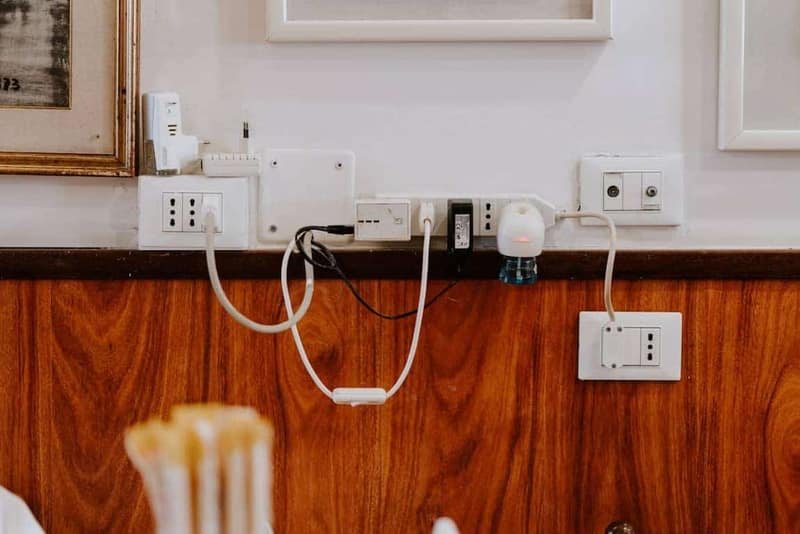
The most common answer catches almost everyone: it is on a GFCI circuit and the GFCI has tripped somewhere else. One GFCI outlet can protect several downstream outlets, and those downstream ones have no indicator at all. Go and check every GFCI in the house, including the garage, bathrooms, kitchen, outdoors and any unfinished basement or crawl space, and press reset.
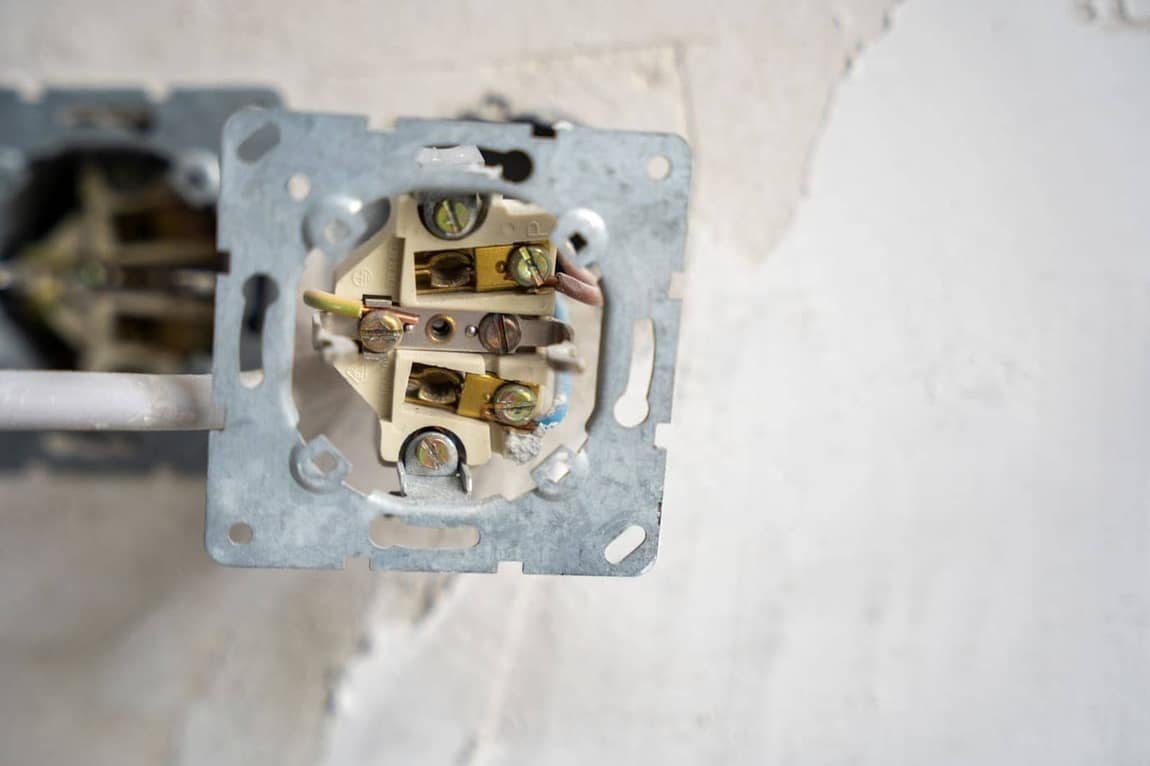
Second is a loose connection, most often at a back-stabbed device where the wire pushes into a hole in the back rather than being clamped under a screw. These work loose over years.
Third is a failed device. Outlets wear out, particularly ones used constantly.
If an outlet is warm, discoloured or smells hot, stop using it and call. That is not a dead outlet, it is a heating connection.
Receptacles and switches are the parts of your electrical system you actually touch, and they are consumable. They have moving contacts, they get plugged and unplugged thousands of times, and they carry current through connections that expand and contract with every load cycle.
Loose connections are the root of most outlet problems and the reason some of them matter. A loose connection creates resistance, resistance generates heat, and heat degrades the connection further. That is a self-worsening cycle, and its end point is arcing inside a wall cavity. This is precisely why a warm outlet or a faint scorch mark around a plug is worth taking seriously rather than living with.
Back-stabbed connections deserve specific mention. Many devices allow the wire to be pushed into a hole in the back rather than wrapped under a terminal screw. It is faster to install and it is a well known source of intermittent faults years later, because the small internal spring loses tension. When we replace a device, we land the wires under the screws.
Worn receptacles lose grip. If a plug falls out under its own weight, the contacts inside no longer hold it firmly, which means a poor connection and heat at exactly the point carrying the current.
Two-prong outlets in older homes indicate ungrounded wiring. Simply fitting a three-prong receptacle to ungrounded wiring is both unsafe and against code, because it presents a grounded outlet that has no ground. There are compliant ways to address this, and that shortcut is not one of them.
Talk to a technician who works on Treasure Valley homes every day.
Call (614) 756-0643The first four on this list are safety issues rather than inconveniences.
Have a licensed tech diagnose it and quote the repair up front.
Call (614) 756-0643Most of this work is quick. The value is in finding the cause rather than swapping the visible part.
Diagnosing dead outlets starts with tracing the circuit, checking for tripped GFCIs upstream, and testing at the device. If we find a loose or heat-damaged connection we address the connection, not just the device, because a new outlet on a damaged conductor solves nothing.
Device replacement covers worn receptacles, failed switches, dimmers and smart devices. Dimmers are worth mentioning: many older dimmers do not work correctly with LED lamps, which is behind a great many complaints about flickering and buzzing lights. The fix is an LED-compatible dimmer rather than different bulbs.
GFCI installation. Ground fault protection detects current leaking to ground and shuts off in milliseconds, which is what prevents electrocution in wet locations. Current code requires it in bathrooms, kitchens, garages, outdoors, crawl spaces and unfinished basements. Older homes frequently have none.
AFCI protection addresses a different hazard: arcing faults, which produce heat without necessarily drawing enough current to trip a normal breaker. That is the failure mode behind a large share of electrical fires, and current code requires arc fault protection in most living areas, tied back to the panel that houses most AFCI breakers.
New outlets and dedicated circuits. Adding outlets where you need them removes the extension cord habit. Dedicated circuits are required for a number of appliances, and they solve the recurring trip caused by a high-demand appliance sharing a circuit.
Addressing ungrounded wiring properly, through the compliant routes the code provides rather than by fitting a three-prong device to a two-wire circuit.
Schedule service anywhere from Star to Mountain Home.
Call (614) 756-0643They sound similar and they address entirely different hazards. Many homes need both.
| GFCI | AFCI | |
|---|---|---|
| Protects against | Electric shock and electrocution | Electrical fires caused by arcing |
| How it works | Detects current leaking to ground and cuts power in milliseconds | Detects the electrical signature of an arcing fault and cuts power |
| Where required | Bathrooms, kitchens, garages, outdoors, crawl spaces, unfinished basements | Most living areas including bedrooms and living rooms |
| Typical form | A receptacle with test and reset buttons, or a breaker | Usually a breaker in the panel, sometimes a combination device |
| What trips it | Current taking an unintended path, such as through a person | Arcing from damaged cable, loose connections or pinched wire |
| Nuisance tripping | Often a genuine fault, or a failing appliance | Can reveal existing wiring faults that were previously undetected |
If an AFCI breaker trips repeatedly after a panel upgrade, it is usually not a faulty breaker. It is generally revealing a wiring fault that existed all along and had no way of announcing itself before. That is the device working as designed.
Ask for an upfront price before any work starts.
Call (614) 756-0643Most of this work is completed in a single visit.
Genuinely. A tripped GFCI elsewhere in the house explains a large share of dead outlets and costs nothing to rule out.
Dead, intermittent, warm, sparking or scorched. The last three are treated as priority.
We find the actual cause, which is often upstream of the device you noticed.
Approved before we start, including if tracing reveals something behind the wall.
Devices replaced with wires landed under screws, and GFCI and AFCI protection tested before we leave.
Same day and next day appointments are available across the valley.
Call (614) 756-0643Idaho enforces the Uniform Plumbing Code rather than the International Plumbing Code, and the electrical side runs on the National Electrical Code, both administered through the Idaho Division of Occupational and Professional Licenses. Electrical work in Idaho follows the National Electrical Code, and the requirements for GFCI and AFCI protection have expanded considerably over successive code cycles. That means what was compliant when your house was built may be well behind what a new house gets today, and that gap is largest in older homes.
Meridian has grown more than 260 percent from its year-2000 population and is now Idaho’s second largest city, with about 60 percent of its housing units built after 2000. Newer Meridian, Eagle, Star and Kuna homes were generally wired to a reasonably modern standard with grounded circuits and at least some GFCI protection. What they need tends to be additions rather than corrections: outlets in the garage for a workshop, exterior outlets for patio living, dedicated circuits for new appliances, and smart switches.
Older Boise, Nampa and Caldwell housing is where the corrections live. Nampa’s median home construction year sits right around 2000, but roughly one in ten houses there predates 1950, which puts two very different plumbing eras inside the same city limits. Homes from before the 1960s can have ungrounded two-wire circuits, no GFCI protection anywhere, original devices that are decades past their useful life, and in the oldest cases wiring methods that are no longer acceptable. Two-prong outlets are the visible signal.
One valley-specific note: garages and outbuildings. Given how commonly garages here serve as workshops, garage circuits get loaded far beyond what a builder anticipated. A garage on a single shared circuit with a freezer, a compressor and power tools is a recurring trip waiting to happen, and the answer is dedicated circuits rather than a bigger breaker. It is also worth confirming smoke alarms are wired into a modern circuit while any of this work is underway.
Source: Nampa housing data

Book a licensed Meridian technician for this job.
Call (614) 756-0643Most device work is quick and inexpensive. Priced before we start, as always.
Get this looked at before it turns into a bigger repair.
Call (614) 756-0643Not every outlet in a house should be the same type, and knowing the difference helps you understand what a quote is actually specifying.
Request a visit and we will confirm your appointment window.
Call (614) 756-0643For anything beyond swapping a like-for-like device, yes, and for new circuits the answer is always yes. Idaho enforces the Uniform Plumbing Code rather than the International Plumbing Code, and the electrical side runs on the National Electrical Code, both administered through the Idaho Division of Occupational and Professional Licenses. Adding a circuit, running new wiring, or correcting ungrounded wiring involves decisions about wire sizing, breaker rating and code-required protection that carry real safety consequences if they are wrong.
Ask whether the quote includes tracing the cause of a fault or just replacing the visible device, since those are different jobs at different price points. If several devices need attention, ask about doing them in one visit, which is almost always more economical than separate call-outs for each one.
For a new circuit, ask where it originates and what that route looks like, since running through an accessible attic or crawl space is a different job from opening finished walls. A contractor who gives a firm number without seeing the route, or without asking about your panel’s available space, is guessing at part of the job.
Talk to a technician who works on Treasure Valley homes every day.
Call (614) 756-0643None of this requires tools, and it catches problems while they are still minor.
Have a licensed tech diagnose it and quote the repair up front.
Call (614) 756-0643The most common explanation is that the outlet is protected by a GFCI somewhere else that has tripped. A single GFCI receptacle can protect several downstream outlets, and those downstream ones have no indicator light or reset button of their own. Check every GFCI in the house, including the bathrooms, kitchen, garage, exterior and any crawl space or unfinished basement, and press reset. Beyond that, the usual causes are a loose connection at the device, a failed receptacle, or a break somewhere in the circuit.
Yes, and it should not be ignored. Heat at an outlet means electrical resistance, and resistance in a connection carrying current is the beginning of a self-worsening cycle: the heat degrades the connection, which increases resistance, which generates more heat. Left alone it can end in arcing inside the wall cavity. Stop using the outlet, switch off the circuit at the breaker if you can identify it, and have it looked at. This is one of the clearer cases where prompt action prevents something much worse.
A ground fault circuit interrupter monitors the current flowing out and back, and if it detects a difference, meaning current is leaking to ground possibly through a person, it cuts power within milliseconds. That speed is what prevents electrocution. Current code requires GFCI protection in bathrooms, kitchens, garages, outdoors, crawl spaces and unfinished basements, essentially anywhere water and electricity might meet. Older homes frequently have none at all, and adding it is one of the more worthwhile safety upgrades available.
Almost always an incompatible dimmer. Older dimmers were designed for incandescent bulbs, which draw far more current than LEDs, and they rely on that load to operate correctly. With an LED lamp drawing a fraction of the current, the dimmer cannot regulate properly, which produces flickering, buzzing or a limited dimming range. The fix is an LED-compatible dimmer rather than trying different bulbs, and it usually resolves the problem completely.
Not by simply swapping the device, which is unfortunately a common shortcut. A two-prong outlet indicates ungrounded wiring, and fitting a three-prong receptacle to it presents a grounded outlet that has no ground behind it. Anything plugged in that relies on that ground for safety has no protection, and the user has no way of knowing. The code provides compliant alternatives, including running a proper ground, or using GFCI protection with the required labelling. We can explain which applies to your situation.
Usually because it is detecting something real. Arc fault breakers look for the electrical signature of arcing, which is the fault type behind a large share of electrical fires and which does not necessarily draw enough current to trip a standard breaker. When an AFCI trips repeatedly after a panel upgrade, it is most often revealing a wiring fault that existed all along and previously had no way of announcing itself: a damaged cable, a loose connection, or a wire pinched by a staple. Some appliances can also cause nuisance trips. It is worth diagnosing rather than assuming the breaker is faulty.
The main variable is the route from the panel or from an existing circuit. Adding an outlet on the same wall as an existing one, with accessible space behind, is straightforward. Running a new circuit from the panel through finished walls and ceilings is a different scale of job. Whether the run can go through an attic, a crawl space or an unfinished basement makes a large difference. If you need several outlets, doing them all in one visit is considerably more economical.
A receptacle with an internal shutter mechanism that blocks anything from being inserted into just one slot, which is the way a child can otherwise contact a live conductor with a single object like a hairpin. Both slots have to be pushed simultaneously, which a standard plug does and a single object does not. Current code requires tamper-resistant receptacles throughout most of a new home, and they are a sensible upgrade in an older one with young children in it.
Many smart switches are designed for straightforward swap-in installation, but a common snag is the absence of a neutral wire at older switch boxes, which many smart switches require to power their internal electronics. Wiring it without a neutral present, or without understanding the existing circuit, is how switches fail or overheat after installation. If your switch boxes are original to an older home, it is worth having the wiring checked before buying a specific smart switch model.
That is a classic sign of worn contacts inside the receptacle or a loose connection at the terminal, and it should not be lived with. A connection that only makes contact intermittently is arcing every time it makes and breaks that contact, and arcing generates heat inside the wall. It is a quick repair and one of the clearer cases where the symptom looks trivial but the underlying cause is not.
Current code requires bathroom receptacles to be GFCI protected, and in many cases a dedicated 20 amp circuit is required to serve bathroom receptacles specifically, separate from lighting. Requirements have changed across code cycles, so an older bathroom may not meet current standards even if it has GFCI protection. This is worth checking during any bathroom remodel rather than assuming the existing wiring is adequate.
No. A properly installed receptacle should grip a plug firmly from day one. If a newly installed device feels loose, either the device itself is faulty or it was not seated correctly in the box. It is worth flagging immediately rather than living with it, since a loose grip at the contacts is exactly the condition that leads to heat and arcing over time.
Aluminum branch circuit wiring was used in some homes for a period and has known connection problems distinct from copper, since it expands and contracts differently at terminals and is more prone to loosening over time. It is not automatically an emergency, but it is worth having assessed, and there are approved methods for making aluminum-to-copper connections safely rather than leaving original connections as they were installed decades ago.
Have a licensed tech diagnose it and quote the repair up front.
Call (614) 756-0643Check your GFCIs first, then get in touch. If an outlet is warm, scorched or smells hot, stop using it and call rather than waiting.