AC repair and maintenance
A heat pump is an air conditioner, so the cooling side shares the same diagnostics.
Learn moreA heat pump is an air conditioner that can run backwards. In a climate like this one, that makes it an efficient way to heat for most of the season and a normal AC all summer.
Yes, and the Treasure Valley is a better fit than most of Idaho. Treasure Valley winters routinely drop into the low twenties overnight in January, while July afternoons average near 92 degrees, so the same house has to survive hard freezes and high desert heat in the same year. A heating climate that lives mostly in the twenties and thirties, rather than repeatedly below zero, sits comfortably within the range where modern heat pumps operate efficiently.
Modern cold climate heat pumps hold useful capacity well below freezing, far beyond what older equipment managed. The honest caveat is that capacity does fall as it gets colder, which is why the most common recommendation here is a dual fuel system: a heat pump handling the bulk of the season, with a gas furnace taking over in a genuine cold snap.
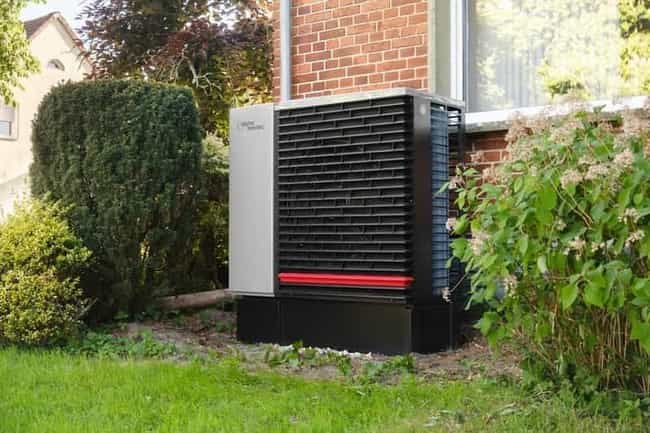
A heat pump does not create heat, it moves it. In cooling mode it takes heat from inside the house and rejects it outside, exactly like an air conditioner. In heating mode a reversing valve flips the refrigerant flow, so it collects heat from the outdoor air, even cold outdoor air, and delivers it inside.
That is why heat pumps are efficient: moving existing heat takes far less energy than generating it. It is also why they behave in ways that make people think something is wrong when nothing is.
The air from the vents feels cooler than a furnace. A gas furnace delivers air at perhaps 120 to 140 degrees. A heat pump delivers air in the region of 90 to 100 degrees, which is above body temperature but feels cool against your skin. The house still reaches temperature, but the heat is delivered gently over longer run times rather than in short hot blasts. People frequently report this as a fault, and it is normal operation.
It runs for much longer periods. Long, steady run times are how a heat pump is supposed to work.
It periodically steams and blows cold. In cold damp conditions frost forms on the outdoor coil, and the unit runs a defrost cycle: it briefly reverses to cooling mode to melt the frost, which is why you see steam rising off the outdoor unit and why the indoor air goes cool for a few minutes. Auxiliary heat usually covers that gap.
Book a licensed Meridian technician for this job.
Call (614) 756-0643Some heat pump behaviour looks alarming and is normal. These are the ones that are not.
Get this looked at before it turns into a bigger repair.
Call (614) 756-0643Heat pumps are refrigeration systems, and diagnosing them properly means measuring rather than looking.
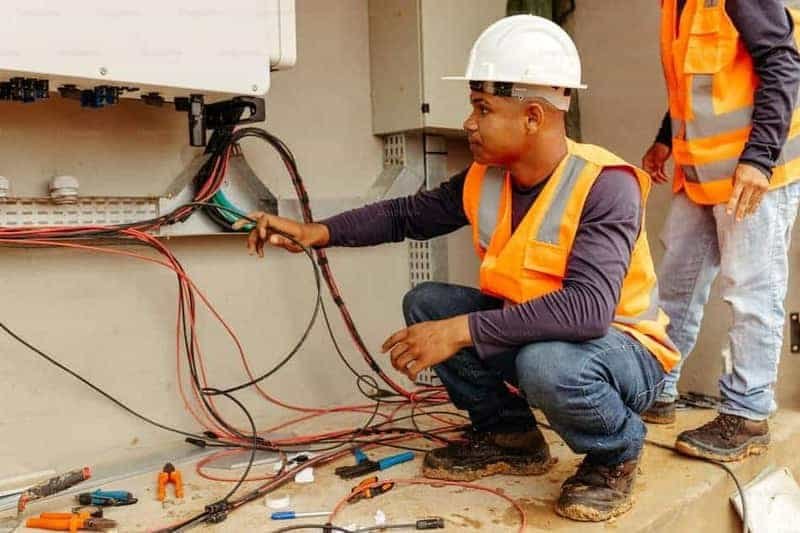
On repairs, we measure. Superheat and subcooling readings tell us whether the refrigerant charge is correct, which is fundamental because both undercharge and overcharge cause poor performance and both damage compressors over time. We also check the reversing valve, defrost control, airflow and electrical components.
Refrigerant deserves plain speaking. If a system is low on refrigerant, it has a leak, because refrigerant is not consumed in normal operation. Simply adding refrigerant without finding the leak is topping up a system that will be low again, and it is poor practice. We look for the leak.
On maintenance, heat pumps need attention twice a year rather than once, because they work in both seasons. Coil cleaning matters more than on a cooling-only system since the outdoor coil operates as an evaporator in winter, and a dirty coil directly reduces heating capacity and worsens frost buildup.
On installation, the same rules as any HVAC equipment apply: load calculation, static pressure testing on the ductwork, and proper commissioning. There is one additional decision specific to heat pumps, which is how the auxiliary heat is configured and at what outdoor temperature the system switches over. Get that balance point wrong and you either run expensive auxiliary heat unnecessarily or leave the house cold in a cold snap. A heat pump’s outdoor unit also draws a meaningful dedicated circuit, so it is worth confirming the panel has the capacity before the install date rather than on it.
Request a visit and we will confirm your appointment window.
Call (614) 756-0643In this climate all three are legitimate choices, and the right one depends on your fuel situation and what you are replacing.
| System | How it heats | Best suited to |
|---|---|---|
| Air source heat pump only | Heat pump for everything, with electric auxiliary heat in cold snaps | Homes with no natural gas service. Also the simplest all-electric option |
| Dual fuel (heat pump + gas furnace) | Heat pump through most of the season, furnace below the balance point | Homes with gas that are replacing both heating and cooling. Usually our recommendation here |
| Gas furnace + separate AC | Furnace for all heating, AC for cooling | Homes replacing only one component, or where the ductwork constrains options |
| Ductless mini split heat pump | Individual indoor units, no ductwork required | Additions, garages, converted spaces and zoning. See mini splits |
Dual fuel gets the best of both in this climate: efficient heat pump operation through the long mild shoulder seasons, and the reliable output of gas heat when it genuinely gets cold. The balance point is set during commissioning and it is worth getting right.
Talk to a technician who works on Treasure Valley homes every day.
Call (614) 756-0643Whether it is a fault, a service or a new system, the sequence is similar.
Not heating, not cooling, icing up, running constantly, or auxiliary heat always on. Also tell us the outdoor temperature when it happens.
Refrigerant pressures, superheat and subcooling, airflow and electrical readings, plus reversing valve and defrost operation.
You hear what is actually wrong, including honestly if the behaviour you are worried about is normal operation.
Leaks located and repaired rather than topped up, and installations sized and commissioned properly.
A heat pump has to be confirmed working in heating and cooling, because a fault can affect only one.
Have a licensed tech diagnose it and quote the repair up front.
Call (614) 756-0643Treasure Valley winters routinely drop into the low twenties overnight in January, while July afternoons average near 92 degrees, so the same house has to survive hard freezes and high desert heat in the same year. Read that as a heat pump specification rather than as weather. A season that lives mostly between the twenties and the fifties, with cold snaps rather than sustained deep cold, is squarely where a modern heat pump performs well.
Add the cooling side and the case gets stronger. Valley summers genuinely need air conditioning, with July afternoons averaging near 92 degrees. A heat pump is your air conditioner anyway, so choosing one is not adding a machine, it is choosing what the machine you already need does in winter.
Idaho Power serves the valley for electricity and Intermountain Gas for natural gas, and both are relevant to the arithmetic. In a home with existing gas service, dual fuel usually makes the most sense: heat pump efficiency through the long shoulder seasons, gas heat when it is genuinely cold. In a home without gas at the location, an all-electric heat pump avoids the cost of bringing gas in entirely.
Meridian has grown more than 260 percent from its year-2000 population and is now Idaho’s second largest city, with about 60 percent of its housing units built after 2000. The practical consequence is a large population of valley homes whose original furnace and AC are aging out together, which is precisely the moment when dual fuel is worth evaluating rather than defaulting to a like-for-like replacement.
Source: Boise climate averages

Schedule service anywhere from Star to Mountain Home.
Call (614) 756-0643Repairs are priced after diagnosis. Installations are quoted after a proper assessment.
Ask for an upfront price before any work starts.
Call (614) 756-0643Heat pumps do several things that look wrong and are not, which makes it worth separating genuine warning signs from normal operation before deciding to call.
| Behavior | Normal or worth a call |
|---|---|
| Steam rising off the outdoor unit in cold weather | Normal. A defrost cycle clearing frost from the coil |
| Air from the vents feels cool rather than hot | Normal. Heat pump air runs cooler than furnace air but still warms the house |
| Long, steady run times rather than short cycles | Normal. This is how heat pumps are designed to run |
| Outdoor unit encased in solid ice, not light frost | Worth a call. The defrost cycle is not functioning |
| Auxiliary heat running constantly in mild weather | Worth a call. The heat pump is not carrying the load it should |
| Cools normally in summer but will not heat in winter | Worth a call. Often the reversing valve |
The general pattern is that gentle, gradual, cyclical behavior is normal, while sudden changes, one mode working and the other not, or a system that used to defrost cleanly and now ices over, are the signals worth acting on.
Same day and next day appointments are available across the valley.
Call (614) 756-0643Because a heat pump works through both the heating and cooling seasons, it earns a maintenance visit at the start of each rather than the single annual visit a furnace or AC-only system gets.
Book a licensed Meridian technician for this job.
Call (614) 756-0643A heat pump installed and commissioned correctly performs very differently from the same equipment set up carelessly, more so than with a furnace.
Get this looked at before it turns into a bigger repair.
Call (614) 756-0643In the Treasure Valley, yes, and better than most people expect. Valley winters typically live in the twenties overnight and rarely drop below ten degrees, which is comfortably within the range where modern heat pumps operate efficiently. Capacity does decline as temperatures fall, which is why dual fuel systems, pairing a heat pump with a gas furnace that takes over in a genuine cold snap, are the most common recommendation for homes that already have gas service.
Because it is cooler than furnace air, and this is normal rather than a fault. A gas furnace delivers air at around 120 to 140 degrees. A heat pump delivers air closer to 90 to 100 degrees, which is above body temperature but still feels cool against your skin. The house reaches temperature just the same, but the heat arrives gently over long run times rather than in short hot bursts. This is the single most common thing people report as a problem when their heat pump is working correctly.
Light frost on the outdoor coil in cold damp weather is completely normal, and the unit periodically runs a defrost cycle to clear it, briefly reversing to cooling mode. That is why you see steam rising off the outdoor unit and why the indoor air goes cool for a few minutes. What is not normal is the unit being encased in solid ice, which means the defrost cycle is not working, usually because of a defrost control board, sensor or reversing valve fault. That one needs attention, because an iced coil cannot absorb heat.
It pairs an electric heat pump with a gas furnace on the same ductwork. The heat pump handles heating through mild and moderate conditions, which in this valley is most of the season, and when the outdoor temperature drops past a set balance point the system switches to the gas furnace. You get heat pump efficiency for the bulk of the winter and the reliable output of gas heat when it is genuinely cold. For a valley home with existing gas service that is replacing both heating and cooling, it is usually the strongest option.
Auxiliary heat is meant to supplement the heat pump in cold conditions or during defrost cycles, not to run continuously in mild weather. When it does, the heat pump is not carrying the load it should be. Common causes are a low refrigerant charge, a defrost or reversing valve problem, a system undersized for the house, or a thermostat configured incorrectly so it calls for auxiliary heat too readily. It matters because auxiliary heat is considerably more expensive to run, so this usually shows up on the electricity bill first.
Twice a year, which is more than a cooling-only system needs, because a heat pump works in both seasons. The outdoor coil deserves particular attention: in winter it acts as the evaporator, absorbing heat from outside air, so a dirty coil directly reduces heating capacity and makes frost buildup worse. Spring and autumn visits before each season are the sensible pattern.
It depends on electricity and gas rates and on the outdoor temperature. Heat pumps are efficient because they move heat rather than generate it, and in mild conditions they typically deliver several times more heat energy than the electrical energy they consume. As temperatures fall that advantage narrows. This is exactly the reasoning behind dual fuel systems, which use the heat pump while it is the cheaper option and switch to gas when it is not.
The balance point is the outdoor temperature at which the system switches from the heat pump to the gas furnace, set during commissioning based on the heat pump’s capacity curve, the furnace’s output and local utility rates. Above the balance point the heat pump handles heating on its own, which in this valley is the majority of the season. Below it the furnace takes over because the heat pump’s capacity has fallen enough that gas becomes the more efficient and effective choice. Getting the balance point wrong in either direction either wastes money running expensive backup heat too early or leaves the house under-heated in genuine cold.
Yes, that is essentially what a heat pump is. It performs the air conditioner’s job in summer and, in this climate, can perform most or all of the furnace’s job in winter, either on its own with electric auxiliary heat or paired with a gas furnace in a dual fuel setup. For a home replacing both an aging furnace and an aging air conditioner at the same time, evaluating a heat pump instead of a like-for-like furnace and AC replacement is worth doing before defaulting to the familiar setup.
A well-maintained heat pump typically provides on the order of fifteen years of service, broadly similar to a central air conditioner, since it is fundamentally the same refrigeration equipment running in both directions. Because it operates year-round rather than only in the cooling season, it accumulates run hours faster than an AC-only system would, which makes the twice-yearly maintenance schedule more consequential for reaching the upper end of that range.
Often, but it should be verified rather than assumed. A heat pump moves a larger volume of air at a lower temperature than a gas furnace does, so the ductwork needs to be able to support that airflow without excessive static pressure. Static pressure testing on the existing ducts, the same check performed before any furnace installation, tells you whether they are suitable or whether some duct work should be part of the project.
Get this looked at before it turns into a bigger repair.
Call (614) 756-0643We diagnose by measurement and set dual fuel systems up properly, including the balance point. Serving Meridian, Boise, Nampa and the surrounding valley.