AC repair and maintenance
The cooling side of the system the air handler serves.
Learn moreYour air handler moves every cubic foot of conditioned air in the house. When it underperforms, the equipment it serves gets blamed for the result.
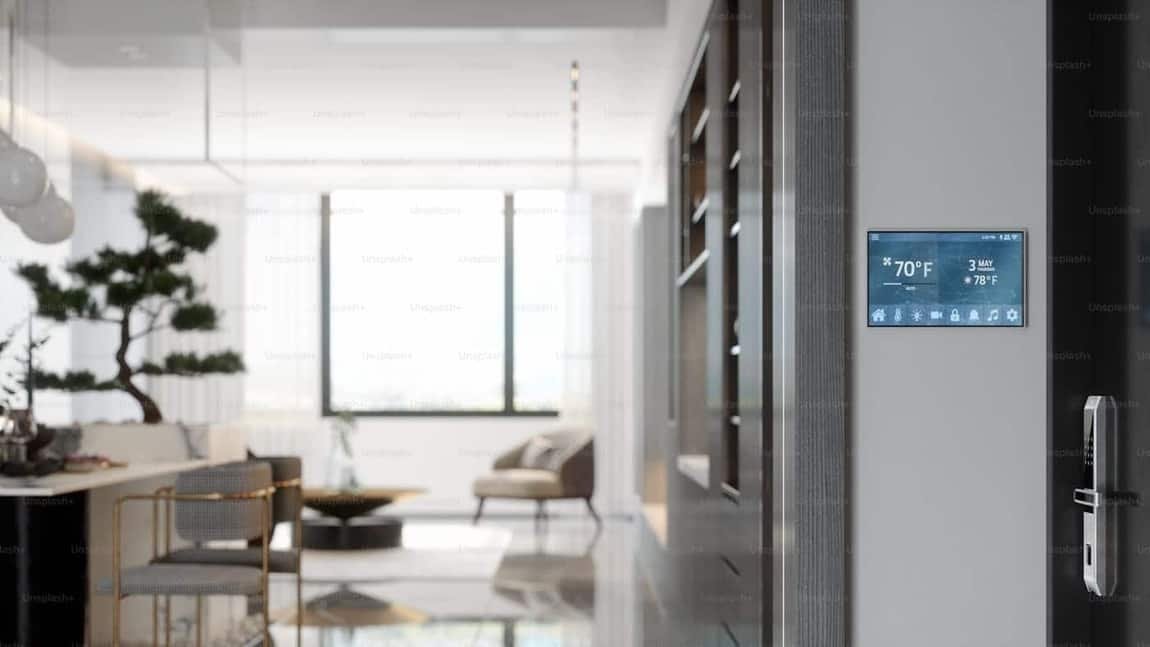
It is the indoor half of a heating and cooling system: a cabinet containing the blower, the evaporator or indoor coil, the filter, and on all-electric systems the auxiliary heat strips. It pulls air from the return ducts, passes it across the coil, and pushes it out through the supply ducts.
In a gas furnace system, the furnace itself contains the blower and performs this role. A separate air handler is what you have with a heat pump or an all-electric system.
It matters because everything depends on airflow. Insufficient airflow freezes evaporator coils, overheats heat exchangers, damages compressors and makes correctly sized equipment underperform.
Blower motor failure is the headline fault. Older systems use PSC motors, which are simple and either work or do not, usually failing along with their capacitor. Newer systems use ECM variable speed motors, which are far more efficient and modulate their speed, but they are also more complex and their control modules can fail independently of the motor itself. That distinction matters, because a failed ECM module is a much smaller repair than a failed motor and the two are easily conflated.
A dirty blower wheel is the fault nobody expects. The blower wheel has curved blades, and over years dust builds on them and changes their shape. The motor spins at full speed and moves noticeably less air, which is why a system can lose airflow without anything having obviously failed. Cleaning a blower wheel is genuinely one of the more satisfying restorations in this trade.
Coil fouling restricts airflow and reduces heat transfer at the same time. In a dusty valley with a filter that has been left too long, evaporator coils load up faster than most people expect.
Condensate problems live in the air handler too. The coil produces condensate in cooling mode, and it has to drain away. A blocked drain either trips a safety switch and shuts the system down or, on systems without one, overflows into the cabinet and whatever is beneath it.
Duct connection failures at the cabinet are common and expensive. Air escaping at the plenum connection is conditioned air you paid for, dumped into an attic or crawl space.
Schedule service anywhere from Star to Mountain Home.
Call (614) 756-0643Most of these get blamed on the furnace or the air conditioner, and the air handler is the actual cause.
Ask for an upfront price before any work starts.
Call (614) 756-0643The key diagnostic tool here is a manometer, not a screwdriver.
Static pressure testing is how airflow problems are actually found. We measure the pressure the blower is working against, and compare it with what the equipment is designed for. A system running well above its design static pressure is being throttled, and that single measurement distinguishes between a blower problem, a duct problem, a filter problem and a coil problem. Without it, everyone is guessing.
It is worth saying plainly: excessive static pressure is extremely common, and it is the underlying cause of a great many complaints that get treated as equipment faults. Restrictive high-MERV filters in systems not designed for them, undersized return ducts and crushed flexible duct are the usual contributors.
Blower wheel cleaning is often the single highest value service on an older system. Removing years of accumulated dust from the blades restores airflow that has been declining so gradually nobody noticed.
Motor and module replacement covers both PSC and ECM systems. On ECM systems we test the module separately from the motor, because they fail independently and the repair costs differ substantially.
Coil cleaning and condensate service, including clearing the drain, testing the safety float switch and checking the pan.
Cabinet and plenum sealing, because leakage at the air handler is the most concentrated leakage in the entire duct system.
Same day and next day appointments are available across the valley.
Call (614) 756-0643Knowing which you have changes what a failure means and what it costs.
| PSC motor | ECM variable speed motor | |
|---|---|---|
| How it runs | Fixed speeds, selected by tap. Full power or off | Continuously variable speed, electronically controlled |
| Efficiency | Considerably less efficient, especially at partial load | Substantially more efficient, particularly on long low speed runs |
| Comfort | Noticeable start and stop, less even distribution | Gentle ramping, quieter, more even room to room |
| Common failure | Motor windings or, more often, the run capacitor | The control module frequently fails before the motor does |
| Repair cost | Lower. Capacitors in particular are inexpensive | Higher, but a module-only failure is far cheaper than a full motor |
| Found in | Older and budget systems | Modern and higher efficiency systems |
If you have an ECM motor that has failed, ask whether the module was tested separately. Replacing an entire motor when only the control module has failed is a meaningfully more expensive repair than it needed to be.
Book a licensed Meridian technician for this job.
Call (614) 756-0643Airflow complaints are diagnosed by measurement, because visual inspection misses most of them.
Weak airflow, freezing coil, water beneath the unit, noise, or a blower that will not run.
The single most common airflow restriction and free to rule out before we arrive. See our filter replacement page for the right change schedule.
Against the equipment’s design specification, which is how the actual restriction gets identified.
You hear whether the problem is the blower, the coil, the filter or the ductwork, with the cost agreed first.
Static pressure and airflow confirmed after the repair, so the fix is proven rather than assumed.
Get this looked at before it turns into a bigger repair.
Call (614) 756-0643Two local factors load air handlers here faster than they would elsewhere.
Agricultural dust. This is a farmed valley, and fine soil particulate is a constant through the dry months. It loads filters, coats blower wheels and fouls coils. A blower wheel that might need cleaning once a decade elsewhere is a genuine service item here, and it is one of the reasons airflow degrades noticeably on valley systems over time.
Late summer wildfire smoke. Regional smoke reaches the Treasure Valley most years, and The Treasure Valley sits under temperature inversions through much of the winter, which traps carbon monoxide and fine particulates close to the ground. During a smoke episode, filters load dramatically faster than normal. A filter that would comfortably last three months can be significantly restricted within weeks, and because people often close up the house and run the system harder during smoke events, the restriction arrives at exactly the moment the system is working hardest.
There is a practical warning attached to that. Homeowners quite reasonably respond to smoke by fitting the highest MERV filter they can find. That helps air quality, but a restrictive filter in a system not designed for it drives static pressure up and can freeze coils and strain blowers. The right answer is usually a properly sized filter in a properly sized filter housing, rather than the densest filter that will physically fit the existing slot. We can tell you what your system can actually handle.
Source: Idaho DEQ regional air quality
Request a visit and we will confirm your appointment window.
Call (614) 756-0643Diagnosis first, with the repair priced and approved before it proceeds.
Talk to a technician who works on Treasure Valley homes every day.
Call (614) 756-0643Have a licensed tech diagnose it and quote the repair up front.
Call (614) 756-0643An air handler is engineered to move a specific airflow across a specific coil size, matched to the outdoor heat pump it serves. Fitting an air handler that does not match the outdoor unit’s capacity produces the same problems as a mismatched condenser and coil: reduced capacity, poor efficiency and, in some cases, warranty complications.
This is why replacing just the air handler on an otherwise healthy system needs care. The airflow it is set up to deliver, and the coil inside it, both need to suit the outdoor equipment it will be connected to. Where a straight swap is not appropriate, we say so before ordering equipment rather than after.
Schedule service anywhere from Star to Mountain Home.
Call (614) 756-0643Restriction here is the single largest driver of the problems on this page.
Storage crowding a closet air handler restricts the return air it needs to breathe.
A new hum, squeal or rattle is worth reporting before it becomes a failed motor.
The only way to catch a slow airflow decline before it causes a frozen coil or a strained blower.
A one-time fix to an undersized return or an overly restrictive filter slot outperforms repeated workarounds.
Ask for an upfront price before any work starts.
Call (614) 756-0643Air handlers in valley homes turn up in utility closets, garages, attics and basements, and the location changes both how quickly a fault can be diagnosed and how the unit ages. A closet air handler with clear access is straightforward to service. An attic unit exposed to summer heat well above the house’s interior temperature works in a harder environment and is more time consuming to reach for repair.
Garage-mounted air handlers, common in newer valley construction, sit in a space that swings between near-freezing winter mornings and very hot summer afternoons, which is a harder environment on electrical components than a conditioned utility closet. None of this is a reason to avoid a particular location during construction, since builders make that choice for other reasons, but it is useful context when comparing why two similar-aged air handlers in different homes are ageing differently.
Same day and next day appointments are available across the valley.
Call (614) 756-0643On an all-electric or heat pump system, the air handler cabinet often contains electric auxiliary heat strips that supplement the heat pump when outdoor temperatures drop low enough that the heat pump alone cannot keep up. If those strips are running constantly rather than occasionally, it usually points to the heat pump itself underperforming rather than a fault with the strips.
A heat pump losing capacity from a dirty outdoor coil, a refrigerant issue or a failing component pushes more of the heating load onto the electric strips, and strip heat is considerably more expensive to run than the heat pump’s compressor. A noticeable jump in winter electricity bills on a heat pump system is worth investigating for exactly this reason, since it is often the heat pump quietly failing to carry its share of the load rather than the strips being at fault.
Book a licensed Meridian technician for this job.
Call (614) 756-0643Both contain the blower that moves air through your ducts, but they differ in how they produce heat. A furnace burns gas and contains a heat exchanger. An air handler does not burn anything: it houses the blower, the indoor coil and the filter, and on all-electric systems it contains electric auxiliary heat strips. You typically have an air handler if your system is a heat pump or all-electric, and a furnace if you have gas heating. In a gas system, the furnace performs the air handler’s role.
The most common causes are a clogged filter, a dirty blower wheel, a fouled evaporator coil, or restrictive ductwork. The blower wheel one surprises people: dust builds up on the curved blades over years and changes their shape, so the motor spins at full speed while moving substantially less air. Nothing has failed, and nothing looks wrong, but airflow has quietly declined. Cleaning it often restores performance completely. The way to find out which cause you have is static pressure measurement.
Static pressure is the resistance the blower has to work against to push air through your filter, coil and ductwork. Every piece of equipment has a design static pressure it is rated to operate at. When the actual pressure is well above that, the system is throttled and cannot deliver its capacity no matter how good the equipment is. Measuring it is the only reliable way to distinguish a blower problem from a duct problem from a filter problem, and excessive static pressure is behind a great many complaints that get misattributed to the furnace or air conditioner.
The indoor coil produces condensate during cooling, and it has to drain away. If the condensate drain blocks, which happens through algae growth and dust, the water backs up. Systems with a safety float switch shut down, which is annoying but protects your property. Systems without one overflow into the cabinet and onto whatever is below, and if the air handler is in an attic that can mean ceiling damage. This is one of the more common causes of water damage from an HVAC system and it is entirely preventable with routine drain service.
Better filtration genuinely helps during smoke episodes, but there is a real trade-off. A dense filter in a system not designed for it drives static pressure up, which can freeze the evaporator coil, strain the blower and reduce airflow throughout the house. The best solution is usually a properly sized filter in an adequately sized filter housing, giving good filtration with enough surface area to keep pressure drop reasonable, rather than the densest filter that will physically fit the existing slot. We can measure what your system can actually handle.
Typically fifteen to twenty years, comparable to the equipment they serve. Blower motors are often replaced during that life rather than the whole cabinet. Because the air handler is usually replaced alongside the outdoor unit to keep the system matched, its life often ends up aligned with the heat pump or air conditioner it works with rather than being determined independently.
Yes, and it is one of the more overlooked causes. When airflow is restricted by a dirty blower wheel, a fouled coil or a clogged filter, the system has to run longer to deliver the same amount of heating or cooling. Restricted airflow also pushes equipment outside its designed operating conditions, which reduces efficiency further. Cleaning the blower wheel and coil frequently produces a noticeable improvement in both comfort and running cost, with no parts involved at all.
It depends heavily on whether you have a PSC or ECM motor. A PSC motor and its capacitor sit at the inexpensive end of HVAC repairs. An ECM variable speed motor costs considerably more, but if only the control module has failed rather than the motor itself, that repair is far cheaper than replacing the whole assembly, which is why testing the two separately matters before ordering parts.
Sometimes, but it needs checking rather than assuming. The air handler’s airflow and coil have to suit the capacity of the outdoor unit it connects to, so a mismatched pairing can mean reduced performance or efficiency, similar to mismatching a condenser and coil on a conventional AC system. We check compatibility before recommending a standalone air handler replacement.
A loud bang or thump at startup often points to a blower wheel that has come loose on its shaft, or ductwork flexing under a pressure change. A prolonged squeal usually indicates a bearing issue in the motor. Both are worth having checked before they progress to a full motor failure, since a slipping blower wheel can also throw off the whole assembly’s balance over time.
Most often a utility closet, a garage, an attic or a basement, depending on how the house was built and where the ductwork runs from. Attic and tight closet installations take longer to service simply because of access, which is worth knowing when comparing repair time estimates between homes.
Ask for an upfront price before any work starts.
Call (614) 756-0643We measure static pressure and find the actual restriction rather than blaming the equipment. Serving Meridian, Boise, Nampa and the surrounding valley.