Carbon monoxide safety testing
The other life safety hazard in any home with gas appliances.
Learn moreSmoke alarms expire. Most people know to change the battery and have no idea the unit itself has a service life, or that it stops being reliable once it passes it.
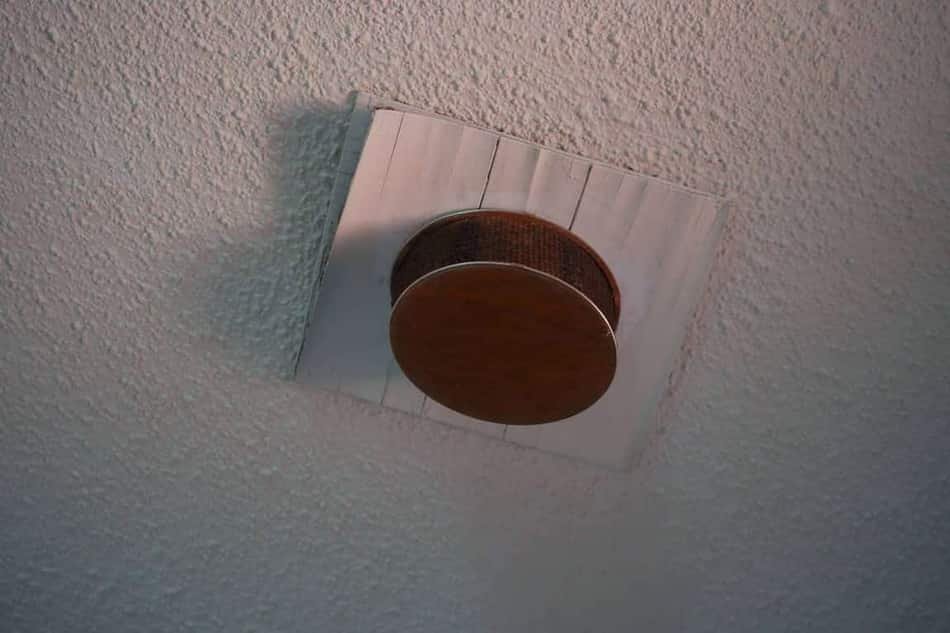
About ten years from the manufacture date, and this is the single most overlooked fact about them. The sensing element degrades over time, so an alarm past its date may look normal, chirp normally when tested, and still fail to detect a real fire.
The date is printed on the back of the unit. Take one down and look. If it predates the last decade, replace it, and while you are there check the others because they were almost certainly installed at the same time.
The test button does not test the sensor. It tests the horn and the battery circuit. A unit can pass the button test and be unable to sense smoke.
Three things determine whether smoke alarms do their job: how many you have and where, whether they are interconnected, and whether they are current.
Placement and coverage. Current requirements for new construction call for an alarm inside every sleeping room, one outside each sleeping area, and at least one on every level including basements. Older homes often have far fewer, sometimes a single alarm in a hallway.
Interconnection is the difference that matters most and gets the least attention. When alarms are interconnected, one detecting smoke sounds all of them. Consider a fire starting in a basement or garage at night: a standalone alarm at the source may sound for a long time before anyone upstairs hears it through closed doors. With interconnection, everyone is alerted the moment any unit detects. Modern hardwired alarms interconnect through a dedicated conductor, and wireless interconnected units exist for retrofit where running that conductor is impractical.
Sensing technology is worth understanding. Ionisation sensors respond faster to fast flaming fires. Photoelectric sensors respond faster to slow smouldering fires, which are the type most likely to occur at night from wiring, upholstery or bedding. Photoelectric units are also markedly less prone to nuisance alarms from cooking, which matters because the most common reason alarms end up disabled is repeated false alarms from a kitchen. Dual sensor units cover both.
Combination smoke and carbon monoxide alarms handle two hazards in one device, which is worth considering in any home with gas appliances.
Get this looked at before it turns into a bigger repair.
Call (614) 756-0643Most of these are quick to check and take five minutes to walk the house.
Request a visit and we will confirm your appointment window.
Call (614) 756-0643Straightforward work with a genuinely disproportionate safety return.
Assessing coverage. We walk the house and identify where alarms are needed against current standards: inside each sleeping room, outside each sleeping area, and on every level. We also look at placement problems, because an alarm too close to a kitchen or bathroom will nuisance alarm, and a nuisance alarm eventually becomes a disconnected alarm.
Hardwired replacement. Where alarms are already hardwired, replacing them is usually straightforward, though connector types vary by manufacturer and mixing brands on an interconnected circuit does not work reliably. We replace the full set together so the interconnection is consistent.
Adding interconnection. In homes with standalone battery alarms, wireless interconnected units are the practical retrofit. They achieve the all-sound-together behaviour without running a new conductor through finished walls and ceilings.
Hardwiring where there is none. Running power to new alarm locations, which is most practical where there is attic or crawl space access above the ceilings in question.
Combination smoke and CO units placed where they cover both hazards sensibly, particularly near sleeping areas in homes with gas appliances or an attached garage.
Hardwired alarms are fed from ordinary lighting circuits at the panel, so any panel work is a sensible moment to confirm those circuits are still sound. One point on sealed ten year battery units: they remove the annual battery change and the temptation to remove a battery for another device, which is a real cause of alarms sitting dead for months. For battery-powered installations they are generally the better choice.
Talk to a technician who works on Treasure Valley homes every day.
Call (614) 756-0643The sensor technology genuinely affects both detection and how often you get false alarms.
| Type | Responds fastest to | Best placed |
|---|---|---|
| Photoelectric | Slow smouldering fires, which are the most common overnight fire type | Near bedrooms and anywhere close to a kitchen, since it is far less prone to cooking nuisance alarms |
| Ionisation | Fast flaming fires | Away from kitchens and bathrooms. Prone to nuisance alarms from cooking steam and smoke |
| Dual sensor | Both fire types | General coverage where you want one device to handle everything |
| Combination smoke and CO | Fire plus carbon monoxide | Near sleeping areas in homes with gas appliances or an attached garage |
| Sealed ten year battery | Same as its sensor type | Battery installations, since it removes the annual change and the borrowed-battery problem |
If an alarm keeps going off when you cook, the answer is relocating it or fitting a photoelectric unit, not removing it. A disconnected alarm is the most dangerous alarm in any house, and nuisance alarms are the most common reason they end up that way.
Have a licensed tech diagnose it and quote the repair up front.
Call (614) 756-0643Usually a single short visit covering the whole house.
Take one alarm down and look at the manufacture date on the back. It tells you immediately whether this is urgent.
We identify what you have, what is missing, and where placement is causing nuisance alarms.
Hardwired replacement, wireless interconnection, or new locations, with the price agreed first.
Units fitted, interconnection verified, and combination CO units placed where they cover both hazards.
Every alarm triggered to confirm the interconnection actually sounds them all.

Schedule service anywhere from Star to Mountain Home.
Call (614) 756-0643Idaho enforces the Uniform Plumbing Code rather than the International Plumbing Code, and the electrical side runs on the National Electrical Code, both administered through the Idaho Division of Occupational and Professional Licenses. Idaho enforces the electrical code through DOPL, and building codes set alarm requirements for new construction and for significant remodels. What that means practically is that requirements have tightened over successive code cycles, so the standard your house was built to depends on when it was built.
Meridian has grown more than 260 percent from its year-2000 population and is now Idaho’s second largest city, with about 60 percent of its housing units built after 2000. There is a specific consequence for alarms. A very large number of valley homes were built within the same handful of years in the early to mid 2000s, which means their original hardwired smoke alarms were installed at the same time and reached the ten year mark at the same time. If your home is from that era and you have never replaced the alarms, they are now well beyond their service life even though they may still chirp and test normally.
Older Boise, Nampa and Caldwell housing has the opposite problem. Nampa’s median home construction year sits right around 2000, but roughly one in ten houses there predates 1950, which puts two very different plumbing eras inside the same city limits. Homes built before alarm requirements existed often have only what was added later, typically a couple of battery units in hallways, with no coverage inside bedrooms and no interconnection at all.
Two local factors are worth adding. Attached garages are near universal in valley homes, and a garage is a common fire origin point as well as a carbon monoxide source, which strengthens the case for coverage and interconnection reaching that side of the house. And during wildfire smoke season, heavy outdoor smoke occasionally triggers alarms. That is the alarm working, and the correct response is finding the source rather than disabling the unit.
Source: Meridian housing and growth data
Ask for an upfront price before any work starts.
Call (614) 756-0643This is among the least expensive electrical work available and among the highest value. Priced before we start.
Same day and next day appointments are available across the valley.
Call (614) 756-0643Coverage is driven by bedroom count and floor count, not by square footage alone.
| Home layout | Minimum coverage | Notes |
|---|---|---|
| Single story, 3 bedrooms | One inside each bedroom, one outside the sleeping area, one general area alarm | Around 4 to 5 units total is typical |
| Two story, 4 bedrooms | One inside each bedroom, one outside the sleeping area upstairs, one on the main level | Often 6 to 7 units, more if the layout has separated wings |
| Home with a finished basement | Add coverage on the basement level as well | Every level of the home needs at least one alarm regardless of use |
| Home with an attached garage | A combination smoke and CO alarm near the door from the garage into the house | Garages are both a fire origin point and a carbon monoxide source |
These are general coverage principles, not a substitute for a walkthrough of your specific layout, since closed doors, hallway length and vaulted ceilings all affect what actually works.
Book a licensed Meridian technician for this job.
Call (614) 756-0643You can, and a battery alarm is far better than no alarm at all. Where a professional installation earns its cost is interconnection and hardwiring: a hardwired, interconnected system means every alarm sounds together and none of them depends on someone remembering to change a battery. For a starter home or a rental, quality battery units are a reasonable stopgap, but they are not the equivalent of a properly interconnected hardwired system.
If you go the battery route yourself, sealed ten-year battery units remove the most common failure mode of standalone alarms, which is a dead or missing battery. Wireless interconnected battery alarms are also available and get you most of the safety benefit of hardwiring without opening any walls.
Where we recommend calling a professional regardless is any home with an attic or crawl space that makes running a hardwired conductor practical, since a properly wired and interconnected system is more reliable over the long run than any battery-based solution, however good the batteries are.
Get this looked at before it turns into a bigger repair.
Call (614) 756-0643Every ten years from the manufacture date printed on the back of the unit, not from when you installed it. This is the most commonly missed fact about smoke alarms. The sensing element degrades over time, so an alarm past its date can look completely normal, sound correctly when you press the test button, and still fail to detect an actual fire. Take one down and check the date. If it is old, the others almost certainly are too, since they were probably installed together.
Current standards call for an alarm inside every sleeping room, one outside each separate sleeping area, and at least one on every level of the home including basements. Many older homes have far less than this, sometimes just one unit in a hallway. Placement also matters for avoiding nuisance alarms: units too close to a kitchen or a bathroom will trigger on cooking smoke and shower steam, and repeated false alarms are the most common reason people end up disabling them.
Usually a low battery, and replacing the battery normally stops it. If the chirping continues with a fresh battery, many units use that same intermittent chirp as an end of life signal, telling you the unit itself has expired. Check the manufacture date on the back. It is worth noting that a chirp is quite different from a genuine alarm, which is a loud repeating pattern that is impossible to mistake for anything else.
Yes, and it is the single most valuable improvement most homes can make. When alarms are interconnected, one detecting smoke sounds every alarm in the house. Consider a fire starting in a garage or basement at night: a standalone alarm at the source may sound for a long time before anyone upstairs hears it through closed bedroom doors. Modern hardwired alarms interconnect through a dedicated conductor, and wireless interconnected units make this practical to retrofit without running new wiring through finished ceilings.
They detect fires differently. Photoelectric sensors respond faster to slow smouldering fires, which are the type most likely to start overnight from wiring, upholstery or bedding. Ionisation sensors respond faster to fast flaming fires. Photoelectric units are also considerably less prone to nuisance alarms from cooking, which matters practically because nuisance alarms are what lead to alarms being disconnected. Dual sensor units cover both types, and are a sensible default where you want one device to do everything.
If you have any fuel-burning appliance, a gas furnace, water heater, boiler, fireplace, range or dryer, or an attached garage, then yes. Carbon monoxide is a completely separate hazard from fire, and smoke alarms do not detect it. Combination smoke and CO units cover both in one device, which is convenient near sleeping areas. Note that CO alarms also expire, typically after five to ten years, so the same date-checking habit applies. More on this on our carbon monoxide page.
Do not disconnect it, because a disabled alarm is the most dangerous alarm in any house and this is exactly how it happens. There are two real solutions. Relocating the alarm further from the kitchen, while keeping it within the coverage the code requires, often resolves it entirely. Alternatively, fitting a photoelectric unit in that location helps considerably, since photoelectric sensors are markedly less prone to triggering on cooking smoke and steam than ionisation units are.
Adding or replacing battery smoke alarms generally does not require a permit. Hardwired alarm work, including running new circuits or adding interconnection, falls under the same permitted electrical work as other circuit modifications in the jurisdictions we serve. It is a small part of the overall cost and worth having on record, particularly since smoke alarm compliance is something a home inspector checks at resale.
Rental properties generally need to meet the same coverage standard as owner-occupied homes: an alarm inside every bedroom, one outside each sleeping area, and one on every level. Landlords carry a particular responsibility here, since tenants may not know to check alarm dates or test them regularly, which makes sealed ten-year battery units or hardwired interconnected systems a sensible standard for rental units.
Yes, and it is increasingly common. Smart smoke alarms can send an alert to your phone when they trigger, which matters if you are away from home or asleep in a part of the house the sound does not reach well. They can also often be included in a broader smart home or monitored security setup. This is worth discussing at installation, since it affects which units and which wiring approach make sense.
Generally no, standard coverage requirements focus on bedrooms, hallways outside sleeping areas, and each level of the home rather than every enclosed space. An attic used for storage or a walk-in closet is not typically a required location. If a space is used as living or sleeping space, though, such as a converted attic bedroom, it needs the same coverage as any other bedroom.
The hush function temporarily silences a nuisance alarm, typically from light cooking smoke, without disabling the unit’s ongoing protection. It is a much better option than removing the battery or pulling the unit down, since protection resumes automatically after a short interval rather than staying off indefinitely. If you find yourself using hush constantly, that is a sign the alarm needs to be relocated or swapped for a photoelectric unit rather than a sign to keep silencing it.
Most municipal recycling programs and some hardware stores accept old smoke alarms, and units containing a small radioactive source, an older ionization type, sometimes have specific disposal instructions from the manufacturer. It is worth checking the manufacturer’s guidance printed on the unit or their website rather than simply placing it in household trash.
For interconnected systems, yes. Interconnection relies on a signaling method between units, either a dedicated third wire on hardwired systems or a radio signal on wireless systems, and manufacturers generally design that signaling to work reliably only within their own product line. Mixing brands on what is supposed to be one interconnected system is a common reason an installation fails to sound every alarm together, even though each individual unit tests fine on its own.
For most households, yes. A sealed ten-year unit removes the two most common ways standalone alarms end up silently disabled: a dead battery nobody replaced, and a battery borrowed for a remote control or another device. Since the alarm itself is generally due for full replacement at around the same ten-year mark the battery is rated for, a sealed unit lines both up naturally rather than asking anyone to remember an annual battery swap on top of the eventual full replacement.
Request a visit and we will confirm your appointment window.
Call (614) 756-0643Take one down and look at the back. If it is more than ten years old, so are the rest. We can replace the whole set and interconnect them in one visit.