Furnace repair and maintenance
For when a repair is the better answer than replacement.
Learn moreThe most common mistake in furnace replacement is fitting the same size as the old one. That assumes the original was right, and very often it was not.
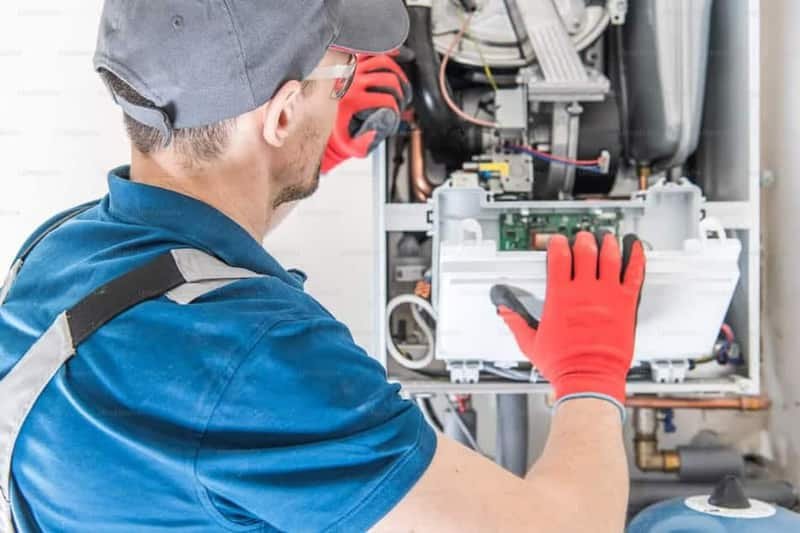
Through a load calculation, which accounts for your home’s square footage, insulation levels, window area and type, air leakage, ceiling heights, orientation and the local design temperature. It is the industry standard method and it takes real information about your specific house.
What it is not is matching the BTU rating of the furnace being removed. That approach simply inherits whatever mistake was made originally, and oversizing was extremely common in older installations.
An oversized furnace is genuinely worse than a correctly sized one. It heats the air near the thermostat quickly, shuts off, then restarts a few minutes later. That short cycling produces uneven temperatures, more wear, worse humidity control and no efficiency benefit at all.
Equipment choice gets the attention, but installation quality determines far more of the outcome. A mid-range furnace installed properly will outperform a premium unit installed badly, every time.
Sizing comes first, through a load calculation. Beyond avoiding short cycling, correct sizing is what makes a two-stage or modulating furnace worth having, because those units are designed to run long and gentle rather than hard and brief.
Ductwork is the part almost nobody thinks about, and it is frequently the actual constraint. If your existing duct system cannot move the air a new furnace needs, the new furnace will underperform in exactly the way the old one did. We measure static pressure to find out, because a system fighting excessive static pressure is throttled no matter what is bolted to it.
Venting changes with efficiency level. A high efficiency condensing furnace vents through PVC rather than metal flue, and it produces acidic condensate that needs a properly routed drain. If you are replacing a mid efficiency furnace that shared a masonry chimney with a water heater, removing it changes the venting conditions for the water heater too, and that has to be addressed rather than ignored.
High altitude setup matters here specifically. At Treasure Valley elevation, gas equipment needs the manufacturer’s high-altitude provisions applied.
Schedule service anywhere from Star to Mountain Home.
Call (614) 756-0643Replacement is a large decision. These are the situations where it is genuinely the right one.
Ask for an upfront price before any work starts.
Call (614) 756-0643The parts of the job you cannot see afterwards are the parts that determine how it performs.

Assessment and load calculation. We measure the house rather than the old furnace. That includes looking at insulation, windows, air sealing and how the existing system has actually performed, because a homeowner telling us the back bedroom has never been warm is genuine diagnostic information.
Static pressure testing on the existing ductwork. This tells us whether the duct system can support the equipment being proposed. If it cannot, you need to know that before choosing equipment, not after.
Equipment selection with the trade-offs explained. Single stage, two stage and modulating furnaces have real differences in comfort, noise and running cost, and so does efficiency level. We will explain where the money makes a difference in your house and where it does not.
Installation done properly. Correct gas connection and sizing, correct venting for the efficiency level, condensate drain routed and trapped, electrical connections to code including confirming the panel has the dedicated circuit capacity, and the plenum and duct connections sealed rather than just taped.
Commissioning. Gas pressure verified, temperature rise measured against the rating plate, airflow confirmed, safety switches tested, high-altitude provisions applied, and the thermostat configured for the equipment type. A two-stage furnace wired as single stage is a common and entirely avoidable waste.
Same day and next day appointments are available across the valley.
Call (614) 756-0643The difference is how the furnace manages output, and it affects comfort more than the efficiency rating does.
| Type | How it runs | What you notice | Best for |
|---|---|---|---|
| Single stage | Full output or off, nothing in between | Faster temperature swings, louder starts, more noticeable cycling | Budget-conscious replacement, smaller or well-zoned homes |
| Two stage | A low stage for most conditions, high stage in cold snaps | Longer gentler cycles, quieter operation, more even temperatures | Most valley homes. The best value comfort upgrade |
| Modulating | Continuously varies output to match the actual load | Very steady temperatures, quietest operation, best comfort | Larger homes, owners prioritising comfort, long-term ownership |
| Dual fuel (with heat pump) | Heat pump handles mild conditions, furnace takes over when it is cold | Lower running cost through most of the season | Homes adding or replacing AC at the same time. See heat pumps |
A two-stage or modulating furnace only delivers its benefit if it is sized correctly and the thermostat is configured to use the staging. Both are routinely got wrong, which is why commissioning matters as much as equipment choice.
Book a licensed Meridian technician for this job.
Call (614) 756-0643Replacement is usually a single day, planned in advance unless you are without heat.
We look at the house, the existing equipment, the ductwork and the venting, and measure static pressure.
You get a correctly sized recommendation with the efficiency and staging options explained, and a written price for each.
Pulled where your jurisdiction requires. Emergency no-heat replacements are prioritised.
Old unit removed and disposed of, new equipment set, gas, venting, condensate and electrical all completed properly.
Full commissioning, thermostat configured, filter access shown, and the registration and warranty details left with you.
Get this looked at before it turns into a bigger repair.
Call (614) 756-0643Treasure Valley winters routinely drop into the low twenties overnight in January, while July afternoons average near 92 degrees, so the same house has to survive hard freezes and high desert heat in the same year. That profile matters for equipment choice. This is a real heating climate but not a severe one, which is precisely the condition where a heat pump or a dual fuel system becomes genuinely attractive rather than a compromise.
Natural gas is widely available across the valley through Intermountain Gas, and gas furnaces remain the default. But if you are replacing an ageing air conditioner at the same time as the furnace, the arithmetic on a dual fuel system is worth running properly, because a heat pump handles the majority of a Treasure Valley heating season efficiently and the furnace only takes over in genuine cold.
Two local technical points affect every gas installation here. First, elevation. At valley altitude, gas equipment requires the manufacturer’s high-altitude provisions. Second, winter inversions. The Treasure Valley sits under temperature inversions through much of the winter, which traps carbon monoxide and fine particulates close to the ground. Correct venting and combustion setup matter more in an airshed that does not disperse well.
Meridian has grown more than 260 percent from its year-2000 population and is now Idaho’s second largest city, with about 60 percent of its housing units built after 2000. There is a practical consequence: a very large number of valley furnaces were installed within the same few years and are now reaching replacement age together. If your house is from the early 2000s and still has its original furnace, planning ahead beats an emergency replacement in January.
Source: Boise climate averages
Request a visit and we will confirm your appointment window.
Call (614) 756-0643Quoted in writing after the assessment. There are no scenarios where the price moves once work has started.
Talk to a technician who works on Treasure Valley homes every day.
Call (614) 756-0643Most valley homes replacing a furnace are simply replacing gas with gas, but the question comes up often enough on new gas service or all-electric homes to answer directly.
A straight electric resistance furnace is the least efficient common option and is rarely the right recommendation for a whole-house system here, though it still shows up as supplemental or emergency heat behind a heat pump. If gas is already run to the house, a modern gas furnace remains a straightforward, reliable choice. If you are weighing an all-electric build or do not currently have gas service, it is worth reading our heat pump page before defaulting to gas, since Treasure Valley winters sit in a range where heat pumps perform well.
Have a licensed tech diagnose it and quote the repair up front.
Call (614) 756-0643If you inherited the current furnace with the house, these are the tells that the last installation cut corners, and they are worth flagging before the new one goes in the same way.
Schedule service anywhere from Star to Mountain Home.
Call (614) 756-0643Equipment brand gets most of the attention when homeowners shop for a new furnace. Installation quality is what actually determines comfort, noise and running cost.
If a quote arrives within minutes of a phone call describing only the symptom, with no visit to measure the house, that is a sign the number was invented rather than calculated. It is worth treating the assessment visit itself as part of what you are evaluating, not just a formality before the sales pitch.
Ask for an upfront price before any work starts.
Call (614) 756-0643Installing heating into a brand new home and replacing an aging unit in an existing one share the same equipment but differ in what constrains the project.
In new construction, the load calculation happens at the design stage alongside the ductwork layout, so equipment, ducts and the building envelope are all sized together. There is no existing system to compare against and no compromises forced by ducts that were installed for different equipment decades earlier.
In a replacement, the ductwork is usually fixed and was very possibly sized for a furnace installed under different assumptions. This is exactly why static pressure testing on the existing ducts matters so much on replacement projects specifically: the new furnace has to work within constraints the original installer set, unless duct modification becomes part of the scope.
Either way, the underlying principle is the same: size to the building’s actual heating load, not to a rule of thumb, and confirm the distribution system can move the air the equipment is designed to deliver.
Same day and next day appointments are available across the valley.
Call (614) 756-0643It depends on the capacity your load calculation calls for, the efficiency level, whether you choose single stage, two stage or modulating, and what the installation itself requires. Venting changes, duct modifications and access all move the number. We quote in writing after assessing the house, and the price does not change afterwards. What we will not do is give a figure over the phone, because that number would be invented.
The answer comes from a load calculation, which accounts for square footage, insulation, window area and type, air leakage, ceiling heights and the local design temperature. What it does not come from is the BTU rating of the furnace being removed, because that just inherits whatever sizing error was made originally. Oversizing was very common in older installations, and an oversized furnace short cycles, heats unevenly and wears faster without saving anything.
In a climate with a real heating season like this one, usually yes, though the payback depends on your gas usage and how long you plan to stay. What is worth understanding is that high efficiency condensing furnaces change the installation: they vent through PVC rather than a metal flue and produce acidic condensate that needs a properly routed drain. If your current furnace shares a masonry chimney with the water heater, removing it changes the venting for the water heater too, which has to be addressed. Those factors belong in the comparison.
A straightforward replacement in an accessible utility room is typically a single day. It takes longer if the venting has to change, if ductwork needs modification, if access is difficult, or if you are switching system type. We will tell you what to expect before scheduling, and if you are without heat we prioritise getting you back up.
If both are near the end of their life, yes. The furnace blower is what moves air for the cooling system as well as the heating system, so the two pieces of equipment work as a matched pair. Replacing one and leaving the other means the new equipment is limited by the old, and you pay mobilisation and labour twice. It also opens up dual fuel as an option, which is worth considering in this climate.
Yes, and it is one of the more important things we do. We measure static pressure across the existing duct system, which tells us whether the ducts can actually move the air the new equipment needs. This matters because a system fighting excessive static pressure is throttled no matter how good the furnace bolted to it is. If the ducts are the real constraint, you deserve to know that before choosing equipment rather than after wondering why the new furnace performs like the old one.
Yes, where the jurisdiction requires it, and in the cities we serve furnace replacement is generally permitted work. Permits mean the installation gets inspected against code, which protects you. Fees are set by the city or county and passed through at cost.
The difference is how the burner manages output rather than a difference in fuel or efficiency category by itself. A single stage furnace is either full on or off. A two stage furnace has a low setting it uses most of the time and a high setting for genuinely cold conditions. A modulating furnace continuously adjusts its output to match the load. Two stage and modulating units run longer, gentler cycles that produce steadier temperatures and quieter operation, but the benefit only shows up if the furnace is sized correctly and the thermostat is configured for staged operation.
Most gas furnaces provide somewhere in the range of fifteen to twenty years of service, with variation depending on maintenance history, installation quality and how hard the system is worked. A furnace that receives annual maintenance and was installed with correct sizing and airflow tends to last toward the higher end of that range. One that was oversized or poorly installed tends to develop faults earlier, regardless of the equipment’s own quality.
Yes, and it is worth evaluating rather than assuming a like-for-like gas furnace is the only option. A heat pump can replace a furnace entirely with electric auxiliary heat for the coldest snaps, or it can be added alongside the existing furnace as a dual fuel system, which is often the stronger choice for a home that already has gas service. See our heat pump services page for how that decision plays out in this climate.
No, and this is one of the more persistent misconceptions in heating. An oversized furnace reaches the thermostat’s setpoint quickly, shuts off, and then cycles on again a short time later once the house cools near the thermostat while the rest of the rooms are still catching up. That short cycling produces uneven temperatures, more wear on components, worse humidity control in the shoulder seasons, and no actual comfort benefit. Correct sizing from a load calculation outperforms oversizing in every practical respect.
Ask for an upfront price before any work starts.
Call (614) 756-0643We size on a load calculation, check whether your ductwork can support the equipment, and commission it properly. Serving Meridian, Boise, Nampa and the wider valley.