Water heater repair and installation
Tank units, gas and electric, when tankless is not the right fit for the house.
Learn moreEndless hot water in a fraction of the space, with a service life roughly double that of a tank. It only works out that way if the gas line is sized properly and the unit is descaled for our water.
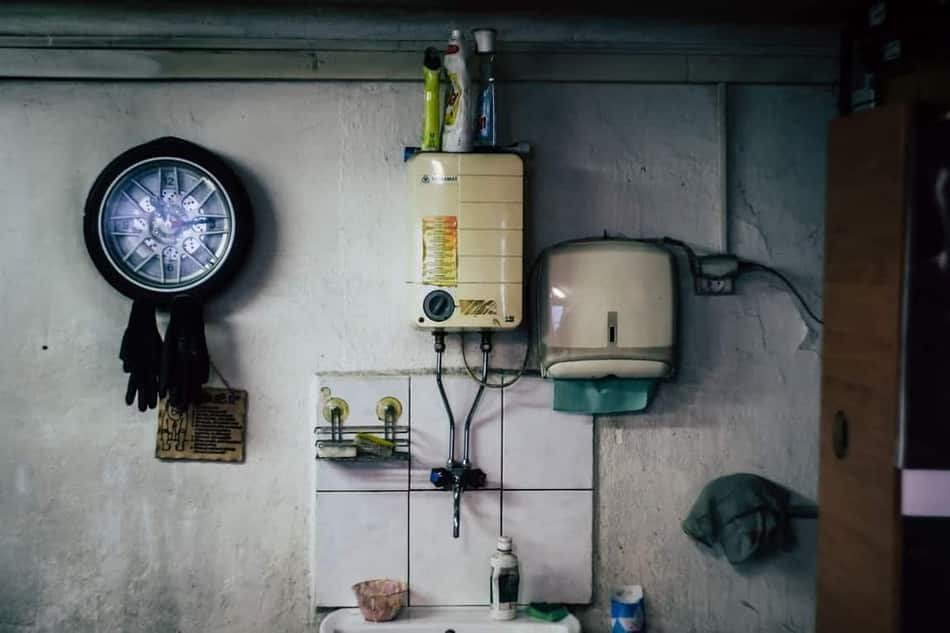
Yes, with two conditions that get skipped more often than they get met. Tankless units routinely last 20 years or more against 8 to 12 for a tank, they never run out of hot water, and they take up a fraction of the wall space. In a market where hard water kills tanks early, a serviceable unit with replaceable parts is a genuinely good fit.
The two conditions are gas line capacity and annual descaling. A whole-home gas tankless unit can demand up to around 199,000 BTU, several times what the tank it replaces used. Many Treasure Valley homes have a gas line that physically cannot deliver that. And with local water at roughly 7 to 8 grains per gallon and higher in parts of the valley, scale builds inside the heat exchanger and has to be flushed out yearly.
A tankless unit heats water as it flows, so there is no stored volume sitting at temperature waiting to be used. That removes standby loss, removes the risk of a 50 gallon tank failure flooding your garage, and removes the hard ceiling on how much hot water is available.
What it does not do is deliver unlimited hot water at any flow rate. A tankless unit is rated by how many degrees it can raise the temperature at a given flow. That is the specification that matters, and it is where sizing goes wrong in Idaho.
Here is why. Groundwater entering your house is markedly colder in January than in July. A unit sized on a mild-weather assumption looks fine in summer and then disappoints in winter, when it has to raise incoming water through a much larger temperature rise and has to cut flow to keep up. That is the source of almost every “my tankless cannot run two showers” complaint we get called about, and it is a sizing problem rather than a fault.
We size on the winter case. If the unit satisfies your household in January it will be comfortable the rest of the year.
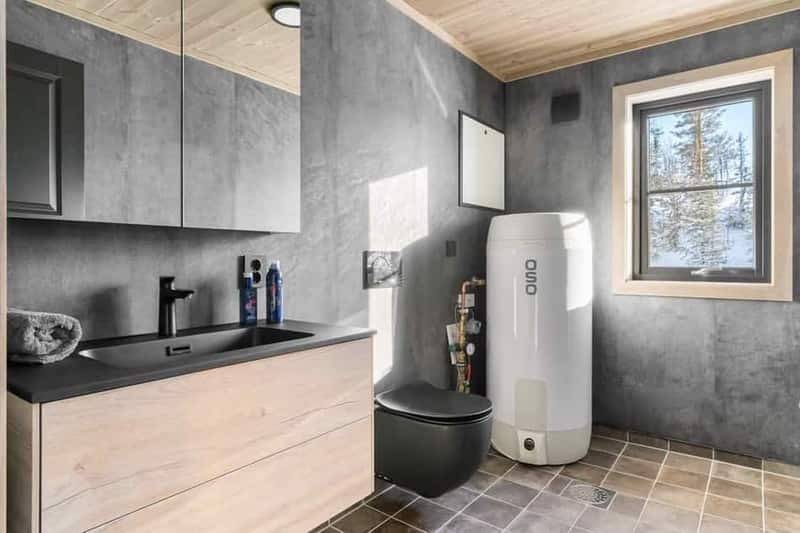
Ask for an upfront price before any work starts.
Call (614) 756-0643Tankless units usually tell you something is wrong through error codes and flow behaviour rather than leaks.
Same day and next day appointments are available across the valley.
Call (614) 756-0643A tankless installation is a bigger job than swapping a tank, and the parts that get cut are the parts that cost you later.
Four things have to be right. Gas supply comes first. We calculate the demand of every gas appliance in the house and confirm the line and meter can carry the load. If they cannot, the line gets upsized. Running a 199,000 BTU appliance on a line sized for a 40,000 BTU tank produces exactly the underperformance people blame on the unit.
Venting is second. Condensing tankless units produce acidic condensate and need the correct category of vent material, properly sloped, with a condensate drain that terminates legally. This is not the same vent the old tank used.
Isolation valves are third, and they are the detail that separates a good installation from a cheap one. A service valve kit costs very little at installation time and makes every future descaling straightforward. Without them, descaling means cutting into pipe.
Water treatment is fourth. In water at local hardness levels, pairing a tankless unit with a water softener materially extends the interval between descalings and the life of the exchanger.
Book a licensed Meridian technician for this job.
Call (614) 756-0643Tankless is the better long-term answer for many homes here, but not for every home and not at every budget.
| Factor | Tank water heater | Tankless water heater |
|---|---|---|
| Typical service life | 8 to 12 years, shorter in hard water | 20 years or more with annual descaling |
| Hot water capacity | Fixed. When the tank is empty you wait | Continuous, limited by flow rate rather than volume |
| Space required | A footprint of roughly two feet square plus clearance | Wall mounted, roughly the size of a carry-on suitcase |
| Install complexity | Straightforward like-for-like swap in most cases | May require gas line upsizing, new venting and a condensate drain |
| Hard water maintenance | Annual flush, anode rod every few years | Annual descaling through isolation valves, non-negotiable here |
| Failure mode | Tank ruptures and floods the space | Component failure, repairable, no stored water to release |
| Winter performance | Recovery slows but capacity is unchanged | Flow rate drops as inlet temperature falls, so sizing must account for it |
If your gas service cannot support a whole-home tankless unit and upsizing is impractical, a high efficiency tank or a heat pump water heater is often the more sensible recommendation. We will say so.
Get this looked at before it turns into a bigger repair.
Call (614) 756-0643The assessment matters more here than on almost any other plumbing job.
We look at your gas meter and line size, the venting route, the mounting location, the condensate path and your household’s real peak demand.
You get a recommended unit sized on winter inlet temperature, and a price that includes any gas or venting work needed to support it.
Mounting, gas, water, venting, condensate and isolation valves, with permits pulled where your city requires them.
Gas pressure checked at full fire, temperature verified at the fixtures, error-free operation confirmed.
We show you the isolation valves, explain descaling, and set the expectation for the annual interval.
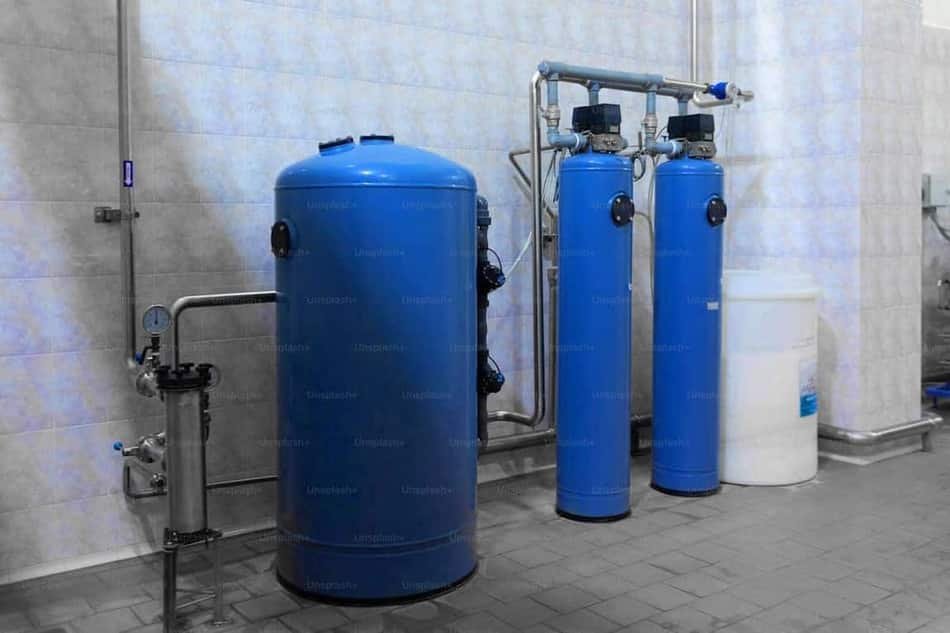
Request a visit and we will confirm your appointment window.
Call (614) 756-0643City of Meridian water averages about 7 grains per gallon, with independent testing putting parts of the system closer to 8.4 grains per gallon. Across the Treasure Valley hardness runs roughly 6 to 15 grains per gallon, and anything above 8 is considered hard water by the standard scale.
Inside a tankless unit, water passes through a narrow heat exchanger at high temperature. That is precisely the condition under which dissolved calcium and magnesium come out of solution and plate onto the metal. Scale in a heat exchanger does two things: it insulates the water from the burner so the unit works harder for the same output, and it restricts the passage so flow drops.
The fix is simple and cheap if it is done on schedule. A descaling service circulates a mild acid solution through the exchanger and dissolves the deposits. Done annually, a tankless unit here will run its full expected life. Skipped for five years, you are looking at a heat exchanger replacement, which is the most expensive part of the appliance.
This is also the strongest practical argument for a softener in this valley. Softened water dramatically slows scale formation, which protects the tankless unit, the dishwasher, the washing machine and every fixture at the same time. Pairing it with sediment filtration ahead of the softener also keeps grit out of the tankless unit’s inlet screen.
Source: Idaho water hardness by city
Talk to a technician who works on Treasure Valley homes every day.
Call (614) 756-0643A tankless installation has more variables than a tank swap, which is exactly why we quote after seeing the space rather than over the phone.
Have a licensed tech diagnose it and quote the repair up front.
Call (614) 756-0643Manufacturers compete mostly on three specifications that matter for an Idaho installation: the maximum temperature rise at a given flow, the minimum activation flow, and whether the unit is condensing or non-condensing.
Condensing units extract extra heat from the exhaust, run more efficiently, and need a plastic vent and a condensate drain. Non-condensing units are simpler to vent but run less efficiently and need a metal vent rated for higher exhaust temperatures. Both are legitimate choices; the right one depends on where the unit sits and what the existing venting route can support.
Schedule service anywhere from Star to Mountain Home.
Call (614) 756-0643Ask for an upfront price before any work starts.
Call (614) 756-0643A tankless quote that skips the gas load calculation is the single biggest red flag in this trade. Ask directly whether the installer has calculated the total simultaneous BTU demand of every gas appliance in your home, and whether the existing line and meter can carry it. If the answer is vague, the risk of an underperforming installation is high.
Ask what temperature rise the recommended unit was sized on, and confirm it reflects winter groundwater temperature rather than a summer average. Also ask whether isolation valves are included as standard, since without them every future descaling means cutting into pipe rather than a routine service visit.
Same day and next day appointments are available across the valley.
Call (614) 756-0643The gas line is usually the biggest variable. If the existing supply and meter can already carry a whole-home tankless unit’s peak demand, the installation is comparable in scope to a tank swap with the addition of proper venting. If the line needs upsizing, that is a separate piece of work with its own labor and material cost, and it can range from a short run near the meter to trenching a new supply across the property.
Venting is the second variable. Condensing units need their own vent category and a legal condensate termination, which is straightforward on some homes and involves a longer, more complex route on others depending on where the unit sits relative to an exterior wall or roof penetration.
Finally, whether you are also adding a water softener at the same visit changes the math in your favor rather than against it, because combining the two jobs into one visit is more efficient than scheduling them separately later.
Book a licensed Meridian technician for this job.
Call (614) 756-0643Once a year is the standard interval for water at local hardness levels, and that is what we recommend across the Treasure Valley. If the home has a water softener you can often stretch to eighteen months or two years. If the unit has never been descaled and is several years old, the first service will take longer and may not restore full performance, which is why the schedule matters.
A properly sized whole-home unit will, but that depends on the temperature rise it has to deliver. In January, incoming groundwater is much colder than in July, so the same unit produces less hot water flow. This is why we size on winter conditions. A unit sized on summer performance will disappoint every winter, and that is a sizing failure rather than a defect.
Often, yes. A whole-home gas tankless unit can call for up to around 199,000 BTU, which is several times the demand of the tank it replaces. We calculate the load of every gas appliance in the house and confirm the existing line and meter can carry it. If they cannot, the line is upsized as part of the job. Running one on an undersized line is the most common cause of poor tankless performance.
Twenty years or more is a realistic expectation with annual descaling, against 8 to 12 years for a conventional tank. The important difference is that most tankless components are replaceable, so a failure is usually a repair rather than a complete replacement. A tank that leaks from the shell is finished.
It can be, provided you commit to the maintenance or install a softener. Hard water is hard on every water heating appliance, including tanks, where it causes sediment buildup and shortens life with no way to reverse it. The advantage of tankless is that scale can be flushed out and the heat exchanger restored. The disadvantage is that if you ignore it, the repair is expensive. Softening the water largely removes the trade-off.
Outdoor rated models exist and they simplify venting considerably. They do need freeze protection, and that matters here, because Treasure Valley winters regularly drop into the low twenties overnight. Outdoor units have built-in freeze protection that depends on electrical power, so a long winter outage is a genuine risk to consider. For most Idaho homes we lean toward an indoor installation.
Condensing units are more efficient and generally cost more to buy, but need a plastic vent and a condensate drain. Non-condensing units are simpler to vent but run less efficiently. The better choice usually comes down to what venting route is available and what it would cost to run it, rather than a blanket preference for one technology.
A gradual decline almost always means scale accumulating in the heat exchanger, which is exactly why the annual descaling interval exists. A sudden change is more likely a clogged inlet filter, a venting obstruction, or a fault the unit is reporting through an error code. Check the display for a code before calling, since it usually points straight to the cause.
We would not recommend it. Beyond the licensing requirement for gas and water connections in Idaho, the sizing calculation, venting category and gas line capacity all have to be right at the same time, and getting any one of them wrong is what produces the underperformance people mistakenly blame on the equipment.
Generally yes, because there is no standby loss from keeping a full tank hot around the clock, but the savings are modest compared to the upfront cost difference. The bigger financial case for tankless in this valley is the much longer service life and the fact that most failures are repairable rather than requiring full replacement.
Often, yes, and this is one of the more common reasons larger households switch. A single correctly sized whole-home unit can replace two tanks, freeing the space both occupied. Whether one unit is sufficient depends on your simultaneous peak demand across the whole house, which is exactly what the winter-based sizing calculation is meant to confirm before you commit.
There is no single answer, because it depends on how many fixtures might run at once during your household’s peak moment, typically mornings, and on winter inlet temperature. A family that showers sequentially needs less capacity than one running two showers and a dishwasher simultaneously. We size on your actual pattern rather than a generic household size chart.
With isolation valves fitted, a confident homeowner can descale a tankless unit with a pump and a mild solution purchased for the purpose. The value in a professional visit is that it doubles as an inspection of the venting, the gas connection and the unit’s error history, catching small issues before they become failures.
No, standard tankless units need electricity to operate their ignition and control systems, even the gas-fired ones, so a power outage stops hot water production just as it would with an electric tank. This is worth factoring in if you are considering a backup generator alongside a tankless installation.
Manufacturer warranties on the heat exchanger commonly run considerably longer than on a conventional tank, reflecting the expected service life difference, though specific terms vary by brand and model and often require proof of the annual descaling to remain valid.
Codes vary by manufacturer, but the common families are ignition failure, flame loss, exhaust or intake blockage, overheat, and flow sensor faults. Note the exact code from the display before you call. It usually tells us whether this is a maintenance issue such as scale, a venting problem, or a gas supply problem, and it means we arrive with the right parts.
Same day and next day appointments are available across the valley.
Call (614) 756-0643We will look at your gas line, your venting route and your real hot water demand, then tell you honestly whether tankless is the right call for your home.