Heat pump services
Mini splits are heat pumps, so the same technology and diagnostics apply.
Learn moreFor the room that is always too hot, the garage you want to use year round, or the addition nobody ran ducts to, a mini split solves the problem without touching the rest of the house.
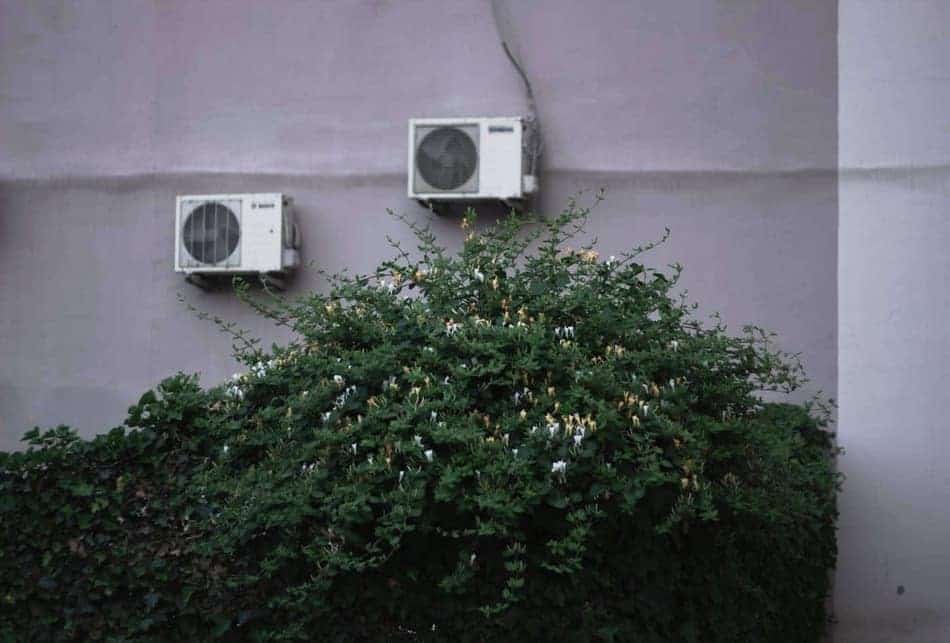
A mini split is a heat pump split into two parts: a small outdoor condenser and one or more indoor units, connected by a slim line set through a three inch wall penetration. There is no ductwork, which is the entire point.
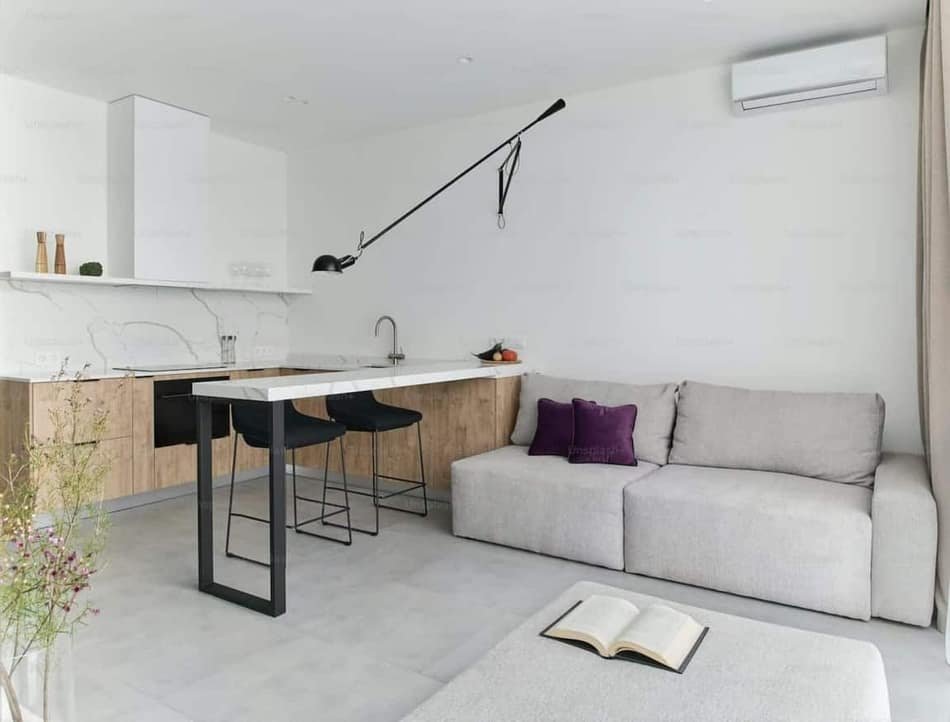
It makes sense whenever running ducts is impractical or disproportionate: garages and shops, additions and converted spaces, a bonus room over the garage that has never been comfortable, a single upstairs bedroom that runs hot, and older homes with no ductwork at all.
Because they are heat pumps, they heat as well as cool. In a garage or shop that is often the more valuable half.
The strongest case for a mini split is a space your existing system was never going to serve well.
Garages and workshops are the most common installation we do. A garage is usually outside the conditioned envelope entirely, and extending ductwork into it is both impractical and often not permitted. A mini split makes a garage usable as a workshop, gym or office through both a valley summer and a valley winter.
Bonus rooms over garages are the classic problem space in valley subdivisions. They sit above an unconditioned garage, often with a large roof area above and inadequate duct runs, and they are reliably too hot in summer and too cold in winter. Adding a mini split solves it directly, without rebalancing the whole house to fix one room.
Additions and conversions frequently have no practical duct path from the existing system, and even where one exists, adding load to a system already sized for the original house tends to degrade comfort everywhere.
Individual problem rooms, particularly a single upstairs bedroom that runs hot, are worth considering when the alternative is duct modification through finished ceilings.
What a mini split is generally not is a whole-house replacement for a working ducted system in a home that already has good ductwork. It can be done with a multi zone system, but where ducts exist and perform, a conventional system is usually the better value.
Request a visit and we will confirm your appointment window.
Call (614) 756-0643If you recognise one of these, ductless is probably worth a conversation.
Talk to a technician who works on Treasure Valley homes every day.
Call (614) 756-0643Installation is far less invasive than ducted work, but the details still determine whether it performs.
Sizing per zone. Each indoor unit is sized for the space it serves, and oversizing here has the same consequences as anywhere else: short cycling, poor temperature control and, on a mini split, loss of the variable speed operation that makes them efficient in the first place. Mini splits are at their best running continuously at low output.
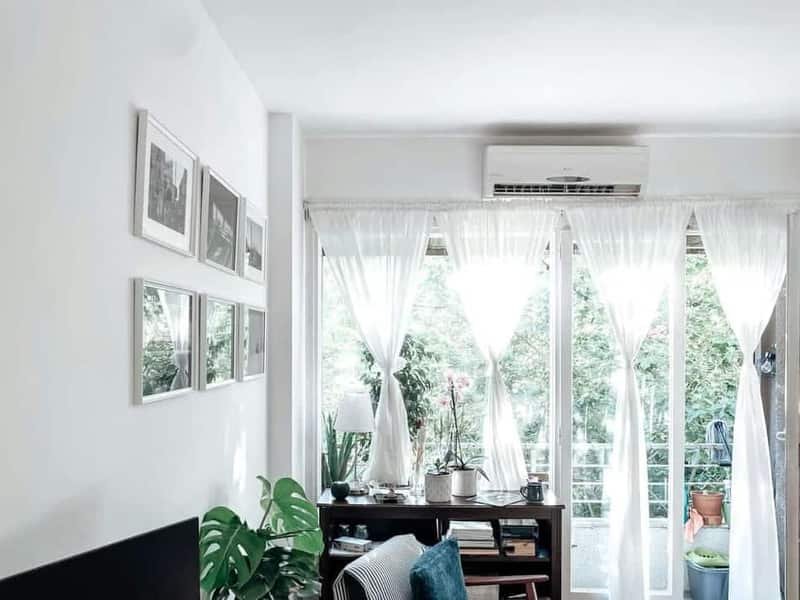
Indoor unit placement. Wall mounted high on an interior wall is standard, but ceiling cassettes, floor mounted units and slim ducted units all exist for situations where a wall unit will not work. Placement affects air distribution, so it is worth getting right rather than defaulting to whichever wall is easiest.
The line set and penetration. Refrigerant lines, condensate drain and control wiring run together through a small wall penetration, which is sealed and usually covered with a line hide on the exterior for a tidy finish. Condensate has to drain somewhere sensible, and on a wall unit that is by gravity, which constrains placement.
Proper commissioning. Line sets are evacuated to a deep vacuum before the refrigerant is released, exactly as with a conventional system. This is skipped surprisingly often on mini split installations, particularly by installers treating them as a plug-in appliance, and it causes compressor damage over time.
Winter setup. In this climate, an outdoor unit that will run in heating mode through the winter needs to be mounted clear of snow accumulation, with attention to how defrost condensate drains away rather than freezing at the base.
Have a licensed tech diagnose it and quote the repair up front.
Call (614) 756-0643For a problem room or a new space, these are usually the two realistic options.
| Consideration | Ductless mini split | Extending ducted system |
|---|---|---|
| Installation disruption | Minimal. A three inch wall penetration and a line set | Significant if it means opening ceilings or walls to run duct |
| Effect on the rest of the house | None. It is an independent system | Adds load to a system sized for the original house, often degrading comfort elsewhere |
| Control | Independent thermostat per zone | Shares the house thermostat unless zoning is added |
| Efficiency | Very high. No duct losses at all | Duct losses in unconditioned spaces can be substantial |
| Appearance | Visible indoor unit and exterior line hide | Invisible once finished, just a vent |
| Serving a garage or shop | Straightforward and the standard solution | Usually impractical and often not permitted |
| Whole house from scratch | Possible with multi zone, but costly at scale | Better value where ductwork already exists and performs |
The honest trade-off is appearance. A wall mounted indoor unit is visible in the room. Ceiling cassettes and slim ducted units address that in situations where it matters, at additional cost.
Schedule service anywhere from Star to Mountain Home.
Call (614) 756-0643Most single zone installations are completed in a day.
A garage, a bonus room, an addition, or a bedroom that is never comfortable. The space defines the system.
We look at the room, the exterior wall, where the outdoor unit can sit, the condensate path and the electrical supply.
Per zone sizing, unit style options, and a price covering the electrical work as well as the equipment.
Indoor unit mounted, penetration made and sealed, line set run and hidden, outdoor unit set, electrical connected.
Line set evacuated properly, system charged and verified, controls demonstrated.
Ask for an upfront price before any work starts.
Call (614) 756-0643Two characteristics of valley housing make ductless unusually useful here.
Garages and shops. This valley has a strong culture of using garages and outbuildings as workshops, gyms and home offices, particularly across Kuna, Star, Middleton and the rural fringe. Those spaces need both cooling in summer and heating in winter, and a mini split is the standard answer because it does both from one small system. Treasure Valley winters routinely drop into the low twenties overnight in January, while July afternoons average near 92 degrees, so the same house has to survive hard freezes and high desert heat in the same year. A garage without conditioning is genuinely unusable at both ends of that range.
Bonus rooms over garages. Meridian has grown more than 260 percent from its year-2000 population and is now Idaho’s second largest city, with about 60 percent of its housing units built after 2000. A great many of those homes have a bonus room above the garage, and it is reliably the least comfortable room in the house: an unconditioned garage below, a large roof area above, and duct runs at the far end of the system. Rebalancing the whole house to fix one room rarely works well. A mini split fixes it directly.
There is also the older Boise housing with hydronic heating and no ductwork at all. Those homes have no duct system to add cooling to, and a multi zone ductless system is usually the most practical route to air conditioning without installing ducts throughout a finished period home.
Source: Boise climate averages

Same day and next day appointments are available across the valley.
Call (614) 756-0643Quoted after seeing the space, since placement and electrical supply drive a lot of the variation.
Book a licensed Meridian technician for this job.
Call (614) 756-0643| Situation | Single zone | Multi zone |
|---|---|---|
| One garage or shop | The standard, most economical choice | Rarely needed unless the building has separate rooms |
| One problem bedroom | Straightforward and cost effective | Overkill for a single room |
| Whole home with no ductwork | Not practical on its own | The usual approach, one indoor unit per room or zone |
| Addition plus an existing problem room | Two separate single zone systems is often simpler to service | One outdoor unit serving both, if they are close together |
| Budget priority | Lower cost per zone conditioned | Higher upfront cost, but one outdoor unit instead of several |
As a rule, match the system to the problem rather than defaulting to the biggest option. A single zone system that solves one room well is often the better choice over a multi zone system asked to do too much.
Get this looked at before it turns into a bigger repair.
Call (614) 756-0643Request a visit and we will confirm your appointment window.
Call (614) 756-0643Unlike a conventional split system where refrigerant joints are brazed, mini split line sets commonly connect using flare fittings, mechanical connections torqued to a specific spec rather than soldered. A flare fitting that is under-torqued, over-torqued or made on a line that was not cut and deburred properly is a slow leak waiting to happen.
This is one of the more common places we find leaks on mini splits that were installed by someone treating the job as a quick plug-and-play appliance rather than a refrigeration system. Torquing flare connections to the manufacturer’s specification, and checking them with a proper leak detector rather than by feel, is a basic step that is worth confirming was actually done.
Talk to a technician who works on Treasure Valley homes every day.
Call (614) 756-0643Garages and shops are the space where sizing a mini split purely off square footage goes wrong most often. An uninsulated or poorly insulated garage has a far higher heat loss and heat gain per square foot than a finished room, so a unit sized for the floor area alone will struggle on the hottest and coldest days. This is why we ask about insulation, garage door type and typical use of the space before sizing equipment.
Bonus rooms over garages have the opposite issue in a way: they are finished space, but they usually sit above an unconditioned garage and below a large uninsulated or under-insulated roof area, so their real heat load is higher than the square footage alone would suggest for a normal bedroom. Treating them like any other room and undersizing accordingly is a common mistake we see corrected by mini split installations that account for the actual conditions rather than the floor plan.
Have a licensed tech diagnose it and quote the repair up front.
Call (614) 756-0643Most mini splits come with a handheld remote as standard, and many current models also offer Wi-Fi control through a manufacturer app, letting you adjust a garage or bonus room system from inside the house or before you get home. Multi zone systems typically let each indoor unit run on its own schedule independently of the others, which is one of the underrated advantages of ductless over a single house thermostat controlling every room the same way.
Some homeowners prefer a wall-mounted thermostat over a handheld remote for a main living space, and that option exists on many systems as an add-on. It is worth mentioning what you want during the assessment, since not every indoor unit model supports every control option.
Schedule service anywhere from Star to Mountain Home.
Call (614) 756-0643Yes. A mini split is a heat pump, so it heats and cools using the same equipment simply by reversing the refrigerant flow. In garages, shops and bonus rooms the heating side is often the more valuable half, because those spaces are typically the coldest in the house in winter. Modern mini splits maintain useful heating capacity well below freezing, which suits Treasure Valley winters where overnight lows typically sit in the twenties.
It depends mainly on the number of zones, the capacity each space needs, the style of indoor unit, and the electrical work involved. A single zone wall mounted system in a garage is the most economical configuration. Multi zone systems with several indoor units cost more, as do ceiling cassettes and slim ducted units where visible wall units are not acceptable. Most systems need a dedicated electrical circuit, and whether your panel can accommodate that affects the price. We quote after seeing the space.
A multi zone system can, with indoor units in each area you want conditioned. Whether it should is a different question. If your home already has ductwork that performs reasonably well, a conventional ducted system is usually better value at whole-house scale. Ductless comes into its own where there is no ductwork at all, such as older homes with hydronic heating, or where running ducts would be seriously disruptive. For a single problem room or a garage, ductless is almost always the right answer.
They are the standard solution, and it is the most common installation we do. A garage is typically outside the home’s conditioned envelope, and extending ductwork into it is impractical and often not permitted. A mini split provides both heating and cooling as an independent system with its own thermostat. One thing worth flagging: insulation matters enormously in a garage. An uninsulated garage door and walls will make any system work far harder than it needs to, so it is worth addressing the envelope before sizing equipment.
Indoor units are very quiet, generally quieter than a ducted system’s air movement, because there is no duct noise and the fan runs at low speed most of the time. Outdoor units are also quieter than a conventional condenser, though they are not silent, so placement relative to bedroom windows and neighbouring properties is worth thinking about. The variable speed operation helps considerably, since the system spends most of its time running gently rather than starting and stopping at full output.
Yes, and modern units far better than older ones. Cold climate models maintain useful heating capacity well below freezing, which covers the great majority of Treasure Valley winter conditions where overnight lows typically sit in the twenties and rarely drop below ten degrees. Capacity does decline as it gets colder, so in a space with high heat loss such as a poorly insulated shop, sizing needs to account for the coldest conditions you actually want to use the space in. Mounting the outdoor unit clear of snow, with defrost condensate able to drain away, matters here too.
Comparable to conventional heat pumps, typically in the region of fifteen to twenty years with regular maintenance. The maintenance that matters most is keeping the indoor unit filters and the blower wheel clean, and keeping the outdoor coil clear. Indoor units on mini splits are easy to neglect because they are quiet and out of the way, and a fouled blower wheel reduces both airflow and efficiency noticeably.
Less than a ducted system in some respects, but it should not be ignored. The indoor unit filters should be rinsed regularly, more often if the room is dusty or the unit runs constantly, and the outdoor coil benefits from an annual check for debris and buildup. Because the filters are washable and easy to reach, homeowners often handle that part themselves between professional visits.
The mounting and line set routing are within reach of a capable DIYer, but the refrigerant work is not something to attempt without EPA certification, and it is illegal to handle refrigerant without it. Charging, evacuating the line set to a proper vacuum and verifying the charge by measurement all require training and equipment most homeowners do not have, and getting it wrong shortens the compressor’s life significantly.
Typically yes for the electrical circuit, since most mini splits need a dedicated circuit run to a panel. Requirements are set by your city or county, and we pull permits where they are required as part of the installation rather than leaving that to you.
Mini splits connect their line sets with flare fittings rather than brazed joints, and a flare connection that was not torqued correctly during installation is one of the more common leak points on these systems. Unlike a slow coil leak, a flare fitting leak is often findable and repairable without replacing any major component, which is one advantage of diagnosing it properly rather than assuming the worst.
Talk to a technician who works on Treasure Valley homes every day.
Call (614) 756-0643Ductless solves it without touching the rest of the house. Garages, shops, additions and bonus rooms across Meridian, Eagle, Star, Kuna and the wider valley.