AC repair and maintenance
For when repair is the better answer than replacement.
Learn moreA bigger air conditioner does not cool better. It cools faster, shuts off sooner and leaves the house clammy and uneven. Sizing correctly is most of the job.
Whatever a load calculation says, based on your square footage, insulation, window area and orientation, air leakage, ceiling heights and the local design temperature. Not the size of the unit being removed, and not a rule of thumb per square foot.
Oversizing is the most common and most damaging mistake. An oversized air conditioner cools the air quickly, satisfies the thermostat and shuts off before it has run long enough to remove humidity or to even out temperatures between rooms. You get short blasts of cold air, uneven rooms and more wear from constant starting and stopping.
Undersizing is rarer and more obvious: the system runs continuously and never quite reaches setpoint on the hottest afternoons.
Equipment gets the attention and installation quality determines the outcome. Three things matter more than which brand goes on the pad.
Correct sizing. Through a load calculation, for the reasons above.
Ductwork capacity. This is the constraint people discover after the fact. Your air conditioner can only move as much air as the duct system allows, and if static pressure is too high the system is throttled no matter what its rating says. We measure static pressure before recommending equipment, because finding out afterwards means paying for capacity you cannot use. In older homes and in fast-built newer ones, duct undersizing is common enough that we check as a matter of course.
Matching indoor and outdoor. An air conditioner is a pair: the outdoor condenser and the indoor evaporator coil are engineered to work together. Fitting a new condenser to an existing older coil is a shortcut that shows up as reduced capacity, worse efficiency and sometimes warranty problems. When it is genuinely appropriate to reuse a coil we will say so, but the default should be a matched set.
There is also the refrigerant question. The industry has moved through several refrigerants, and an older system may use one that is being phased down. If your existing system uses an older refrigerant and develops a leak, the cost of servicing it factors into the repair-versus-replace decision. We will tell you what your system uses and what that means practically.
Talk to a technician who works on Treasure Valley homes every day.
Call (614) 756-0643Replacement is a significant expense. These are the situations where it is genuinely the better decision.
Have a licensed tech diagnose it and quote the repair up front.
Call (614) 756-0643The work you can see is a day. The work that determines performance is in the preparation and the commissioning.
Assessment and load calculation. We measure the house rather than the old equipment, and we ask how the existing system has actually performed, because a homeowner saying the upstairs has never cooled is real diagnostic information that a calculation alone will not surface, and it sometimes points to the air handler‘s blower rather than the outdoor equipment.
Static pressure testing. Measured on the existing ductwork before equipment is selected, so you know whether the ducts can support what you are buying.
Proper installation practice. The line set evacuated to a deep vacuum before charging, because moisture and non-condensables left in a system cause acid formation and long term compressor damage. This step takes time and is one of the first things skipped on a rushed installation. Where an old line set is reused, it needs to be checked for compatibility and cleanliness rather than simply reconnected.
Correct charging. By weight where the line set length allows, then verified by superheat and subcooling readings under actual operating conditions. Charging by pressure alone, or by how cold the air feels, is guesswork.
Commissioning. Airflow verified, temperature split measured, safety controls tested, the condensate drain confirmed with its safety switch, and the thermostat configured for the equipment. On a two-stage or variable speed system, that configuration is what unlocks what you paid for.
Schedule service anywhere from Star to Mountain Home.
Call (614) 756-0643The difference is how the system manages output, and in a dry climate like this one it affects comfort in specific ways.
| Type | How it runs | What you notice | Best for |
|---|---|---|---|
| Single stage | Full output or off | Cold blasts then nothing, more temperature swing between rooms | Budget replacement, smaller homes, shorter ownership horizons |
| Two stage | Low stage for most conditions, high stage on the hottest afternoons | Longer gentler run times, quieter, more even room to room | Most valley homes. The best comfort value |
| Variable speed | Continuously modulates output to match the actual load | Very steady temperatures, quietest, best room to room balance | Larger or multi storey homes, comfort priority, long ownership |
| Heat pump | Same equipment, but it also heats | Cooling identical to an AC, plus efficient heating most of the season | Anyone replacing both heating and cooling. See heat pumps |
In a two storey valley home, upstairs cooling complaints are extremely common. Longer run times from a two stage or variable speed system genuinely help, because they give air time to circulate and equalise rather than dumping cold air and stopping.
Ask for an upfront price before any work starts.
Call (614) 756-0643Usually one day on site, planned in advance unless you are without cooling in a heatwave.
The house, the existing equipment, the ductwork and the electrical supply, plus static pressure measurement.
A correctly sized recommendation with staging and efficiency options explained, and a written price for each.
Pulled where your jurisdiction requires. Emergency replacements in a heatwave are prioritised.
Old equipment removed and disposed of, new equipment set, line set evacuated properly, electrical and condensate completed.
Charge verified by measurement, airflow and temperature split confirmed, thermostat configured and warranty registered.
Same day and next day appointments are available across the valley.
Call (614) 756-0643Treasure Valley winters routinely drop into the low twenties overnight in January, while July afternoons average near 92 degrees, so the same house has to survive hard freezes and high desert heat in the same year. A July average high near 92 degrees, in a dry high desert climate, produces a specific cooling profile: hot afternoons, meaningful overnight cooling, and low humidity throughout.
The low humidity matters for equipment choice. In a humid climate, the dehumidification an air conditioner provides is half the point, and short cycling from an oversized unit leaves the house clammy. Here, dryness means the comfort penalty from oversizing shows up differently, as uneven temperatures and noticeable cold blasts rather than as damp. It is still a real penalty and correct sizing still matters, but the symptom presents differently and homeowners sometimes do not recognise it.
Two storey homes are worth calling out. Valley subdivisions built during the growth years contain a great many two storey houses, and upstairs cooling complaints are one of the most common things we are asked about. That is usually a duct design and airflow issue rather than a capacity issue, which is exactly why we measure static pressure rather than simply recommending a larger unit. Fitting a bigger air conditioner to a duct system that cannot deliver the air is a way to spend money without solving the problem.
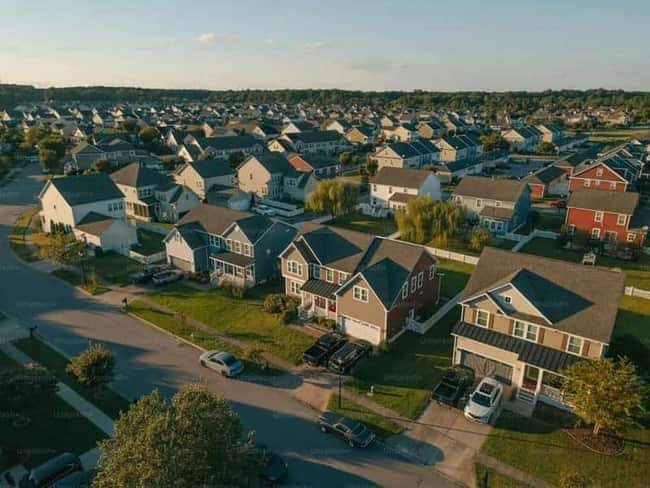
Meridian has grown more than 260 percent from its year-2000 population and is now Idaho’s second largest city, with about 60 percent of its housing units built after 2000. A large number of valley air conditioners were installed within the same few years and are now aging out together, which makes this a good moment to consider whether a heat pump or dual fuel system makes more sense than a like-for-like replacement.
Source: Meridian housing and growth data
Book a licensed Meridian technician for this job.
Call (614) 756-0643Quoted in writing after the assessment. The price does not change once work has started.
Get this looked at before it turns into a bigger repair.
Call (614) 756-0643SEER2 measures how much cooling a system delivers per unit of electricity over a season, and higher numbers mean lower running costs for the same cooling output. It is a useful way to compare two proposals for similar equipment, but it is not the only thing that determines your actual electricity bill.
A high SEER2 rating on paper only delivers real-world savings if the installation supports it. Correct sizing from a load calculation, ductwork with acceptable static pressure, and a properly verified refrigerant charge all affect whether a system performs anywhere near its rated efficiency. A mid-efficiency system installed correctly frequently outperforms a high-efficiency system installed carelessly.
Staging matters alongside the rating itself. A single stage system spends its whole life running at full output or off, while a two stage or variable speed system spends most of its time running gently at partial output, which is both quieter and more efficient in practice than the SEER2 number alone suggests.
Request a visit and we will confirm your appointment window.
Call (614) 756-0643Installation quality is difficult to see once the drywall and insulation are back in place, which is exactly why it is worth asking about before work starts rather than after.
Talk to a technician who works on Treasure Valley homes every day.
Call (614) 756-0643The furnace or air handler location, and the attic or closet path to it, should be reachable without obstruction.
Two feet of clearance around the condenser is needed both for installation and for the airflow the unit depends on afterward.
Tell the technician during the assessment. It is real diagnostic information a load calculation alone will not surface.
A scheduled spring or fall replacement avoids being without cooling during a July heatwave, though emergency replacements are still prioritised when needed.
Have a licensed tech diagnose it and quote the repair up front.
Call (614) 756-0643Spring and fall are the easiest times to schedule a planned replacement, since demand is lower than in the middle of a heatwave and you are not sitting without cooling while it is arranged. That said, equipment that fails outright in July does not wait for a convenient season, and emergency replacements are handled with the same care and the same measured commissioning regardless of when they happen.
There is a practical advantage to planning ahead if your system is already showing its age, over twelve years old with a recent repair or two. Scheduling the replacement before a failure means more time to properly size the system, evaluate ductwork and consider a heat pump or dual fuel option, rather than making a decision quickly with the house already hot.
Schedule service anywhere from Star to Mountain Home.
Call (614) 756-0643The size a load calculation produces, based on your square footage, insulation levels, window area and orientation, air leakage, ceiling heights and the local design temperature. Not the size of the unit coming out, and not a rule of thumb per square foot. Oversizing is the most common error: an oversized system cools the air quickly, satisfies the thermostat and shuts off before it has run long enough to even out temperatures between rooms, which produces cold blasts, uneven comfort and more wear from constant cycling.
It depends on the capacity your load calculation calls for, the efficiency level, whether you choose single stage, two stage or variable speed, and what the installation requires. Whether the indoor coil is being replaced alongside the condenser, whether the existing line set can be reused, and whether the ductwork needs attention all affect it. We quote in writing after assessing the house, and the figure does not change afterwards.
It is sometimes possible but it is rarely a good idea. The outdoor condenser and the indoor evaporator coil are engineered to work as a matched pair, and pairing new equipment with an older coil typically means you do not get the capacity or efficiency the new unit is rated for. It can also create warranty complications. There are situations where reusing a coil is genuinely appropriate, and we will tell you when that is the case, but a matched set should be the default expectation.
Heat rises, and duct systems in two storey homes frequently do not deliver proportionally more air upstairs to compensate. It is one of the most common complaints in valley subdivisions. Importantly, the fix is usually not a bigger air conditioner. It is more often duct modification, airflow balancing, adding return air upstairs, or zoning. This is exactly why we measure static pressure and assess the duct system rather than simply quoting a larger unit, because a bigger system on inadequate ductwork spends money without solving the problem.
A straightforward replacement is typically a single day. It takes longer if the indoor coil is being replaced in a difficult location, if the line set needs replacing, if ductwork requires modification, or if the electrical supply needs upgrading. We tell you what to expect before scheduling, and if you are without cooling in a heatwave we prioritise the work.
With July highs averaging around 92 degrees and a genuine cooling season, higher efficiency equipment does return real savings here. How quickly depends on your usage and electricity rates and on how long you plan to stay in the house. What we would emphasise is that installation quality affects real-world efficiency at least as much as the equipment rating does. A high efficiency system on undersized ductwork, or charged by guesswork, will not deliver what the label promises.
It is genuinely worth considering, particularly if your furnace is also nearing replacement. A heat pump provides identical cooling to an air conditioner and also heats efficiently, and Treasure Valley winters sit well within the range where heat pumps work well. For a home with existing natural gas service, a dual fuel setup pairing a heat pump with a gas furnace often makes the most sense: heat pump efficiency through the long shoulder seasons and gas heat when it genuinely gets cold.
Higher SEER2 ratings cost more upfront and save more on electricity over time, and the right choice depends on how long you plan to stay in the house and your local electricity rates. What matters equally is that the rating only reflects real savings if the installation is done correctly: proper sizing, adequate ductwork and a verified refrigerant charge. A correctly installed mid-efficiency system often outperforms a poorly installed high-efficiency one in practice.
Permit requirements are set by your city or county rather than by us, and we pull them where your jurisdiction requires it as part of the installation. This typically covers electrical work and sometimes the equipment change itself. We handle the paperwork so you do not have to track it down separately.
It usually makes things worse rather than better. A bigger air conditioner cools the air faster and satisfies the thermostat sooner, but it shuts off before it has run long enough to remove humidity or even out temperatures between rooms, so you get cold blasts and uneven comfort rather than better cooling. The correct size comes from a load calculation based on your house, not from going up a size for good measure.
Most air conditioners last twelve to fifteen years with reasonable maintenance, and some go longer. Replacement decisions before that point are usually driven by a major component failure on an aging system, recurring refrigerant leaks, or a desire to correct a longstanding sizing or ductwork problem, rather than by age alone. We will tell you honestly when repair is still the better value.
Have a licensed tech diagnose it and quote the repair up front.
Call (614) 756-0643We size on a load calculation, check whether your ducts can support the equipment, and commission it properly. Serving Meridian, Boise, Nampa and the wider valley.