AC Repair
AC repair and maintenance in Meridian, Idaho.
See detailsCooling systems are refrigeration circuits, and they are diagnosed by measurement rather than by how cold the air feels. Superheat, subcooling and static pressure on every call.
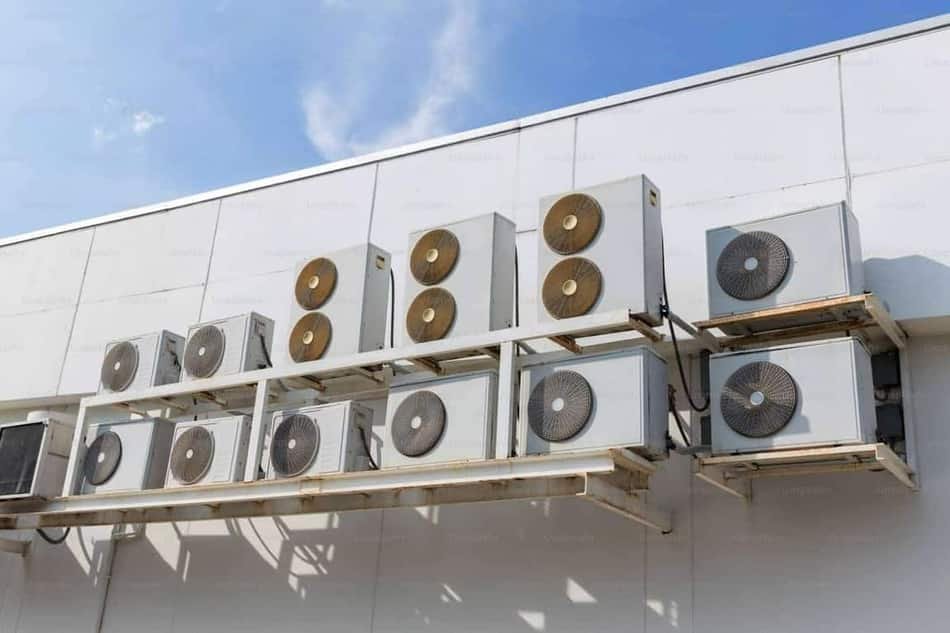
Not because of the temperature. Treasure Valley winters routinely drop into the low twenties overnight in January, while July afternoons average near 92 degrees, so the same house has to survive hard freezes and high desert heat in the same year. A July average high near 92 degrees is a real cooling load but not an extreme one.
The problem is dust. This is a farmed valley, and fine soil particulate through the dry months settles on outdoor condenser coils and loads filters far faster than manufacturers assume. A coil blanketed in dust cannot reject heat, so the system runs longer, cools less and the compressor works against elevated pressure all summer. Add cottonwood seed in June and late summer wildfire smoke, and equipment here needs cleaning on a schedule that would be excessive almost anywhere else.
The second problem is ductwork. Upstairs rooms that never cool are usually an airflow problem, not a capacity problem.
Cooling faults divide into three families, and telling them apart requires measurement rather than inspection.
Electrical faults are the most common and usually the cheapest. Capacitors degrade with heat and age, and valley summers provide plenty of both. A failing capacitor shows up as a compressor that hums but will not start.
Airflow faults cause more damage than people realise. Restricted airflow across the indoor coil drops it below freezing, it ices over, and in the worst case liquid refrigerant returns to the compressor. That is how a clogged filter turns into a compressor failure.
Refrigerant faults deserve plain language: a sealed system does not consume refrigerant, so if the charge is low there is a leak. Adding refrigerant without locating the leak is not a repair, and running low on charge damages the compressor.
Superheat, subcooling and static pressure readings distinguish between these three. Feeling the air at a vent does not.
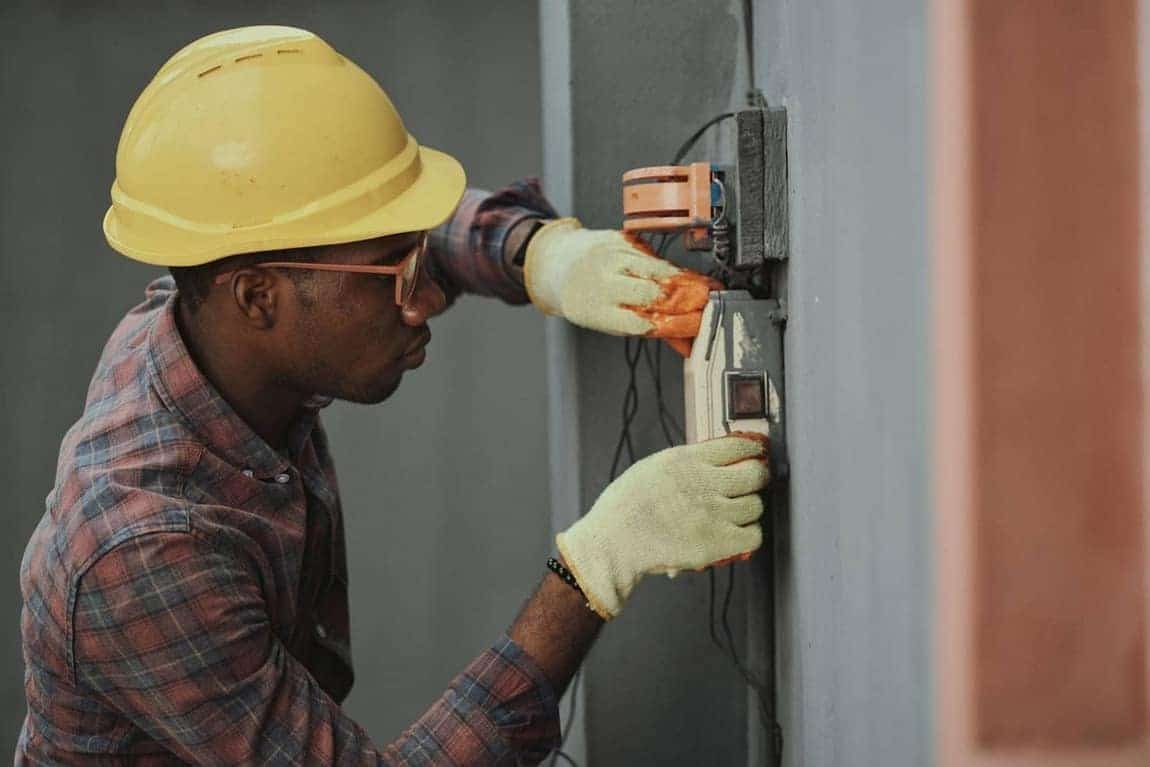
Have a licensed tech diagnose it and quote the repair up front.
Call (614) 756-0643Six cooling services covering the outdoor unit, the indoor coil, the air handler that moves the air, and the filtration that protects all of it.
AC repair and maintenance in Meridian, Idaho.
See detailsAir conditioning installation and replacement in Meridian, Idaho.
See detailsDuctless mini split installation and repair in Meridian, Idaho.
See detailsAir handler repair and replacement in Meridian, Idaho.
See detailsEvaporator coil service in Meridian, Idaho.
See detailsAC and furnace filter replacement in Meridian, Idaho.
See detailsSchedule service anywhere from Star to Mountain Home.
Call (614) 756-0643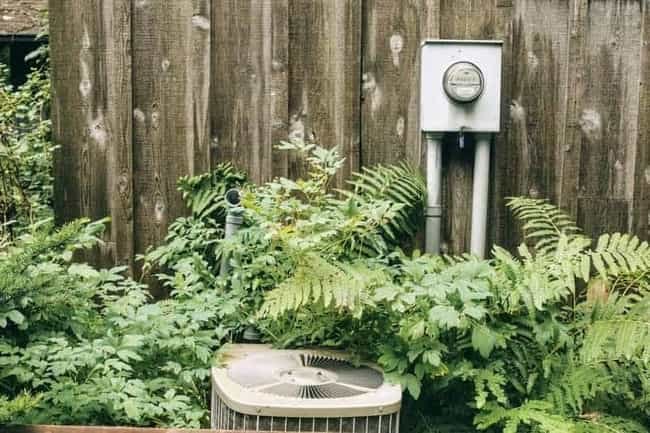
Three sources of airborne particulate combine in this valley in a way that genuinely affects equipment life.
Agricultural dust is constant through the dry months across Ada, Canyon and Elmore counties. It settles on condenser coils and loads filters far faster than in a non-agricultural area.
Cottonwood seed arrives in June and is exceptionally good at matting onto condenser coils, forming a blanket that blocks airflow entirely. Checking the outdoor unit after cottonwood season is genuinely worthwhile.
Wildfire smoke reaches the valley most late summers, and The Treasure Valley sits under temperature inversions through much of the winter, which traps carbon monoxide and fine particulates close to the ground. Smoke particulate is very fine, so it passes low MERV filters readily and loads better ones in weeks rather than months.
There is a trap in that last one worth naming. People respond to smoke by fitting the densest filter that will fit the slot, which helps air quality but drives static pressure up and can freeze coils and strain blowers. The right answer is more filter area, meaning a deep media cabinet, rather than a denser filter in the same small opening.
Source: Idaho DEQ regional air quality
Ask for an upfront price before any work starts.
Call (614) 756-0643Two of these mean shut the system off rather than keep running it.
| Symptom | Likely cause | What to do |
|---|---|---|
| Outdoor unit hums then stops | Failed run capacitor | Routine repair, inexpensive part |
| Runs constantly, cools weakly | Dirty condenser coil or low refrigerant charge | Soon. It costs money every hour it runs |
| Ice on the lines or indoor coil | Airflow restriction, or low charge | Switch cooling off, run the fan to thaw, then call |
| Breaker trips repeatedly | Electrical fault, possibly compressor related | Stop resetting it. This needs diagnosis |
| Water around the indoor unit | Blocked condensate drain | Prompt, because of water damage rather than equipment damage |
| Upstairs never cools | Duct design and airflow, not usually capacity | Measure static pressure before considering a bigger unit |
If your system is iced up, switch cooling off and run the fan only. That thaws the coil without damage and lets the underlying cause actually be diagnosed when we arrive.
Same day and next day appointments are available across the valley.
Call (614) 756-0643No cool calls are prioritised through the summer.
Not cooling, not running, iced up, tripping the breaker or leaking water. Each points somewhere different.
Free to rule out and responsible for a meaningful share of no-cool calls.
Electrical readings, superheat and subcooling, temperature split and static pressure, before any conclusion.
You hear what failed and why, with the cost agreed before we proceed.
The system run and measured again afterwards, so performance is proven rather than assumed.
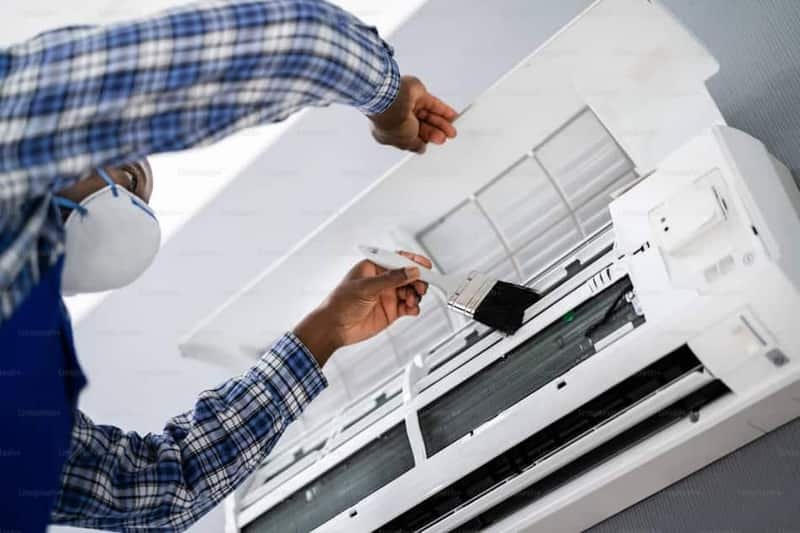
Book a licensed Meridian technician for this job.
Call (614) 756-0643Cooling complaints tend to bundle into three families: not cooling at all, cooling weakly, and cooling unevenly.
A system that will not run or trips the breaker is an electrical or compressor fault, covered under AC repair. A system that runs constantly but never quite gets the house cold is usually a dirty coil or low refrigerant, also repair territory but urgent, since it costs money every hour it runs that way. Uneven cooling, one room or one floor never catching up, is almost always ductwork rather than the outdoor unit.
If the home has no ductwork at all, such as older Boise houses built around hydronic heat, the relevant page is ductless mini splits rather than central AC repair. If the air handler itself is the suspect, whether it is not moving air or making noise, that is the air handler page. And if the complaint is really about air quality during smoke season rather than temperature, that points to filtration rather than the refrigeration side at all.
Get this looked at before it turns into a bigger repair.
Call (614) 756-0643Electrical faults such as a failed capacitor sit at the cheap end and are usually same-visit repairs. Refrigerant leaks cost more, because the job is finding and repairing the leak, not just topping off the charge, and the cost scales with how accessible the leak point is. Compressor failure is the expensive end, and on an older system it is often the point where replacement becomes the more sensible option than a compressor swap.
Ductwork correction is priced separately from the equipment entirely, and it is worth evaluating before agreeing to a larger replacement unit, since a correctly sized system on poor ductwork will underperform just as badly as an undersized one.
Request a visit and we will confirm your appointment window.
Call (614) 756-0643Spring, before the cooling season, is when a capacitor drifting out of tolerance or a coil coated in a winter’s worth of dust gets found cheaply. The same fault found in July, mid heatwave, is an emergency call rather than a routine maintenance item. Cottonwood season in June is worth a specific check afterward, since matted seed on a condenser coil can choke airflow within days of the seed drop.
Late summer wildfire smoke episodes are the other seasonal trigger, both for filter changes and, if MERV 13 filtration is being added, for measuring whether the ductwork can support it before installing it.
Talk to a technician who works on Treasure Valley homes every day.
Call (614) 756-0643| Cooling job | Other trade involved | Why it matters |
|---|---|---|
| New AC or heat pump install | Electrical circuit and disconnect | Equipment amperage has to be matched to a correctly sized circuit and disconnect, not assumed from the old unit |
| Condensate drain routing | Plumbing | Condensate lines tie into or run alongside drainage, and a blocked line causes water damage independent of the cooling fault |
| Whole-home dehumidification add-on | Electrical and sometimes plumbing | Added equipment needs its own circuit and a drain path, evaluated together rather than as an afterthought |
Cooling equipment sits at the boundary of HVAC and electrical more than any other trade on this site, which is part of why we do not split the two.
Have a licensed tech diagnose it and quote the repair up front.
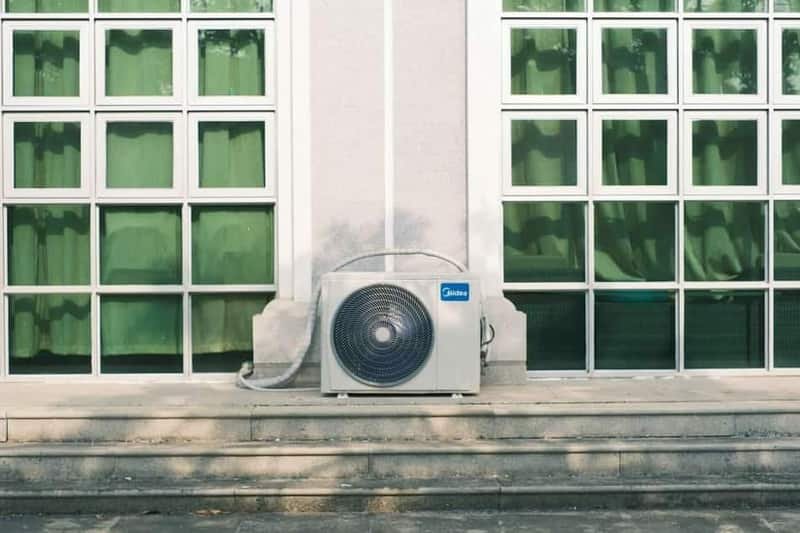
Call (614) 756-0643Worth checking yourself, and free: the air filter, whether the thermostat has power and is calling for cooling, whether the outdoor unit’s breaker has tripped, and whether the area immediately around the outdoor unit is clear of shrubs, fences or debris restricting airflow. Rinsing visible debris off the outdoor coil with a garden hose, power off, is also reasonable.
Not worth attempting: opening the refrigerant circuit, testing or replacing a capacitor while the system is live, or diagnosing electrical faults inside the unit. Capacitors in particular store a genuinely dangerous charge even with power disconnected, and handling refrigerant requires certification under federal law regardless of skill level.
If the system is iced up, the one safe and useful step is switching cooling off and running the fan only, which thaws the coil without risking further damage and lets the underlying cause actually be found when we arrive.
Schedule service anywhere from Star to Mountain Home.
Call (614) 756-0643Cooling faults tend to get worse under load, so a mild symptom in spring is often a real problem by July.
Ask for an upfront price before any work starts.
Call (614) 756-0643A high SEER rating on paper does not guarantee low summer bills if the coil is caked in agricultural dust, the ductwork leaks into an attic, or the system is oversized and short cycling. In this valley, the highest-value efficiency actions are usually the least glamorous: keeping the condenser coil clean, sealing accessible duct leaks, and sizing any replacement equipment from an actual load calculation rather than matching the old unit’s tonnage.
Shading the outdoor unit from direct afternoon sun, without blocking its airflow, can also make a measurable difference through the hottest part of a Treasure Valley summer, since the compressor works against outdoor ambient temperature as well as the indoor load.
Same day and next day appointments are available across the valley.
Call (614) 756-0643We cover Ada, Canyon and Elmore counties. Every town below has its own page with the local detail that matters there.
Cooling demand is broadly similar across the valley, but two things vary. Dust load is highest in the agricultural areas around Caldwell, Middleton and rural Canyon county, and in the drier desert conditions around Mountain Home, which means coil cleaning matters most there. Duct problems concentrate in the newer two storey housing across Meridian, Star and Kuna, where upstairs cooling complaints are one of the most common things we are asked about.
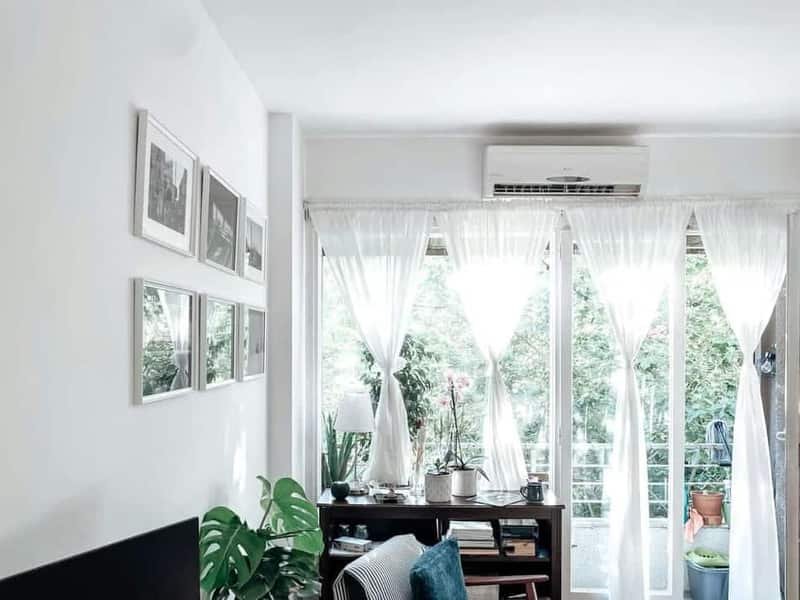
Older Boise homes with hydronic heating have no ductwork at all, which is why ductless mini splits are the usual route to air conditioning there.
Book a licensed Meridian technician for this job.
Call (614) 756-0643The most common causes are a failed run capacitor, meaning the compressor is not actually running even though the fan spins, a condenser coil too dirty to reject heat, a low refrigerant charge, or a frozen evaporator coil caused by restricted airflow. Start with the filter, since it is free to check and causes a real share of these calls. If you can see ice on the refrigerant lines, switch cooling off and run the fan only to thaw it before anything else.
Annually, ideally in spring before the cooling season. In this valley the condenser coil cleaning is the item that matters most, because agricultural dust and cottonwood seed clog coils far faster here than in most places, and a blocked coil makes the compressor work against high pressure all summer. Testing capacitors against their rated values is the other high value check, since a capacitor that has drifted out of tolerance is a cheap spring repair and an expensive July emergency.
Heat rises, and duct systems in two storey homes frequently do not deliver proportionally more air upstairs to compensate. It is one of the most common complaints in valley subdivisions. The important point is that the fix is usually not a bigger air conditioner. It is more often duct modification, airflow balancing, adding return air upstairs, or zoning. That is why we measure static pressure rather than simply quoting a larger unit, because a bigger system on inadequate ductwork spends money without solving the problem.
You can, but it is not a repair. A sealed refrigeration system does not consume refrigerant during normal operation, so if the charge is low there is a leak. Adding refrigerant without locating the leak means paying for the same thing again, usually within a season, and running on a low charge damages the compressor. We locate and repair leaks instead. If someone offers to just top it up without looking for the leak, that tells you something about the work.
Whatever a load calculation produces, based on square footage, insulation, window area and orientation, air leakage, ceiling heights and the local design temperature. Not the size of the unit coming out, and not a rule of thumb per square foot. Oversizing is the most common error: an oversized system cools quickly, satisfies the thermostat and shuts off before it has run long enough to even out temperatures between rooms, producing cold blasts, uneven comfort and extra wear.
Meaningful smoke filtration needs MERV 13 or better, because smoke particulate is very fine. The critical caveat is that a MERV 13 filter in a standard one inch slot will usually restrict a residential system badly, which can freeze the evaporator coil and strain the blower. The right solution is a deep media cabinet with enough surface area to run MERV 13 at a low pressure drop. We can measure your system’s static pressure and tell you exactly what it will support.
Twelve to fifteen years is typical, sometimes longer with consistent maintenance. In this valley the biggest factor within your control is keeping the condenser coil clean, because a compressor that spends every summer working against a dust-blocked coil is under continuous strain. Systems that get annual coil cleaning and routine capacitor checks tend toward the upper end of that range.
It depends mainly on which part failed and the unit’s age. A capacitor or contactor failure is worth repairing at almost any age. A compressor failure on a system already past about twelve to fifteen years, or a refrigerant type that is being phased out, tips the balance toward replacement, since a major repair on an old system is a poor use of money against a unit near the end of its expected life anyway. We will show you both numbers rather than deciding for you.
Yes, and they are the standard answer for homes with no existing ductwork, which describes a meaningful share of older Boise housing built around hydronic heat. Modern mini splits handle this valley’s summer heat without difficulty and add efficient cooling room by room, without the cost or disruption of installing ducts into a house that was never built for them.
The filter, whether the thermostat is powered and calling for cooling, whether the outdoor unit’s breaker has tripped, and whether debris or overgrown shrubs are blocking airflow around the outdoor unit. Rinsing visible dust off the outdoor coil with a garden hose, power off, is also reasonable. Anything involving the capacitor, refrigerant circuit, or internal electrical components should be left to a technician.
Usually not, and oversizing is one of the most common and costly mistakes in cooling installation. An oversized unit cools the air quickly, satisfies the thermostat, and shuts off before it has run long enough to dehumidify the air or even out temperatures between rooms. The result is short cycling, uneven comfort and unnecessary wear, which is why sizing should come from a proper load calculation rather than simply matching or exceeding the old unit’s capacity.
Maintenance is preventive: cleaning the condenser coil, testing the capacitor against its rated value, checking refrigerant charge indirectly through temperature readings, and confirming the condensate drain is clear, all before anything has failed. Repair addresses an already-failed component. In a dusty agricultural valley, the maintenance side matters more than in most climates, because coil fouling alone can push a healthy system toward failure over a single summer.
Yes, and it can even help slightly, since the compressor works against outdoor ambient temperature. The requirement is airflow, not sun exposure: keep at least two feet of clearance on all sides and above the unit so it can draw in and reject air freely. Shrubs, fences or structures crowding the unit hurt performance more than direct sun ever does.
Cottonwood seed released each June is unusually good at matting onto a condenser coil’s fins, forming a dense layer that can choke airflow within days rather than the weeks that ordinary dust takes to accumulate. A quick check and rinse of the outdoor coil right after cottonwood season passes is one of the highest value five-minute maintenance habits available to a valley homeowner.
That depends entirely on the specific warranty’s terms, which we do not administer and cannot speak to. What we can tell you is that a diagnosis is a diagnosis regardless of who pays for it, and we are glad to document what we find in whatever form your warranty provider requires, even if the repair itself ends up being handled through their process.
Schedule service anywhere from Star to Mountain Home.
Call (614) 756-0643No cool calls prioritised all summer across the Treasure Valley. If it is iced up, switch cooling off and run the fan while you wait for us.