Breaker Panels
Electrical panel upgrades and repair in Meridian, Idaho.
See detailsPanels, circuits, EV chargers, generators and lighting, all to the National Electrical Code. Load calculated rather than assumed, so you find out whether you actually need an upgrade.
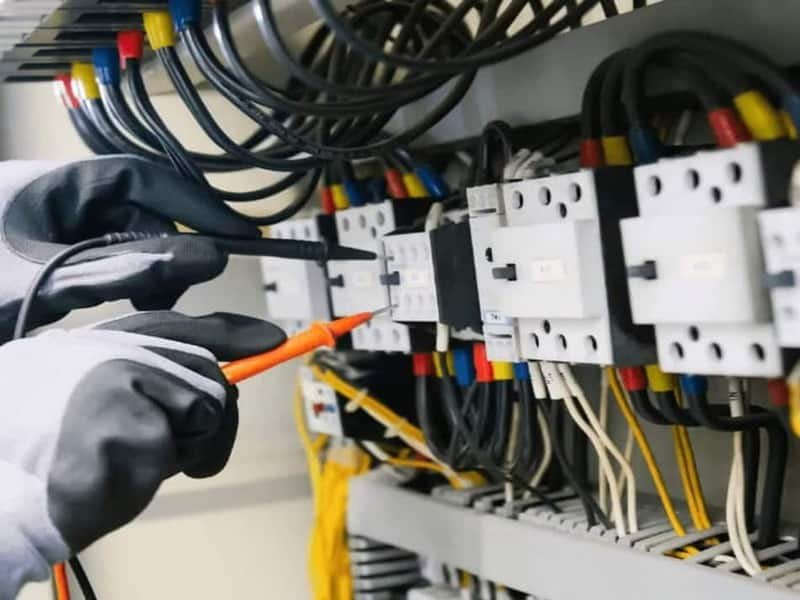
Less often than you might be told. There are three genuine reasons: capacity, when you are adding load the service cannot carry; space, when the panel is physically full; and safety, when the panel is a type with a documented history of breakers failing to trip.
Where capacity is the issue, the answer should come from a load calculation using the method the electrical code defines, not from an assumption. And where capacity is genuinely tight, options exist well short of a service upgrade: a subpanel adds circuit space, and a load management device lets an EV charger fit onto a service that could not otherwise carry it.
A service upgrade is sometimes right. It should be the conclusion of a calculation, not the opening quote.
Electrical work here splits along the same housing lines as everything else, but the consequences are sharper because electrical faults have a different failure mode.
Newer valley homes in Meridian, Eagle, Star and Kuna were generally built with 200 amp services and modern wiring. What they need is additions: EV charger circuits, shop subpanels off the main panel, hot tub circuits, outdoor lighting and gas-adjacent work like generators. These are load questions, answered by calculation.
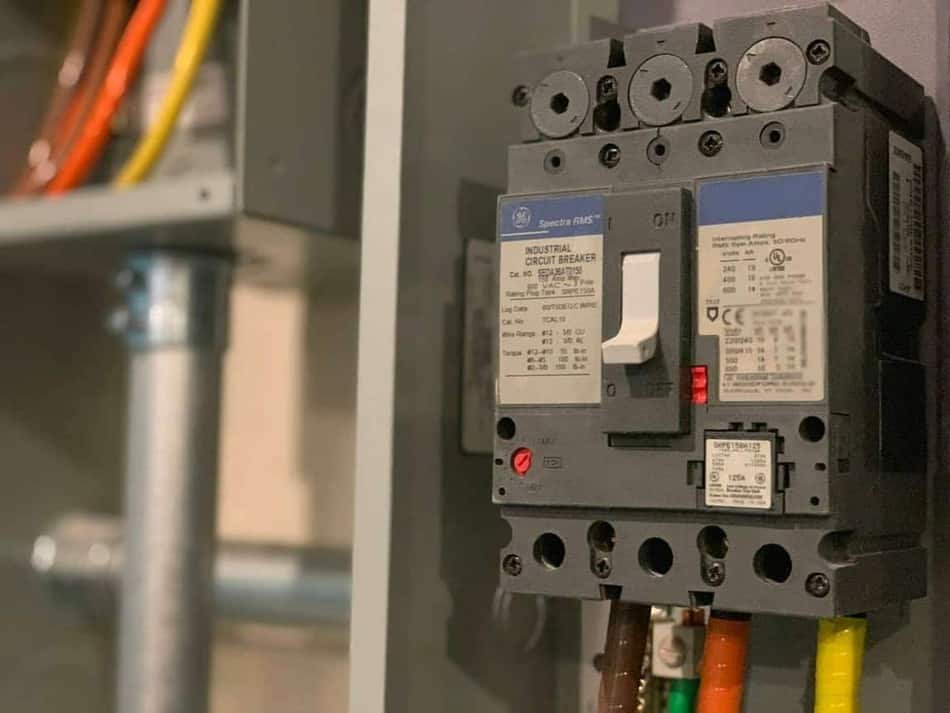
Older Boise, Nampa and Caldwell housing is where the corrections live. Undersized services, ungrounded two-wire circuits with two-prong outlets, missing GFCI protection in wet locations, missing smoke detectors, and occasionally panel brands with documented defects. These are safety questions.
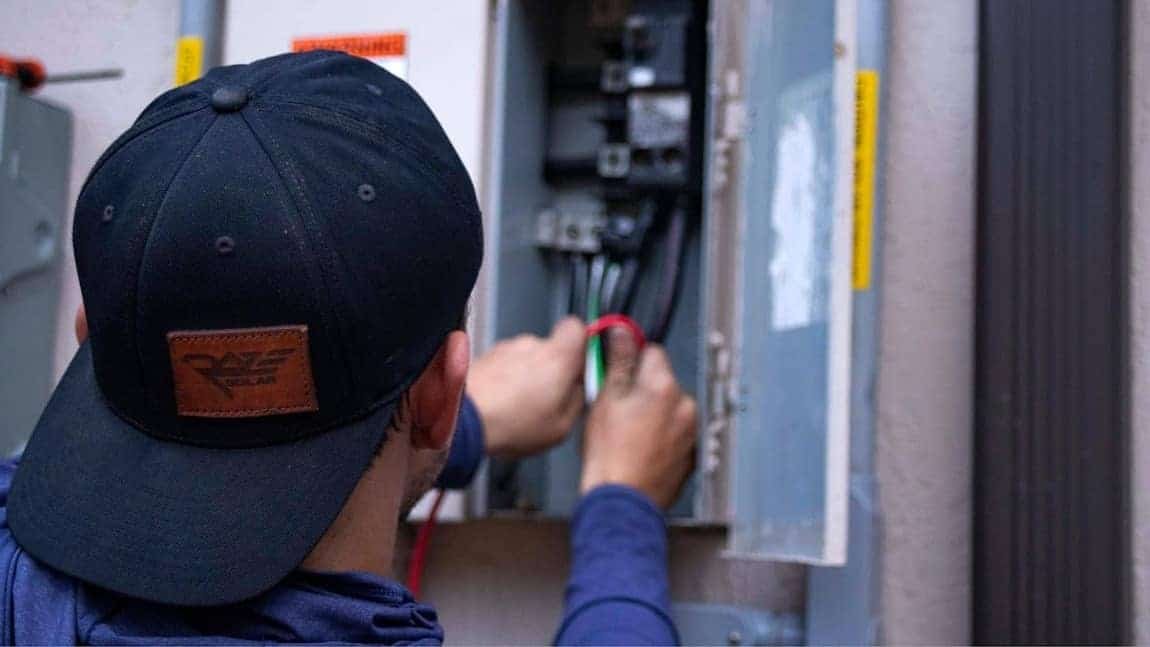
The one thing we say to everyone: never open a panel cover yourself. The service conductors inside remain live even with the main breaker off, and there is no homeowner task in there worth that risk.
Talk to a technician who works on Treasure Valley homes every day.
Call (614) 756-0643Six electrical services covering the panel, the circuits it feeds, and the modern additions valley homes increasingly need.
Electrical panel upgrades and repair in Meridian, Idaho.
See detailsOutlet and switch repair and installation in Meridian, Idaho.
See detailsSmoke detector installation and replacement in Meridian, Idaho.
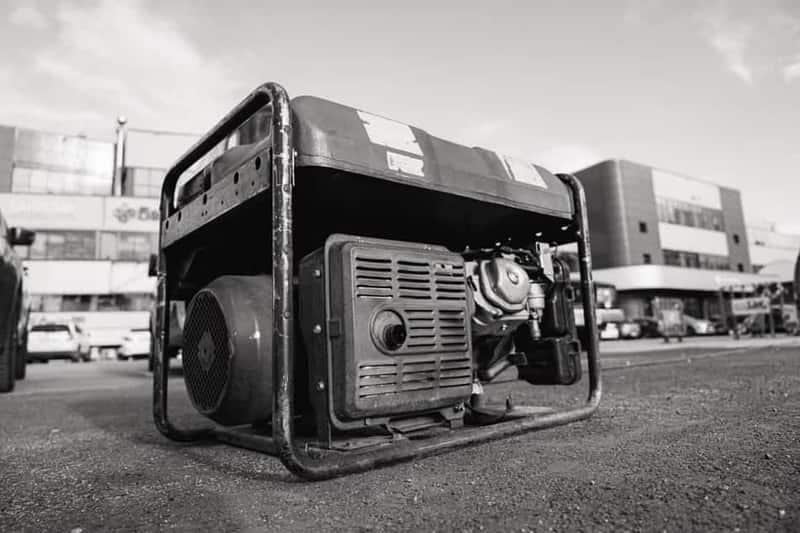
See detailsStandby generator installation, transfer switches and repair in Meridian, Idaho.
See detailsEV charger installation in Meridian, Idaho.
See detailsOutdoor and landscape lighting installation in Meridian, Idaho.
See detailsHave a licensed tech diagnose it and quote the repair up front.
Call (614) 756-0643
Idaho enforces the Uniform Plumbing Code rather than the International Plumbing Code, and the electrical side runs on the National Electrical Code, both administered through the Idaho Division of Occupational and Professional Licenses. Electrical work here follows the National Electrical Code, administered through DOPL, and panel and circuit work is permitted and inspected in the jurisdictions we serve.
Meridian has grown more than 260 percent from its year-2000 population and is now Idaho’s second largest city, with about 60 percent of its housing units built after 2000. That produces the newer-housing pattern: sound systems that simply were not designed for what people now want to plug in. EV charging is the clearest example, and it is where we most often see homeowners quoted a service upgrade they do not need.
Older housing is a different conversation. Nampa’s median home construction year sits right around 2000, but roughly one in ten houses there predates 1950, which puts two very different plumbing eras inside the same city limits. Pre-1970 homes in older Boise, Nampa and Caldwell neighbourhoods can have 60 or 100 amp services, fuse boxes, ungrounded circuits, no GFCI protection anywhere, and in some cases panel brands with well documented histories of breakers failing to trip. Those come up regularly at the point of sale, because home inspectors and insurers both flag them.
There is one more valley-wide driver: outbuildings. Shops and detached garages are common across the rural fringe, and feeding one properly means a subpanel with its own grounding electrode system rather than a borrowed circuit.
Source: Idaho DOPL plumbing board
Schedule service anywhere from Star to Mountain Home.
Call (614) 756-0643Three jobs that get conflated, plus the cases where the answer is none of them.
| Your situation | What you actually need | Why |
|---|---|---|
| Panel is full, service is adequate | A subpanel | Adds circuit space without touching the service |
| Adding load the service cannot carry | A service upgrade | New conductors, meter base and panel, with utility coordination |
| Panel is a known-defective type | Panel replacement | New panel on the existing service, all circuits transferred |
| Adding an EV charger | A load calculation first | Often no upgrade is needed. Load management is far cheaper if capacity is tight |
| One circuit keeps tripping | Diagnosis, not a panel change | The breaker is doing its job. Find the fault, do not fit a bigger breaker |
| Adding a shop or detached garage | A subpanel at the building | With its own grounding electrode system, as the code requires |
A breaker protects the wire behind it, not the appliance in front of it. Fitting a larger breaker to stop nuisance tripping removes the protection on a conductor that cannot safely carry the extra current.
Ask for an upfront price before any work starts.
Call (614) 756-0643Safety concerns are prioritised. Planned work is scheduled around permits and utility coordination.
A safety concern, a dead circuit, or something you want to add. Burning smells, hot panels and buzzing are treated as urgent.
For anything involving capacity, we calculate rather than assume, which frequently shows an upgrade is unnecessary.
Including honestly telling you when a subpanel or load management solves it more cheaply than a service upgrade.
Panel and circuit work is permitted, and we pull it and schedule the inspection.
Protection devices tested, circuits clearly labelled, and the inspection passed.
Same day and next day appointments are available across the valley.
Call (614) 756-0643Electrical symptoms are often assumed to mean the panel, when the actual fault is somewhere else entirely.
A single dead outlet is rarely a panel problem: check GFCIs first, since one GFCI outlet can control several downstream outlets with no reset button of their own. A breaker that trips repeatedly means diagnosing the circuit, not fitting a bigger breaker. A panel that is simply full of breaker slots needs a subpanel, not necessarily a service upgrade. A genuine capacity shortage, such as adding an EV charger to a tight service, is the one case a load calculation and possibly a service upgrade actually applies.
Adding something new, an EV charger, a generator, outdoor lighting, or a shop subpanel, is a capacity and planning question best started with a panel assessment. A safety concern, buzzing, burning smells, warm panels, missing smoke detectors, or two-prong outlets in an older home, should be treated as urgent regardless of how minor it looks. Cosmetic or convenience work, adding switches, relocating outlets, replacing fixtures, is the most routine and least urgent category.
Book a licensed Meridian technician for this job.
Call (614) 756-0643Single circuit work, an added outlet, a switch, a light fixture, sits at the low end. New circuits for specific loads, an EV charger, a hot tub, a shop, cost more because they involve a full run from the panel and often a permit. Service and panel level work, subpanels, panel replacement, service upgrades, is the largest category, driven by utility coordination, permitting and the scale of the job rather than by the parts themselves.
The single biggest cost lever in this category is whether a genuine service upgrade is actually needed. A load calculation done properly, before any quote, regularly avoids one entirely.
Get this looked at before it turns into a bigger repair.
Call (614) 756-0643Electrical work is less seasonal than heating or cooling, but two patterns are worth knowing. Generator installation is worth planning well before winter, since demand and scheduling both tighten as the first cold snap approaches and outages become more likely. Outdoor circuits and lighting are easiest to install in the drier months, before ground conditions make trenching for buried cable more difficult.
Safety issues, burning smells, buzzing panels, warm outlets, are never seasonal. Those get treated as urgent whenever they happen.
Request a visit and we will confirm your appointment window.
Call (614) 756-0643| Electrical job | Other trade involved | Why it matters |
|---|---|---|
| Standby generator | Gas line sizing | The gas supply has to be sized to the generator’s demand, and the electrical transfer switch has to match the panel |
| Heat pump or dual fuel install | HVAC | Electrical capacity has to be confirmed before the HVAC equipment is even specified |
| Well pump circuit | Plumbing | On rural properties a well pump failure is both an electrical and a water supply emergency at once |
| Hot tub or spa circuit | Plumbing, sometimes | Equipment pads often need drainage considered alongside the dedicated circuit |
Generators are the clearest example: a gas contractor sizing the fuel supply and an electrician sizing the transfer switch, without one person owning the whole calculation, is exactly the gap our four-trades model exists to close.
Talk to a technician who works on Treasure Valley homes every day.
Call (614) 756-0643Reasonable and safe: resetting a tripped breaker once, checking and resetting GFCI outlets, replacing a light bulb or a simple fixture with power off at the breaker, and checking whether a dead outlet is downstream of a GFCI elsewhere in the same room or circuit.
Not reasonable: opening a panel cover, working on anything while the circuit is live, wiring a new circuit, or replacing a breaker or the panel itself. Idaho requires a license for this work for good reason: the service conductors inside a panel remain live even with the main breaker switched off, and mistakes in wiring do not always fail safely, sometimes they fail during a fire years later instead of immediately.
If a breaker trips more than once in a short period, the reasonable homeowner action is to stop resetting it and unplug what was running on that circuit, not to keep resetting it repeatedly. A breaker that keeps tripping is reporting a real fault, and repeatedly forcing it back on does not make that fault go away.
Have a licensed tech diagnose it and quote the repair up front.
Call (614) 756-0643Electrical faults are one area where waiting for a more convenient time carries a genuine safety cost.
Schedule service anywhere from Star to Mountain Home.
Call (614) 756-0643The National Electrical Code is updated on a cycle, and individual jurisdictions adopt updates on their own timeline, which means requirements can differ slightly between an older permit and a new one for the same type of work. GFCI and AFCI requirements in particular have expanded over successive code cycles to cover more rooms and circuit types than they used to.
None of this is something a homeowner needs to track personally. It is why permitted work matters: the permit and inspection process applies the current code for your jurisdiction at the time of the work, rather than whatever version happened to apply when the house was originally built.
Ask for an upfront price before any work starts.
Call (614) 756-0643We cover Ada, Canyon and Elmore counties. Every town below has its own page with the local detail that matters there.
Electrical work follows the housing. Newer Meridian, Eagle, Star and Kuna homes need capacity added: EV chargers, shop subpanels, hot tub circuits and outdoor lighting. Older Boise, Nampa and Caldwell homes need corrections: service upgrades, grounding, GFCI protection and occasionally replacement of panels with documented defects.
Rural properties around Kuna, Star, Middleton and Canyon county add two more: outbuilding subpanels, and backup power, since a well pump is electric and an outage means no water at all.
Same day and next day appointments are available across the valley.
Call (614) 756-0643For most work beyond replacing a light fitting, yes. Idaho follows the National Electrical Code, administered through the Division of Occupational and Professional Licenses, and panel work, new circuits and EV charger installations are permitted and inspected in the jurisdictions we serve. Permits matter practically as well as legally: unpermitted electrical work causes real problems at the point of sale and can affect insurance claims. We pull permits and schedule inspections as part of the job.
Some findings are urgent: a burning smell near the panel, buzzing or crackling, scorch marks, melted insulation, or a panel warm to the touch. Stop using the affected circuits and call. Separately, certain panel brands installed through the mid twentieth century have documented histories of breakers failing to trip under fault conditions, which defeats the entire purpose of the protection. What you should never do is open the panel cover yourself, because the service conductors inside remain live even with the main breaker off.
Often yes, and you should not accept a service upgrade quote without a load calculation. A load calculation measures your home’s actual demand rather than assuming the worst. If capacity is genuinely tight, a load management device monitors the service and reduces or pauses charging when other large loads run, which allows a charger to fit onto a service that could not otherwise carry it, at a small fraction of the cost of an upgrade. Charging at a lower amperage is another option, and for a car parked overnight it makes no practical difference.
Because something is drawing more current than the circuit should carry, or because there is a fault. The breaker is doing exactly what it exists to do. The right response is finding out why, not fitting a larger breaker, and that distinction matters a great deal: a breaker protects the wire behind it, so a larger breaker on the same wire removes protection from a conductor that cannot safely carry the extra current. Common causes are genuine overload, a failing appliance, a loose connection, or a short.
They protect against different hazards. GFCI detects current leaking to ground, potentially through a person, and cuts power within milliseconds, which is what prevents electrocution. It is required in bathrooms, kitchens, garages, outdoors, crawl spaces and unfinished basements. AFCI detects the electrical signature of an arcing fault, which is the failure type behind a large share of electrical fires and which does not necessarily draw enough current to trip a standard breaker. It is required in most living areas. Many homes need both.
Not by simply swapping the device, though it is a common shortcut. A two-prong outlet indicates ungrounded wiring, and fitting a three-prong receptacle presents a grounded outlet with no ground behind it. Anything plugged in relying on that ground for safety has no protection and no way of knowing. The code provides compliant alternatives, including running a proper ground or using GFCI protection with the required labelling, and we can explain which applies to your situation.
Both. Generators are a particularly good fit for us because a standby unit needs a sized gas supply as well as an electrical transfer switch, and we handle both trades rather than coordinating with a separate gas contractor. EV chargers start with a load calculation, which frequently shows that the service can carry a charger without any upgrade at all. Idaho Power also offers a residential rebate toward a Level 2 charger for customers with a registered EV, and we can provide the installation documentation those programmes require.
A subpanel solves a full panel with adequate service capacity: it adds physical breaker space without touching the incoming service. A service upgrade solves a genuine capacity shortage, where the load calculation shows the total demand exceeds what the existing service can safely carry. Confusing the two means either paying for a service upgrade that was never needed, or installing a subpanel that does not actually solve a capacity problem. The load calculation is what tells them apart.
Grounding corrections, GFCI additions in bathrooms, kitchens and outdoor locations that predate the requirement, and occasionally replacement of panel brands with documented histories of breakers failing to trip. Pre-1970 homes around older Boise, Nampa and Caldwell neighbourhoods are where these come up most, often surfacing during a home inspection ahead of a sale.
Resetting a tripped breaker once, testing and resetting GFCI outlets, and replacing a light bulb or simple fixture with power off at the breaker. Anything involving opening a panel, wiring a new circuit, or working on a live circuit should be left to a licensed electrician, both because it is regulated work and because electrical mistakes do not always fail safely right away.
It varies with utility coordination and inspection scheduling more than with the physical installation itself, since the panel swap generally happens in a single day once permits and utility arrangements are in place. The utility has to disconnect and reconnect service at the meter, and the local jurisdiction has to inspect the completed work, both of which add calendar time beyond the hands-on labor.
A load calculation is a standardized method, defined by the National Electrical Code, for adding up a home’s actual electrical demand rather than guessing at it. It accounts for square footage, major appliances, HVAC equipment and any new load being added, such as an EV charger. It matters because a large share of service upgrade recommendations turn out to be unnecessary once an actual calculation is run, and we would rather run the numbers than default to the more expensive option.
It can. Insurers and their inspectors sometimes flag specific older panel brands with documented histories of breakers failing to trip, along with knob-and-tube or aluminum branch wiring, and some policies require correction or carry exclusions where those are present. This tends to surface at renewal or at the point of a home sale, which is why addressing known issues proactively is often cheaper than dealing with it under insurer pressure.
There is no fixed schedule the way there is for furnace or AC maintenance, but sensible trigger points exist: before buying an older home, if you notice any of the warning signs described above, and whenever you are adding meaningful new load such as an EV charger, a hot tub, or a shop. Beyond that, well-installed electrical work does not need routine servicing the way mechanical equipment does.
Have a licensed tech diagnose it and quote the repair up front.
Call (614) 756-0643Panels, circuits, EV chargers, generators and lighting, calculated properly and permitted. If you smell burning near a panel, call rather than investigating.