Tankless water heaters
Endless hot water and a much longer service life, provided the gas line is sized correctly and it gets descaled.
Learn moreNo hot water, rusty water, popping noises or a puddle under the tank. We diagnose the actual failure, tell you whether it is worth repairing, and quote the price before we touch anything.
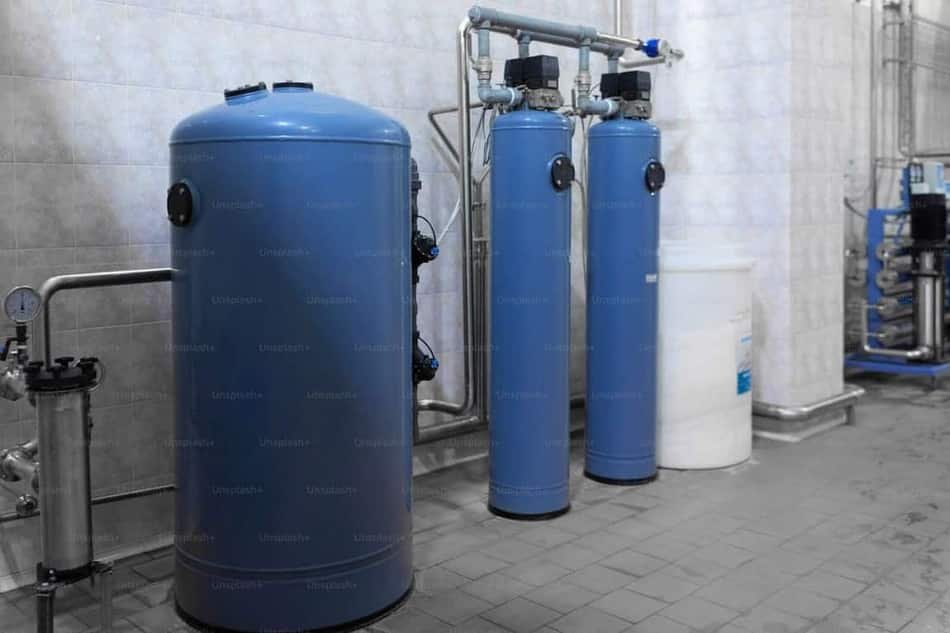
A standard tank water heater is generally expected to last 8 to 12 years. In Meridian and across the Treasure Valley that range tends to sit at the lower end, because hard water accelerates two specific failures: mineral sediment builds on the bottom of the tank where the burner heats it, and the sacrificial anode rod that protects the steel liner is consumed faster.
If your tank is under warranty and the fault is a thermocouple, gas valve, heating element, thermostat or anode rod, repair is almost always the right call. Once a tank is past ten years old and leaking from the shell itself, no repair exists. The steel liner has perforated and the unit has to be replaced.
Almost every water heater call comes down to one of six things, and they present very differently. Knowing which one you have tells you whether this is a ninety minute repair or a replacement.
No hot water at all on a gas tank usually means the pilot or igniter has failed, the thermocouple or flame sensor is dirty, or the gas control valve has quit. On an electric tank it is nearly always a failed upper heating element or a tripped high limit switch, which is the little red reset button behind the access panel.
Hot water that runs out too fast is a different problem. A dip tube that has broken lets incoming cold water mix straight into the outlet, or a lower element has failed so only the top third of the tank is heating, or sediment has taken up so much volume that the tank no longer holds its rated capacity.
Popping, rumbling or crackling is the sound of water flashing to steam underneath a layer of hardened mineral scale. It is the most common noise complaint we get in Meridian and it is a direct consequence of local water chemistry.
Rusty or metallic smelling hot water generally means the anode rod is spent and the tank lining has started to corrode. Caught early, replacing the anode buys years. Caught late, it does not.
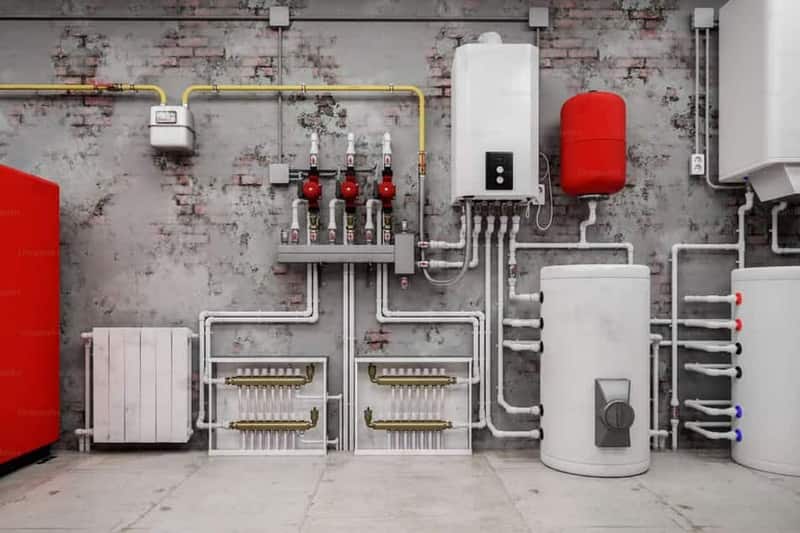
Have a licensed tech diagnose it and quote the repair up front.
Call (614) 756-0643Most tank failures give weeks of warning. These are the signals worth acting on before you come home to a flooded garage.
Schedule service anywhere from Star to Mountain Home.
Call (614) 756-0643A water heater is a pressure vessel connected to a fuel source. The details that get skipped on a cheap installation are the ones that cause problems later.
On a repair visit we test rather than guess. On a gas tank that means checking supply pressure, thermocouple millivolt output, burner flame quality and flue draft. On an electric tank it means testing both elements and both thermostats for continuity and resistance, and checking the high limit.
On a replacement, the tank itself is the easy part. What matters is everything around it. Idaho enforces the Uniform Plumbing Code, and a correct installation means the temperature and pressure relief line runs full size to a safe termination point, the gas connection is properly sized and leak tested, and combustion air and venting meet the appliance requirements.
Two details get missed constantly on Treasure Valley homes. First, a garage installation has specific requirements around ignition source height and physical protection from vehicles. Second, if your home has a pressure reducing valve or a check valve at the meter, the plumbing is a closed system and a thermal expansion tank is required. Without one, every heating cycle drives pressure up and pushes the relief valve open, and homeowners are told the relief valve is faulty when it is doing exactly what it was designed to do.
Ask for an upfront price before any work starts.
Call (614) 756-0643The right answer depends on what fuel you already have at the location, how much space is available and how much hot water you actually use.
| Type | Best suited to | What to watch in the Treasure Valley |
|---|---|---|
| Gas tank | Homes already served by natural gas, larger families, fast recovery | Needs proper venting and combustion air. Recovers quickly, which matters in winter when incoming groundwater is cold. |
| Electric tank | Homes with no gas at the location, garages and interior closets | Simple and inexpensive to install, but slower recovery. Elements scale up in hard water and need periodic replacement. |
| Heat pump / hybrid | Garages and unconditioned spaces, owners focused on operating cost | Very efficient, but it cools and dehumidifies the space it sits in and needs adequate air volume around it. Louder than a standard tank. |
| Tankless | Endless hot water, tight spaces, long-term ownership | Excellent fit here, but gas line sizing and annual descaling are not optional with local water hardness. See our tankless page. |
We size on your real usage rather than defaulting to whatever was installed when the house was built. A 40 gallon tank that was right for the original owners is often wrong for the family living there now.
Same day and next day appointments are available across the valley.
Call (614) 756-0643No surprises and no work begins until you have seen the price.
No hot water, not enough hot water, noise, discoloured water or a leak. Each one points somewhere different and helps us arrive with the right parts.
We test the components rather than reading the age off the label and recommending replacement. You get told what failed and why.
You see the cost of the repair and, where it is a genuine option, the cost of replacement. You choose. Nothing proceeds until you approve it.
Permits pulled where your city requires them. Expansion control, venting, relief line and gas connections all verified.
We bring the unit up to temperature, confirm the temperature at a fixture, check for leaks and show you the shutoffs before we leave.
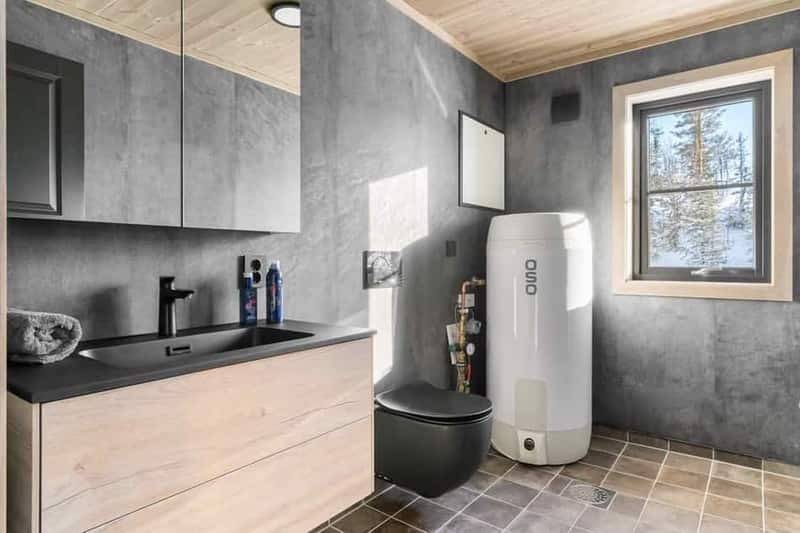
Book a licensed Meridian technician for this job.
Call (614) 756-0643Meridian draws its drinking water from roughly 25 municipal wells between 400 and 800 feet deep, tapping three separate aquifers, and runs it through advanced treatment facilities that strip naturally occurring iron and manganese before chlorination. Treated groundwater is safe and reliable, but it is still mineral rich, and those minerals are what shorten the life of anything that heats water.
City of Meridian water averages about 7 grains per gallon, with independent testing putting parts of the system closer to 8.4 grains per gallon. Anything above eight grains per gallon sits at the hard end of the scale, and across the wider valley the range runs higher still. Every gallon that passes through your tank leaves a little calcium and magnesium behind.
There is a second local factor that has nothing to do with chemistry. Meridian has grown more than 260 percent from its year-2000 population and is now Idaho’s second largest city, with about 60 percent of its housing units built after 2000. A very large number of Meridian homes were built in the same handful of years, which means an entire neighbourhood’s original builder-grade water heaters reach the end of their service life at roughly the same time. If your house went up in the first half of the 2000s and still has its original tank, it is well past the point where planning a replacement beats reacting to one.
Source: City of Meridian water FAQ

Get this looked at before it turns into a bigger repair.
Call (614) 756-0643We quote the job before we start it, so you are never approving work you cannot see the cost of. What moves the number is straightforward.
Request a visit and we will confirm your appointment window.
Call (614) 756-0643A handful of low-effort habits genuinely change how many years you get out of a tank in this valley.
Talk to a technician who works on Treasure Valley homes every day.
Call (614) 756-0643Water heaters combine a pressure vessel with either a fuel connection or a high-current electrical circuit, so the person doing the work matters more than the brand of tank. A few questions separate a proper installation from a fast one.
Ask whether the quote includes a thermal expansion tank if your home has a pressure reducing valve or check valve at the meter. Ask whether the relief valve discharge will run full size to a safe termination point. Ask whether a permit will be pulled where your city requires one, and ask what happens to the old unit. Any licensed Idaho plumber should answer all four without hesitation, because they are basic code requirements rather than upsells.
Have a licensed tech diagnose it and quote the repair up front.
Call (614) 756-0643A few checks a homeowner can safely do first, and what each result actually tells you.
| What you find | Likely cause | Worth trying yourself? |
|---|---|---|
| Pilot will not stay lit | Failing thermocouple, or draft issue at the flue | No. Combustion safety is not a DIY check |
| Electric tank, no hot water at all | Tripped high limit switch behind the access panel, or a failed upper element | Resetting the switch once is reasonable. Repeated tripping means call |
| Hot water runs out fast | Broken dip tube, failed lower element, or heavy sediment reducing capacity | No. Requires opening the tank or testing electrical components |
| Rumbling or popping | Hardened sediment on the tank floor | A flush can help if caught early. Long-neglected tanks often will not clear fully |
| Relief valve dripping | Excess system pressure, often a missing expansion tank | Do not plug or disable the valve. It is doing its job. Call to address the cause |
| Puddle at the base of the tank | Tank shell has failed, or a fitting is loose | Shut off water and power or gas, then call. This does not get better on its own |
If a check involves gas, electrical components inside the unit, or the tank itself, that is where professional diagnosis takes over. The checks above are the ones you can safely do from outside the unit.
Schedule service anywhere from Star to Mountain Home.
Call (614) 756-0643The biggest single swing in price is whether the job is a like-for-like swap or involves changing fuel type or configuration. Going from a tank to a tankless water heater, or from electric to gas, involves new venting, new gas line capacity or a dedicated 240 volt circuit on your panel, and sometimes structural changes to where the unit can sit, and none of that is optional once you have made the switch.
The second largest factor is what the existing installation is missing against current code. Homes that have never had any plumbing touched since original construction often lack a thermal expansion tank, have an undersized relief discharge line, or have venting that would not pass inspection today. Bringing those up to standard is part of doing the job properly rather than an unnecessary add-on, and it is worth budgeting for even if the original quote assumed a simpler swap.
Capacity also matters more than people expect. A larger tank costs more up front but avoids the recurring frustration and cost of a household that has outgrown a 40 gallon unit. We would rather size correctly the first time than sell the cheapest option and have you calling again in a year.
Ask for an upfront price before any work starts.
Call (614) 756-0643The price depends on the fuel type, the capacity, and whether the existing installation needs code corrections such as adding a thermal expansion tank or resizing the relief discharge line. We give you the full price in writing before any work starts, so there is no situation where the number moves after the fact. We do not publish a flat figure because quoting a replacement without seeing the space, the venting and the connections would be guessing.
Yes, on most tanks. Turn off the power or gas, connect a hose to the drain valve, run it somewhere safe, and open the valve until the water runs clear. The two things that go wrong are a drain valve that will not close again once it has been opened, which is common on older plastic valves, and forgetting to restore power or gas afterward. If your tank has never been flushed and is more than a few years old, expect the first flush to be slower and murkier than a routine one.
This is usually a reaction between the anode rod and sulphur-reducing bacteria in the water, not a gas leak. It happens more often on well water and in tanks that have sat unused for a while. Replacing the anode rod with a different alloy, or in persistent cases removing it, generally resolves it. If the smell is anywhere else in the house besides the hot water, that is a separate issue and worth mentioning when you call.
Sometimes, but the more common cause is a household’s hot water use growing past a tank that was correctly sized when it was installed. Before assuming you need a bigger tank, it is worth checking whether a failed lower element or a broken dip tube is quietly reducing the usable capacity you already have. If the tank genuinely is undersized for the household, resizing at replacement is the right call.
A faint tapping or ticking as metal expands and contracts while it heats up for the first time is normal and settles down. Loud popping or rumbling is not normal on a new tank and points to trapped air in the lines or, on rare occasions, a manufacturing issue, so it is worth a follow-up call rather than waiting it out.
Yes, but it is a bigger job than a like-for-like swap. Switching to gas means running a gas line and proper venting where none existed. Switching away from gas means adding the electrical capacity, usually a dedicated 240 volt circuit, that an electric tank requires. Both are routine work, but they should be priced and planned as a conversion rather than assumed to be the same cost as a matching replacement.
Roughly ten gallons of stored hot water capacity, which sounds small but affects how many consecutive showers or how much simultaneous laundry and dishwashing a household can run before recovery time becomes noticeable. The right size depends on household size and habits more than square footage, which is why we ask about usage rather than simply matching the old tank’s rating.
If cold water pressure is normal, the restriction is somewhere specific to the hot side, commonly a partially closed shutoff valve at the water heater, sediment restricting flow through the tank itself, or in older galvanized systems, corrosion narrowing the hot lines faster than the cold, since hot water accelerates that corrosion.
It depends entirely on what failed. A thermocouple, an element, a thermostat or a gas control valve are all reasonable repairs even on an older tank, and they cost a small fraction of a replacement. What is not repairable at any age is a leak from the tank shell itself, because that means the steel liner has corroded through. Our rule of thumb is that we will happily repair a component on a ten year old tank, but we will also tell you honestly that you are likely to be replacing the unit within a couple of years.
That noise is water trapped underneath a layer of hardened mineral sediment on the floor of the tank. When the burner fires, that trapped water flashes to steam and forces its way out through the deposits, which produces the popping. It is extremely common in Meridian because of local water hardness. Flushing the tank can help if the sediment has not fused solid, and a water softener prevents it from building up again.
If your home has a pressure reducing valve or a check valve at the water meter, then yes. Those devices make the plumbing a closed system, so when water is heated and expands it has nowhere to go and pressure spikes. An expansion tank absorbs that expansion. Without one, the temperature and pressure relief valve opens repeatedly to shed the pressure, and homeowners usually assume the valve is defective when it is actually doing its job.
120 degrees Fahrenheit is the usual recommendation. It is hot enough for showers, laundry and dishwashing, it reduces the risk of scalding, and it puts less stress on the tank than running at the maximum setting. If anyone in the household is immunocompromised there are reasons to run hotter with a mixing valve at the outlet, which is worth discussing rather than simply turning the dial up.
A straightforward like-for-like tank swap in an accessible garage is typically a half day job. It takes longer if the old unit has to be drained slowly because of heavy sediment, if access is tight, if the venting or gas line needs to be corrected, or if you are switching type, for example from a tank to a tankless unit, which involves new venting and often a gas line upgrade.
Yes, where the local jurisdiction requires one. Idaho plumbing work is governed by the Uniform Plumbing Code and administered through the Idaho Division of Occupational and Professional Licenses, and cities in the valley set their own permit requirements on top of that. Permit fees are set by the city or county and passed through at cost.
Meridian, Boise, Nampa, Caldwell, Eagle, Kuna, Star, Middleton and Mountain Home. If you are just outside one of those, ask anyway, because coverage depends on the day’s schedule more than a hard boundary.
Schedule service anywhere from Star to Mountain Home.
Call (614) 756-0643Tell us what the water heater is doing and we will get a licensed plumber scheduled. If it is leaking, shut off the water supply and the gas or breaker first, then get in touch.