Air handler services
Where restricted airflow from a bad filter does its damage.
Learn moreA filter costs very little and protects everything downstream. It is also the single most common cause of the expensive failures we get called out to fix.
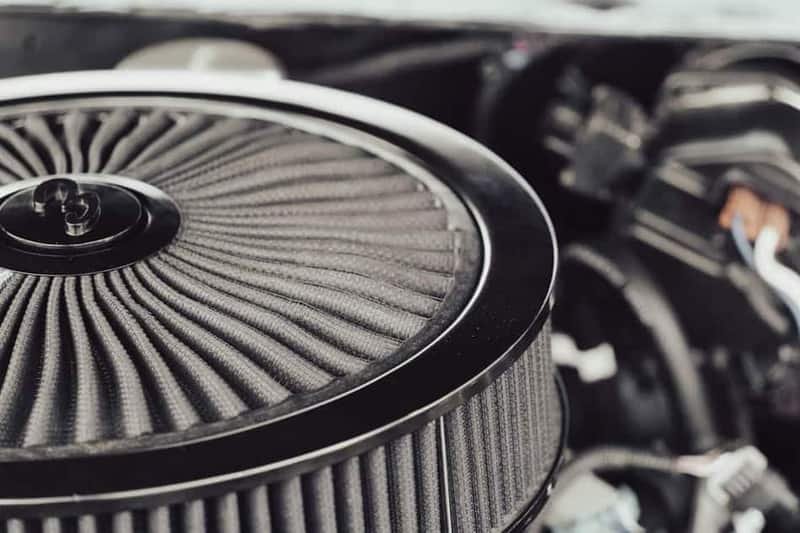
More often than the packet says, because this valley is dustier than average. As a working guide: a one inch filter every one to three months, a four to five inch media filter every six to twelve months.
Shorten those intervals if you have pets, if anyone in the house has allergies, if you are in a newly built area with construction dust nearby, or during late summer wildfire smoke, when filters load dramatically faster than normal.
The reliable method is to look at it. Hold it up to a light. If you cannot see light through it, it should have been changed already.
There is a widespread misunderstanding worth clearing up. The primary purpose of the filter in your heating and cooling system is protecting the equipment, particularly the evaporator coil and the blower wheel inside the air handler. Improving the air you breathe is a genuine secondary benefit, but the filter was put there to keep the machine clean.
That distinction matters because it explains the trap people fall into. Filters are rated by MERV, which describes how small a particle they capture. Higher MERV captures more, and that sounds strictly better. But a denser filter is also harder to pull air through, and your system was designed around a specific amount of resistance.
Fit a high MERV filter into a housing sized for a basic one and static pressure rises. The blower works harder, airflow drops, and the consequences are real: frozen evaporator coils in summer, overheating heat exchangers in winter, higher energy use, and strain on the blower motor. It is entirely possible to damage a system by filtering the air too well through too small an opening.
The way out is not a worse filter. It is more filter area. A four or five inch deep media filter has vastly more surface area than a one inch panel, so it can achieve high MERV filtration with a low pressure drop. That is the correct answer for anyone who genuinely wants better filtration, and it is a housing change rather than a filter change.
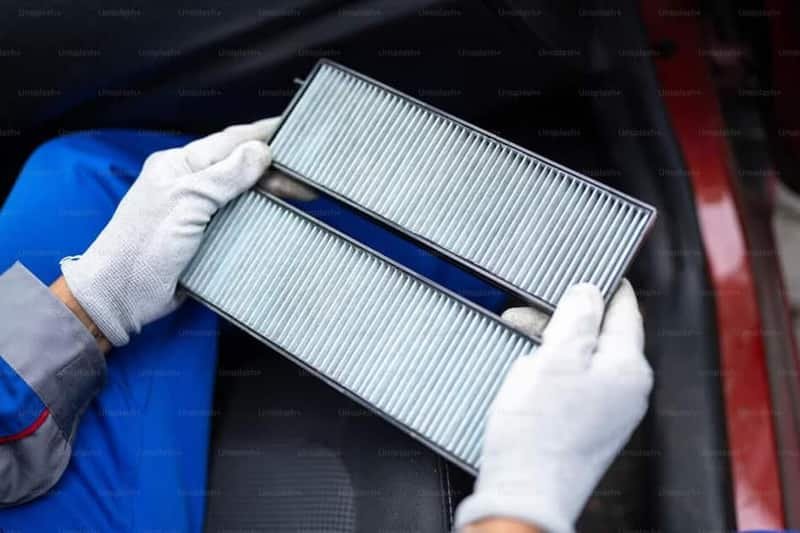
Book a licensed Meridian technician for this job.
Call (614) 756-0643Most of these are avoidable with a filter that costs a few dollars.
Get this looked at before it turns into a bigger repair.
Call (614) 756-0643Changing a filter is something you can do yourself. Getting the filtration strategy right is where we add value.
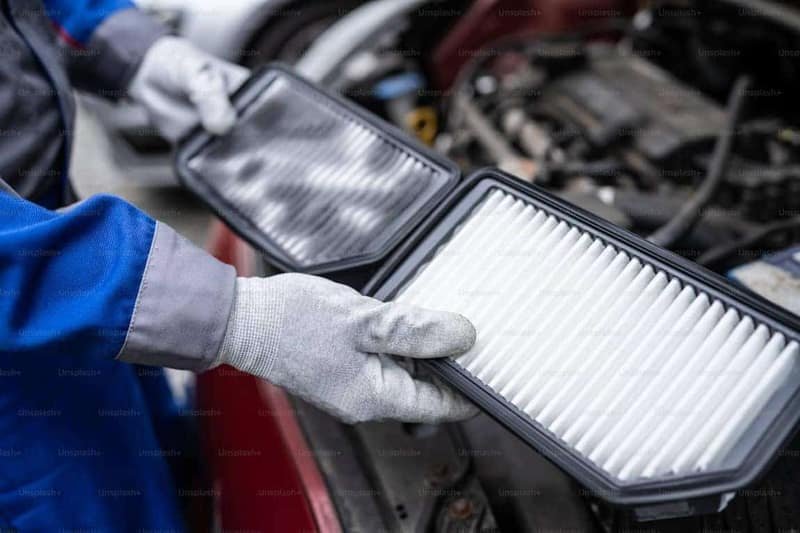
Establishing what your system can handle. We measure static pressure with your current filter in place and compare it against the equipment’s design specification. That tells you objectively whether your current filter is restricting the system, and how much headroom you have for better filtration. This is a measurement almost nobody has ever had done on their house.
Recommending the right filter. Based on that measurement and on what you actually want to achieve. Someone with allergies who wants genuine particulate removal needs a different answer from someone who just wants the coil kept clean, and both answers have to fit within what the system can breathe through.
Filter housing upgrades. This is the real solution for anyone wanting high filtration. Fitting a four or five inch media cabinet in place of a one inch slot gives dramatically more filter area, which allows high MERV filtration at a low pressure drop, and it extends the change interval to six or twelve months.
Addressing filter bypass. A filter only works if all the air goes through it. Gaps around the edges of a poorly fitting filter, or an unsealed filter slot, let air take the easy route around it. We see this constantly, and it is why some homes have dust on the furniture despite a good filter.
Wildfire smoke planning. If you want meaningfully better indoor air during smoke season, we can tell you what your system will actually support and what the alternatives are.
Request a visit and we will confirm your appointment window.
Call (614) 756-0643Higher is not automatically better. The right rating depends on your system as much as your goals.
| MERV range | What it captures | Suitable for |
|---|---|---|
| MERV 1 to 4 | Large particles only. Lint, carpet fibre, larger dust | Minimal equipment protection. Generally too coarse to recommend |
| MERV 5 to 8 | Household dust, pollen, mould spores, pet dander | The practical baseline for most systems. Good equipment protection, low pressure drop |
| MERV 9 to 12 | Finer dust, some smoke particulate, auto emissions | Good balance for allergy sufferers, provided the housing supports it |
| MERV 13 to 16 | Fine smoke particulate, bacteria, very fine dust | Genuine air quality improvement, but only with adequate filter area. Requires a deep media cabinet in most homes |
The rule that matters: a MERV 13 filter in a one inch slot will usually restrict a residential system badly. The same MERV 13 in a five inch media cabinet often has a lower pressure drop than the MERV 8 one inch filter it replaced, because of the vastly greater surface area.
Talk to a technician who works on Treasure Valley homes every day.
Call (614) 756-0643Usually part of an annual maintenance visit rather than a separate call.
Protecting the equipment, managing allergies, or dealing with wildfire smoke. These lead to different recommendations.
Static pressure against the equipment’s design, which establishes how much headroom you actually have.
The right filter for your system as it is, or a housing upgrade if your goals need more than the current setup can support.
Correct filter fitted, or a media cabinet installed and the slot sealed against bypass.
A realistic change schedule for your household and this valley, rather than the number on the packet.

Have a licensed tech diagnose it and quote the repair up front.
Call (614) 756-0643Three local conditions combine to make this a demanding environment for air filtration.
Agricultural dust. Ada, Canyon and Elmore counties are farmed at scale, and field work, harvest and dry summer soil put a great deal of fine particulate into the air. Homes near open ground, which describes a great many newer subdivisions built on former farmland, get the most of it.
Late summer wildfire smoke. Regional smoke reaches this valley most years, and The Treasure Valley sits under temperature inversions through much of the winter, which traps carbon monoxide and fine particulates close to the ground. Smoke particulate is very fine, so it passes low MERV filters readily, and during a smoke episode the concentration is high enough that filters load in weeks rather than months. This is the period when checking your filter monthly genuinely matters.
Construction dust. Meridian has grown more than 260 percent from its year-2000 population and is now Idaho’s second largest city, with about 60 percent of its housing units built after 2000. Sustained building means many valley homes sit near active construction, and construction dust is both heavy and abrasive. If there is building work near you, expect to change filters considerably more often.
The practical takeaway is that manufacturer intervals printed on filter packaging assume average conditions, and this valley is not average. Looking at the filter is worth more than following a schedule.
Source: Idaho DEQ regional air quality

Schedule service anywhere from Star to Mountain Home.
Call (614) 756-0643Filter changes are the least expensive maintenance available, and they are included as part of an annual service visit. Upgrades are priced separately.
Ask for an upfront price before any work starts.
Call (614) 756-0643Same day and next day appointments are available across the valley.
Call (614) 756-0643| Season | What’s loading the filter | What to do |
|---|---|---|
| Spring | Pollen and post-winter dust | Check at the start of the season, ahead of the cooling tune-up |
| Summer | Agricultural dust from field work and dry soil | Check monthly, especially in homes near open farmland |
| Late summer | Wildfire smoke, when it reaches the valley | Check every few weeks, since smoke particulate loads filters fast |
| Fall | Construction dust if nearby building is active | Shorten the interval near any active site |
| Winter | Generally the lightest load of the year | Standard interval is usually fine, but still worth a look |
Book a licensed Meridian technician for this job.
Call (614) 756-0643A one inch filter costs very little, yet a neglected filter is behind a meaningful share of the expensive repairs described elsewhere on this site: frozen evaporator coils, overheated heat exchangers, strained blower motors and higher electricity bills. Measured against those repair costs, filter changes are the cheapest insurance in the entire system.
The upgrade path is similar. A media filter cabinet costs more upfront than a one inch slot, but it extends the change interval to six or twelve months and typically runs at lower static pressure than a restrictive one inch filter, which reduces strain on the blower over the life of the equipment. For a system already working hard through valley summers, that reduction in resistance is worth something on its own.
Get this looked at before it turns into a bigger repair.
Call (614) 756-0643Most residential systems have the filter in one of two places: a slot in the return air duct near the furnace or air handler, or a slot built into a wall-mounted or ceiling-mounted return grille somewhere in the house. Homes with a single central return typically have the filter at the equipment itself, while homes with a filter grille in a hallway ceiling or a central wall have it there instead, closer to where the air actually enters the system.
If you are not sure which type your home has, the return air grille is the largest vent that pulls air in rather than blowing it out, and it is worth checking there first before assuming the filter must be at the furnace. Some newer valley homes have more than one return, and multi-return systems sometimes have more than one filter to check.
Request a visit and we will confirm your appointment window.
Call (614) 756-0643A furnace filter cleans only the air that passes through the ductwork, and only while the blower is running, so it is a partial answer to indoor air quality rather than a complete one. Dedicated air purification, whether an add-on UV light, an electronic air cleaner or a portable purifier in specific rooms, addresses gaps that filtration alone leaves.
For most valley homes concerned mainly about wildfire smoke and everyday dust, a well-chosen media filter running at a MERV rating the system can actually support, combined with the blower set to run continuously rather than only when heating or cooling is called for, does a reasonable job. Households with specific allergy or respiratory concerns often benefit from a conversation about the additional options rather than assuming the standard filter setup is doing everything it could.
Talk to a technician who works on Treasure Valley homes every day.
Call (614) 756-0643In this valley, more often than the packaging suggests. As a working guide, one inch filters every one to three months and four to five inch media filters every six to twelve months. Shorten those intervals if you have pets, if anyone has allergies, if there is construction nearby, or during late summer wildfire smoke when filters load dramatically faster. The most reliable method is simply to look: hold the filter up to a light, and if you cannot see light through it, it is overdue.
No, and this is the most consequential misunderstanding about filtration. A higher MERV filter captures smaller particles, but it is also harder to pull air through, and your system was designed around a specific amount of resistance. Fitting a high MERV filter into a housing sized for a basic one raises static pressure, reduces airflow and can freeze evaporator coils in summer or overheat heat exchangers in winter. The correct route to better filtration is more filter area, meaning a deep media cabinet, rather than a denser filter in the same small slot.
Smoke particulate is very fine, so meaningful smoke filtration needs MERV 13 or better. The critical caveat is that a MERV 13 filter in a one inch slot will usually restrict a residential system badly. If smoke filtration matters to you, the right approach is installing a four or five inch media cabinet, which provides enough surface area to run MERV 13 with a low pressure drop. We can measure your system’s static pressure and tell you exactly what it will support before you spend anything.
Yes, and it is one of the most common root causes behind expensive repairs. On the cooling side, restricted airflow drops the evaporator coil below freezing, it ices over, and in the worst case liquid refrigerant returns to the compressor. On the heating side, restricted airflow means the furnace‘s heat exchanger cannot shed its heat into the airstream, so it overheats and trips the high limit repeatedly, and sustained overheating is one of the mechanisms that eventually cracks a heat exchanger. A filter is the cheapest component in the system and neglecting it damages the most expensive ones.
The arrow points in the direction of airflow, which means it points toward the blower and away from the return duct. Filters are built with a support structure on the downstream side to stop them collapsing under the pressure of air being pulled through them. Fitted backwards, the filter flexes and can partially collapse, its performance drops, and pressure loss increases. It is a small detail that is got wrong surprisingly often.
The most likely explanation is filter bypass, meaning air is going around the filter rather than through it. Gaps at the edges of a filter that does not fit its slot snugly, or an unsealed filter housing, let air take the path of least resistance. Since the filter only cleans the air that actually passes through it, a well-rated filter with significant bypass performs poorly. Sealing the filter slot and using a properly sized filter often produces a noticeable improvement, and it is a cheap fix.
Generally not for equipment protection. Washable filters are typically low MERV, so they capture large particles while letting finer dust through to your coil and blower wheel, which is exactly what you wanted the filter to prevent. They also need to be completely dry before refitting, since a damp filter in the airstream encourages biological growth. For most homes a good disposable pleated filter, changed on a sensible interval, does a better job for very little money.
The size is printed on the frame of your existing filter, and it is worth confirming rather than guessing from the slot dimensions alone, since filters can sit slightly loose or tight depending on the housing. If you cannot find a size marking or the filter is missing, the slot itself can be measured directly. Getting the size wrong leads either to gaps that let air bypass the filter or to a filter that will not seat properly.
Yes, and it is one of the most common causes. A clogged filter restricts the warm indoor air that needs to pass over the evaporator coil, and when that airflow drops enough, the coil temperature falls below freezing and the condensation on it turns to ice. This is one of the reasons a filter check is the first thing worth doing before calling for a no-cool service, since it costs nothing to rule out.
The only reliable way is measuring static pressure with your current filter in place and comparing it against the equipment’s design specification. That tells you objectively how much room you have before a denser filter would restrict airflow. Guessing based on the MERV number alone ignores that the same rating behaves very differently in a one inch slot compared with a deep media cabinet.
Yes. The same filter protects both the furnace’s heat exchanger in winter and the evaporator coil in summer, since air conditioning and gas heating share the same blower and ductwork in most homes. Summer is actually one of the higher-demand seasons for filter changes in this valley, given agricultural dust through the dry months and the possibility of wildfire smoke in late summer.
Get this looked at before it turns into a bigger repair.
Call (614) 756-0643We measure static pressure and tell you objectively, rather than guessing. Especially worth doing before smoke season across Meridian, Boise, Nampa and the valley.