Switches and outlet services
Outdoor outlets with in-use covers, and the switching that controls exterior lighting.
Learn moreTreasure Valley summer evenings are the best part of the year to be outside. Lighting designed properly extends that, without turning your garden into a car park.
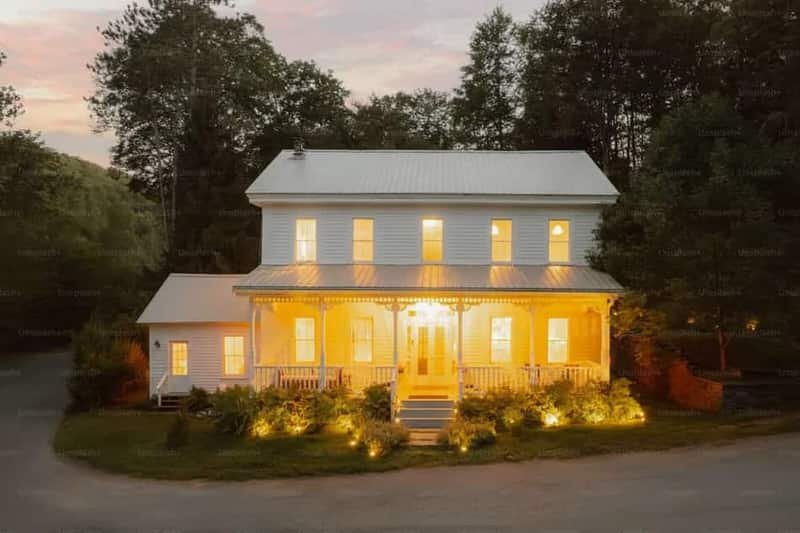
Line voltage runs at standard household voltage. It is used for wall-mounted fixtures, security lighting and anything needing significant output, and it requires proper burial depth, conduit where applicable, weatherproof enclosures and GFCI protection.
Low voltage runs at 12 volts through a transformer. It is the standard for landscape lighting: path lights, uplighting on trees, wash lighting on walls. Because the voltage is low, the cable requirements are far less demanding, so it can be run through beds and around planting with much less disruption.
Most good outdoor schemes use both: line voltage for the fixtures attached to the building, low voltage for everything in the landscape.
The most common mistake is a single powerful floodlight aimed at everything. It creates glare, it destroys your night vision so you actually see less, it throws hard shadows that give anyone a place to stand unseen, and it annoys the neighbours. Bright is not the same as well lit.
Good outdoor lighting is layered, using several modest fixtures each doing one job.
Path and step lighting puts light where feet go, low and shielded so you see the ground rather than the bulb. Steps in particular are where poor lighting causes actual injuries.
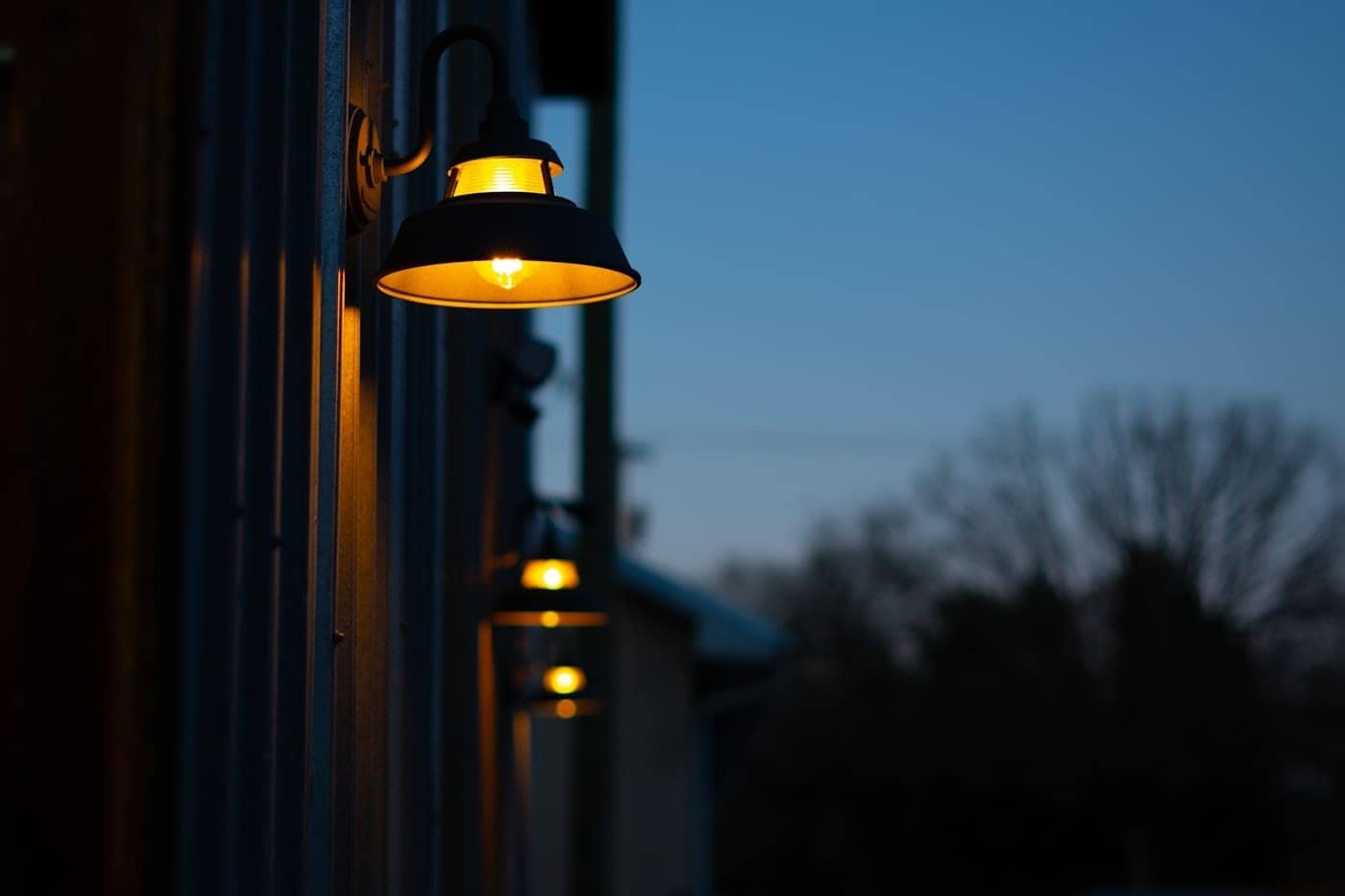
Uplighting and accent lighting picks out trees, architectural features and textured surfaces. This is what makes a house look considered at night rather than merely visible.
Task lighting covers the places you do things: the grill, the outdoor kitchen, the seating area.
Security lighting works best as even, moderate coverage of approaches rather than one intense beam. Motion activation is genuinely useful, since a light that comes on is far more noticeable than one that was already on.
Two technical points worth knowing. Colour temperature matters more outdoors than in: warm light in the 2700 to 3000 kelvin range flatters planting and brickwork, while cooler light looks stark and institutional on a house. And shielding, meaning fixtures that direct light down rather than sideways and up, reduces glare, improves what you can actually see, and keeps light out of neighbours’ windows and off the sky.
Same day and next day appointments are available across the valley.
Call (614) 756-0643Most projects start with one of these, and grow once people see what the first stage does.
Book a licensed Meridian technician for this job.
Call (614) 756-0643Outdoor electrical work has requirements indoor work does not, and skipping them causes failures a few winters later.
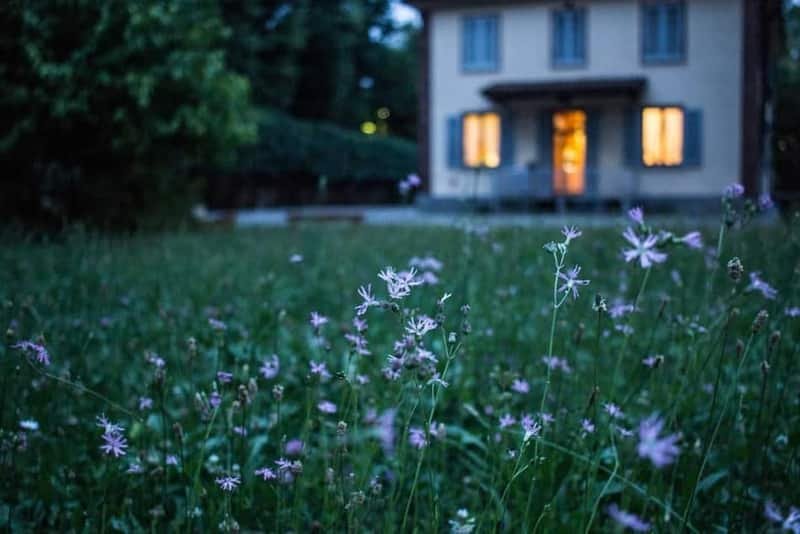
Design first. We walk the property with you, ideally at dusk, and work out what each area needs. What gets lit, from where, and how bright, decided before anything is installed.
Correct wiring methods. Outdoor circuits need weather rated enclosures, in-use covers on outdoor receptacles that keep them protected while something is plugged in, correct burial depth for direct burial cable or conduit, and GFCI protection. That last one is not negotiable outdoors, where water and electricity meet routinely, the same rule covered on our switches and outlets page.
Low voltage systems installed properly means a transformer sized with headroom for future additions, cable runs planned so voltage drop does not leave the far fixtures dim, and connections made with proper waterproof connectors rather than the pierce-type connectors that corrode and fail within a few seasons. Voltage drop is the single most common reason a low voltage system that looked good on day one has three dim fixtures at the end of the run two years later.
Controls. Photocells for dusk to dawn, timers or astronomic timers that track sunset through the year, motion sensors for security, and smart controls where you want them.
Fixtures that survive here. Treasure Valley conditions include hot dry summers, freezing winters, irrigation spray and sprinkler systems. Fixture quality and sealing matter, and cheap landscape fixtures generally do not last more than a few seasons in that combination.
Get this looked at before it turns into a bigger repair.
Call (614) 756-0643Most good schemes use both. This is what each is for.
| Low voltage (12V) | Line voltage (120V) | |
|---|---|---|
| Typical use | Path lights, uplighting, planting and garden features | Wall fixtures, security lighting, porch and entry lighting |
| Installation | Cable can be run shallow through beds with minimal disruption | Requires proper burial depth, conduit where applicable, weather rated enclosures |
| Flexibility | Fixtures easy to move and add as planting matures | Fixed positions. Changes mean electrical work |
| Output | Ample for landscape and accent lighting | Higher output where genuinely needed |
| Main failure mode | Voltage drop leaving distant fixtures dim, and corroded connectors | Water ingress at enclosures and fixtures |
| Adding later | Straightforward if the transformer was sized with headroom | More involved, which is why planning matters |
If you are planning to extend a low voltage system later, say so at the design stage. Sizing the transformer and planning the cable runs with that in mind costs very little now and saves replacing the transformer when you add six more fixtures.
Request a visit and we will confirm your appointment window.
Call (614) 756-0643Most residential schemes are completed in a day or two.
Safety on steps, using the patio after dark, security, or making the property look good at night. These lead to different designs.
Ideally at dusk, so we can see what the space actually does as light falls rather than imagining it.
Fixture positions, layers, controls, and the electrical work needed, priced before anything begins.
Cable runs, fixtures set, transformer and controls installed, with GFCI protection and weather rated enclosures throughout.
Fixtures aimed at night, when you can actually see the effect. This is the step that makes the difference.
Talk to a technician who works on Treasure Valley homes every day.
Call (614) 756-0643Treasure Valley winters routinely drop into the low twenties overnight in January, while July afternoons average near 92 degrees, so the same house has to survive hard freezes and high desert heat in the same year. The relevant part for lighting is the summer: long, dry, warm evenings that make outdoor space genuinely usable for months. Patio culture is strong across this valley for exactly that reason, and outdoor lighting is what extends those evenings past sunset.
Meridian has grown more than 260 percent from its year-2000 population and is now Idaho’s second largest city, with about 60 percent of its housing units built after 2000. Newer valley homes were typically finished with minimal exterior lighting, usually a porch light and perhaps a floodlight on the garage. Landscaping and outdoor living space then gets built out over the years that follow, and lighting is one of the last things added. That is why so much of this work is retrofit rather than new construction.
Three local practicalities shape how we install here.
Irrigation. Valley properties commonly have extensive sprinkler systems, and landscape lighting shares the same ground. Fixtures and connections get sprayed regularly, which means proper waterproof connectors are not optional, and it means coordinating cable routes with irrigation lines so neither damages the other.
Freeze and thaw. Winter cycles move soil and stress buried connections. This is a large part of why cheap fixtures and pierce-type connectors fail here within a few seasons.
Dark skies. Idaho takes night sky quality seriously, and central Idaho is home to the country’s first International Dark Sky Reserve. Many communities encourage shielded, downward directed fixtures. That is worth doing regardless of any requirement, because shielded lighting genuinely produces better visibility with less glare, and it is a good neighbour.
Source: Boise climate averages
Have a licensed tech diagnose it and quote the repair up front.
Call (614) 756-0643Quoted after the design walkthrough, since fixture count and cable runs drive nearly all of it.
Schedule service anywhere from Star to Mountain Home.
Call (614) 756-0643Line voltage outdoor circuits do, since they involve the same permitted electrical work as any other circuit, including correct burial depth, weatherproof enclosures and GFCI protection. Idaho enforces the Uniform Plumbing Code rather than the International Plumbing Code, and the electrical side runs on the National Electrical Code, both administered through the Idaho Division of Occupational and Professional Licenses. Low voltage landscape lighting sits on the far side of a transformer at reduced voltage, which is why some homeowners install simple low voltage kits themselves, though design, transformer sizing and voltage drop planning are exactly where a professional design walkthrough pays off.
Ask to see examples of outdoor work the contractor has done, since fixture placement and aiming are as much a design skill as an electrical one, and a poorly aimed scheme with correct wiring still looks bad. Ask specifically about connector type on any low voltage work, since proper waterproof connectors against cheap pierce-type connectors is one of the biggest differences between a system that lasts and one that fails within a couple of seasons.
For anything involving a new outdoor circuit, confirm the permit is included and ask about GFCI protection explicitly, since it is required without exception outdoors and it is occasionally missed on older work being extended rather than replaced.
Ask for an upfront price before any work starts.
Call (614) 756-0643A little seasonal attention keeps a system looking designed rather than neglected.
Same day and next day appointments are available across the valley.
Call (614) 756-0643The main driver is the number of fixtures and the length of the cable runs. A modest scheme lighting a path and a couple of trees is a small project. A full landscape design covering planting, architecture, steps and a patio is considerably more. Low voltage systems cost less to install than line voltage because the cable requirements are far less demanding. We quote after walking the property, ideally at dusk so we can see what the space actually needs.
They do different jobs and most good schemes use both. Low voltage, running at 12 volts through a transformer, is the standard for landscape lighting because the cable can be run through beds with minimal disruption and fixtures are easy to reposition as planting matures. Line voltage is used for building-mounted fixtures, security lighting and anywhere significant output is needed, and it requires proper burial depth, weather rated enclosures and GFCI protection.
Almost certainly voltage drop. In a low voltage system, voltage falls along the length of the cable run, so fixtures furthest from the transformer receive less than those closest to it. If the runs were not planned for it, the far end of the system ends up visibly dim. It is fixable, through rebalancing the runs, using a hub or multi-tap wiring arrangement, or upgrading the cable. It is also entirely preventable at design stage, which is why run planning matters more than it sounds like it should.
Yes, without exception. Outdoor receptacles are exactly where water and electricity meet, and GFCI protection is what prevents a fault from becoming an electrocution. Outdoor outlets also need weather resistant receptacles and an in-use cover, meaning a cover that keeps the outlet protected while something is plugged into it, rather than one that only closes when the outlet is empty. Both requirements are commonly missed on older installations.
Warm, generally in the 2700 to 3000 kelvin range. Warm light flatters planting, brick, stone and timber, and it produces the inviting look most people are actually after. Cooler light, above about 4000 kelvin, looks stark and institutional on a house and tends to read as a commercial car park rather than a garden. Consistency matters too: mixing colour temperatures across a property is one of the most noticeable ways a scheme looks unplanned.
Not necessarily, and a single very bright floodlight often makes things worse. Intense light creates glare that destroys your own night vision, and it throws hard shadows that give someone somewhere to stand unseen. Even, moderate coverage of approaches is more effective than one intense beam. Motion activation is genuinely useful, because a light that suddenly comes on draws attention in a way a light that was already on does not. Shielded fixtures that direct light downward improve what you can actually see while reducing glare.
It depends heavily on fixture quality, and this is one area where cheap equipment genuinely does not last. Treasure Valley conditions are demanding: hot dry summers, freezing winters, and regular irrigation spray on landscape fixtures. Quality LED fixtures with good seals can last many years. Inexpensive fixtures often fail within a few seasons, usually through water ingress at the seals or corrosion at the connections. Using proper waterproof connectors rather than pierce-type connectors makes a substantial difference to system life.
New line voltage circuits are permitted electrical work in the jurisdictions we serve, the same as any other new circuit in the house. Low voltage landscape lighting fed from an existing outdoor circuit typically does not require a separate permit for the low voltage side itself, since it sits behind a transformer at reduced voltage. If a project includes a new outdoor circuit to feed the transformer, that circuit is what needs the permit.
Basic low voltage kits are designed for homeowner installation, and for a handful of path lights that is a reasonable approach. Where it tends to go wrong is voltage drop on longer runs, connector quality, and simply not having a lighting design plan before fixtures go in the ground, which is how people end up with an uneven, glary result despite following the kit instructions correctly. A design walkthrough before buying fixtures avoids most of that.
Very little. LED landscape fixtures typically draw only a few watts each, so even a scheme with a dozen or more fixtures usually draws less than a single incandescent floodlight would. Running a well-designed landscape lighting system through the night on a photocell has a modest impact on an electric bill, which is part of why layered, always-on landscape lighting has become the norm rather than something people worry about running sparingly.
Low, shielded fixtures placed so you see the ground rather than the light source itself, spaced closely enough that there are no dark gaps between pools of light. Step lights recessed into the riser or mounted low on an adjacent wall work better than a single light at the top of a staircase, which throws long shadows down the treads and can make depth harder to judge rather than easier.
Yes, in most cases. Low voltage cable can be run shallow through mulch beds and around existing planting with minimal disruption compared with a line voltage trench, which is one of the reasons landscape lighting is such a common retrofit project rather than something only done during initial landscaping. Established lawns and hardscaping do require more careful routing, and that is part of what a design walkthrough plans for before any digging starts.
Warning signs include a fixture with a cracked or missing lens exposing the bulb and wiring, a receptacle cover that no longer closes properly, visible corrosion or green buildup at connections, or a GFCI outdoors that no longer trips when tested. Any of these is worth having checked, since outdoor electrical components face conditions indoor devices never see, and failure there tends to be more consequential given the exposure to moisture.
Most well designed systems use both together. A photocell turns the lights on automatically at dusk regardless of the time of year, which a fixed timer alone cannot track accurately through changing seasons. A timer or astronomic timer then turns them off later in the evening once the space is no longer in use, so the system is not running all night for no purpose. Combining the two gives automatic, sensible operation without anyone needing to adjust settings through the year.
Yes, smart control options exist for both line voltage fixtures and low voltage transformers, allowing scheduling, remote on and off control, and sometimes dimming from a phone. This is worth specifying at the design stage, since it can affect which transformer or switching hardware is used, and retrofitting smart control later is usually straightforward if the initial wiring anticipated it.
Book a licensed Meridian technician for this job.
Call (614) 756-0643Designed lighting rather than a floodlight, installed to survive irrigation and Idaho winters. Serving Meridian, Eagle, Star, Boise and the wider valley.