Plumbing
Water heaters, drains, sewer lines, leaks, gas lines and whole-home repiping.
See plumbing servicesEagle homes tend to be larger, more systems-heavy and more likely to have hydronic heating, multiple zones and whole-home water treatment. That needs a different skill set.

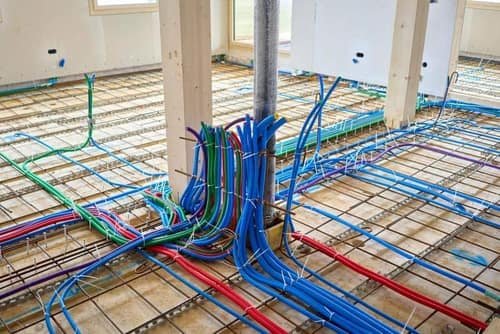
Complexity. Eagle has a high proportion of custom and larger homes, and those homes tend to have systems that a standard tract house does not: hydronic and radiant floor heating, multiple heating and cooling zones, whole-home water treatment, hot water recirculation, standby generators, outdoor kitchens and irrigation systems.
More systems means more interactions, and interactions are where diagnosis gets interesting. A hot water recirculation loop can mask a leak. A multi-zone system can have one zone failing while the rest works perfectly. Radiant floors respond over hours rather than minutes, so control problems look like equipment problems.
Larger lots also mean more properties on private wells and more outbuildings with their own electrical and plumbing needs.
Meridian Plumbing is a licensed plumber in Eagle, Idaho, and this page covers what plumbing, heating, cooling and electrical work actually looks like here.
A modest house has a water heater, a furnace, an air conditioner and a panel. A larger Eagle home may have a boiler serving radiant floors across several zones, a separate forced air system for cooling, a whole-home softener and filtration train, a hot water recirculation pump, a standby generator on its own gas supply, an outdoor kitchen, a pool or spa heater, and a shop with its own subpanel.
Each of those is straightforward on its own. Together they interact, and that changes how diagnosis works.
A concrete example we run into regularly: a home with hot water recirculation and a suspected leak. Recirculation keeps hot water moving through the loop continuously, which means the sound of water moving in the walls is normal, and it masks exactly the audible clue that would otherwise point at a leak. Isolating the recirculation pump before testing is the difference between finding the leak and chasing it.
Another: radiant floor heating has substantial thermal mass, so it responds over hours. Owners used to forced air interpret that lag as a fault and turn the thermostat up, which overshoots hours later. The problem is control setup rather than equipment, and outdoor reset control is usually the answer.
The point is that these homes reward technicians who understand how the systems interact rather than treating each in isolation.
Request a visit and we will confirm your appointment window.
Call (614) 756-0643The full range, with a particular emphasis on the systems that larger Eagle homes actually have.
Water heaters, drains, sewer lines, leaks, gas lines and whole-home repiping.
See plumbing servicesFurnaces, boilers, heat pumps, radiant floors and carbon monoxide safety testing.
See heating servicesAC install and repair, mini splits, air handlers, evaporator coils and filters.
See cooling servicesBreaker panels, outlets and switches, EV chargers, generators, smoke detectors.
See electrical servicesTalk to a technician who works on Treasure Valley homes every day.
Call (614) 756-0643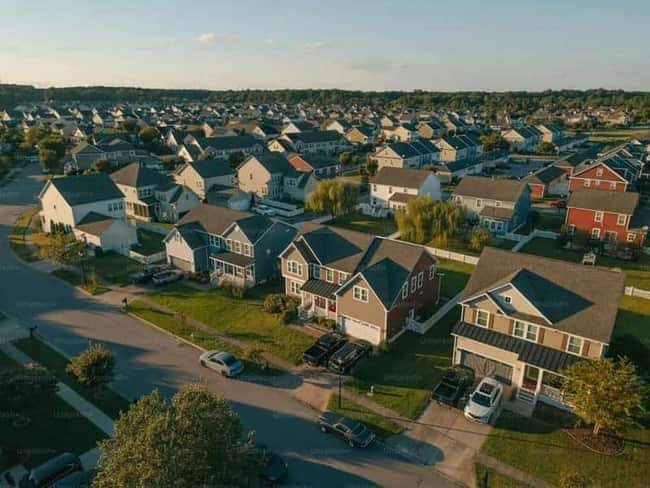
Eagle covers a lot of ground, and the further out from the centre you go the more the properties change character. Larger lots bring three things into the conversation that rarely come up in a dense subdivision.
Private wells. Properties outside the municipal service area draw from their own wells, which means water quality is whatever the ground provides and nobody is testing it but you. Hardness on Treasure Valley wells frequently runs above municipal levels, and iron is common in this aquifer. Treatment here is genuinely individual, based on a test rather than a regional average.
Outbuildings. Shops, detached garages, barns and pole buildings are common, and they need proper electrical feeds. A subpanel at the building with its own grounding electrode system is the correct approach. Heating them is usually best done with a radiant slab or a mini split rather than trying to extend the house system.
Irrigation. Larger properties here typically have substantial irrigation, and it interacts with plumbing diagnosis constantly. An unexplained water bill or a moving meter is very often irrigation rather than a house leak, and isolating it is the first diagnostic step rather than the last.
Ada County is now home to roughly 589,500 people and Canyon County to about 287,260, and the fastest growth is happening in the smaller towns rather than the established cities.
Have a licensed tech diagnose it and quote the repair up front.
Call (614) 756-0643Water treatment in a larger home is not simply a bigger version of the same job, and getting the sizing wrong here is more consequential than in a small house.
Softener sizing depends on your hardness multiplied by your household’s daily water use. A larger home with more bathrooms, more occupants and more water-using appliances needs meaningfully more grain capacity between regenerations. An undersized softener in a large house regenerates constantly, wastes salt and water, and still delivers hard water at peak times. This is a calculation rather than a guess, and it is why we ask about hardness and household size before recommending anything.
Across the Treasure Valley hardness runs roughly 6 to 15 grains per gallon, and anything above 8 is considered hard water by the standard scale. On a private well the figure could be anywhere in or above that range, which is exactly why testing comes first.
Filtration flow rate matters too. A whole-house filter sized for a small home will restrict flow in a large one, and the symptom, reduced pressure when several fixtures run, gets misdiagnosed as a plumbing problem rather than a filter problem.
Hot water recirculation is common in larger homes because the distance from the water heater to the far bathroom is long enough that waiting becomes annoying. It is worth knowing that recirculation increases the total volume of hot water passing through the system, which means more mineral passing through your water heater or tankless unit. Softening matters more in a recirculating system, not less.
Source: Idaho water hardness by city
| System | What gets it wrong in a large home | What to do instead |
|---|---|---|
| Water softener | Sized on house size rather than hardness times usage | Calculate grain capacity from measured hardness and actual daily use |
| Whole-house filtration | Flow rate too low, restricting pressure at peak draw | Size the filter for peak simultaneous demand, not average |
| Hot water recirculation | Assumed harmless. It increases total mineral throughput | Soften the water. Recirculation makes softening more valuable, not less |
| Tankless water heater | Sized on summer conditions, disappoints every winter | Size on winter inlet temperature and simultaneous fixture demand |
| Radiant heating controls | Standard thermostat logic overshoots a high mass slab | Outdoor reset control matched to the system’s response time |
| Leak detection | Recirculation and irrigation mask the symptoms | Isolate both before any acoustic or thermal testing |
The theme across all of these is that a large home is not a small home scaled up. Sizing and control setup matter disproportionately.
Schedule service anywhere from Star to Mountain Home.
Call (614) 756-0643
Idaho enforces the Uniform Plumbing Code rather than the International Plumbing Code, and the electrical side runs on the National Electrical Code, both administered through the Idaho Division of Occupational and Professional Licenses.
The City of Eagle issues its own permits and inspections, and larger custom projects here often involve more than one permit at once: a boiler and radiant install, a generator with its gas and electrical components, or a shop building with its own service. We plan the sequence of permits and inspections up front on multi-system jobs, rather than discovering partway through that one trade is waiting on another’s sign-off.
Properties outside Eagle’s municipal boundary, further into the surrounding rural land, fall under Ada County’s building department instead, and we confirm which applies before filing.
Source: Idaho DOPL plumbing board
Ask for an upfront price before any work starts.
Call (614) 756-0643The calls that define Eagle work are rarely simple breakdowns. They are homeowners whose system is partly working: one radiant zone cold while the rest of the house is comfortable, or a whole-home softener that regenerates constantly and still lets hard water through.
Both problems share a cause: they were diagnosed, or sized, as if the house were a standard tract home rather than a system of interacting parts. A cold zone gets treated as a boiler problem when it is a stuck zone valve. A softener gets replaced when it was simply undersized for the household’s actual usage.
What Eagle homeowners are generally looking for is someone who will measure rather than guess, since guessing on a system this complex tends to be expensive.
Same day and next day appointments are available across the valley.
Call (614) 756-0643We cover Eagle from the town centre out through the surrounding larger-lot areas and into the foothills.
ZIP codes covered: 83616. Eagle sits in Ada County, Idaho.
Eagle runs from a walkable town centre out through larger-lot subdivisions and into the foothills, and the character of the work changes across that range. Closer in, properties are on municipal services with fairly conventional systems. Further out, larger lots bring private wells, outbuildings, substantial irrigation and a stronger case for backup power.
Outdoor living is a bigger part of the work here than in most towns we cover. Gas runs for outdoor kitchens and firepits, landscape lighting, and the electrical work that goes with patios and pool areas are all routine requests.
Book a licensed Meridian technician for this job.
Call (614) 756-0643For complex systems, tell us as much as you can about what the house actually has. Multiple zones, radiant floors, recirculation and water treatment all change the visit.
Describe the problem and the address. Knowing you are in Eagle lets us route the nearest available technician rather than the next one on a list.
You get a window rather than a vague promise about the afternoon, and we contact you if anything changes.
The technician works out what is actually wrong before quoting, rather than pricing from a description over the phone.
Nothing proceeds until you have seen the cost. If we find a second problem, you hear about it before we act on it.
We complete the job, test it, clean up, and show you what was done and anything worth keeping an eye on.
Get this looked at before it turns into a bigger repair.
Call (614) 756-0643Burst pipes, sewer backups, no heat and no cooling are all prioritised. In larger Eagle homes two additional situations are worth flagging.
A failing zone in a multi-zone system can leave part of a large house unheated while the rest is fine, which is easy to underestimate in January. If one area of the house has gone cold and the rest is working, that is usually a zone valve, actuator or circulator, and it is a straightforward fix once diagnosed.
On a private well, a pump failure means no water at all. The same is true of a power outage, which is why standby power comes up more often on larger properties out here.
Request a visit and we will confirm your appointment window.
Call (614) 756-0643All 32 services below are available in Eagle. Each page explains what actually goes wrong, how it gets diagnosed and what changes the price.
Talk to a technician who works on Treasure Valley homes every day.
Call (614) 756-0643We work across Ada, Canyon and Elmore counties. If you are just outside Eagle, ask anyway, because coverage depends more on the day’s schedule than on a hard boundary.
Every trade we cover in Eagle is available in each of those towns too. Browse the complete list of services, or go straight to plumbing, heating, cooling or electrical. To understand how we diagnose and price work before starting, see how we work.
Have a licensed tech diagnose it and quote the repair up front.
Call (614) 756-0643Yes, and Eagle is where a good deal of our radiant work is. Custom homes here frequently specify hydronic radiant heating, and the systems are usually multi-zone. The important thing to know is that radiant faults are almost always in the mechanical room rather than in the floor: zone valves, actuators, circulators, mixing valves and controls. The tubing itself very rarely fails, which is fortunate given where it lives. A cold zone is a manifold diagnosis.
In a multi-zone system, the usual causes are a zone valve or its actuator failing to open, air trapped in that loop blocking circulation, or a balancing problem restricting flow. On a forced air system with zoning, it is more often a damper motor or a control fault. In either case it is generally a straightforward repair once diagnosed, and it is not a sign that the whole system needs replacing, which is a conclusion people sometimes jump to.
By multiplying your measured hardness by your household’s actual daily water use, which gives the grain capacity needed between regenerations. It is arithmetic, not a rule of thumb based on square footage. An undersized softener in a large home regenerates constantly, wastes salt and water, and still lets hard water through at peak demand. If you are on a private well, the hardness figure has to come from a test of your own water rather than a regional average, because wells vary considerably.
On a larger Eagle property, isolate the irrigation system first. Irrigation is the most common explanation for unexplained water use here by a wide margin, and an underground irrigation leak is easy to miss because the ground is meant to be wet. Second, if you have hot water recirculation, isolate that too, because it keeps water moving continuously and masks the audible clue that normally points at a leak. Once both are isolated, watch the meter with everything off. If it still moves, then you have a house leak worth locating properly.
Yes, and they come up frequently out here, particularly on larger properties and those on private wells. A standby generator needs both a properly sized gas supply and an electrical transfer switch, and the gas load is often substantial enough to require its own upsized run. Having both trades in one company avoids the coordination problem where the gas contractor and the electrician each wait on the other. We handle the whole project including permits.
Yes, and there are two good approaches depending on the building. A radiant slab is the best possible way to heat a workshop, because it warms the floor and the contents rather than a large volume of air in a building with a big door. If the slab is already poured, a ductless mini split is the practical retrofit and it provides cooling in summer as well. Either way, the building will also need a proper subpanel rather than a feed borrowed from the house.
Yes, including the larger-lot areas north of town and out toward the foothills. Those properties often bring private wells, outbuildings, substantial irrigation and a stronger case for backup power. Access and travel time are worth mentioning when you call so we can schedule realistically, but they are well within our normal service area.
It depends on the address. Properties inside Eagle’s municipal boundary go through the City of Eagle’s own permitting and inspection process. Properties further out on the larger rural lots surrounding the city fall under Ada County instead. On a multi-system project such as a generator or a radiant retrofit, more than one permit may be needed, and we sequence them so one trade is not left waiting on another’s inspection.
It is almost always sized wrong for the household rather than faulty. Softener capacity has to be calculated from your measured hardness multiplied by your actual daily water use, not from square footage. A larger Eagle home with more bathrooms and occupants than the unit was sized for will regenerate constantly, waste salt and water, and still deliver hard water at peak demand. Resizing, not replacing, is usually the fix.
Yes, and it is common work for us in Eagle. Hydronic and radiant systems are less common across the rest of the valley, so misdiagnosis by technicians who mainly work on forced air happens more than it should. We start by mapping the zones, manifolds and controls rather than assuming the boiler is at fault, which is where a lot of unnecessary parts get replaced.
Isolate the irrigation system at its own valve before assuming anything about the house. On larger Eagle lots with substantial irrigation, an underground leak in the irrigation line is the most common explanation for an unexplained rise in water use, and it is easy to miss because the ground is meant to be wet. Watching the house meter with irrigation isolated and everything else off is the cleanest way to rule the house in or out.
Talk to a technician who works on Treasure Valley homes every day.
Call (614) 756-0643Hydronic and radiant heating, multi-zone systems, whole-home water treatment and generators across Eagle and the surrounding foothills.