Plumbing
Water heaters, drains, sewer lines, leaks, gas lines and whole-home repiping.
See plumbing servicesMountain Home sits higher and drier than the rest of the valley, with a housing market shaped by the Air Force base and a rental cycle that turns over constantly.
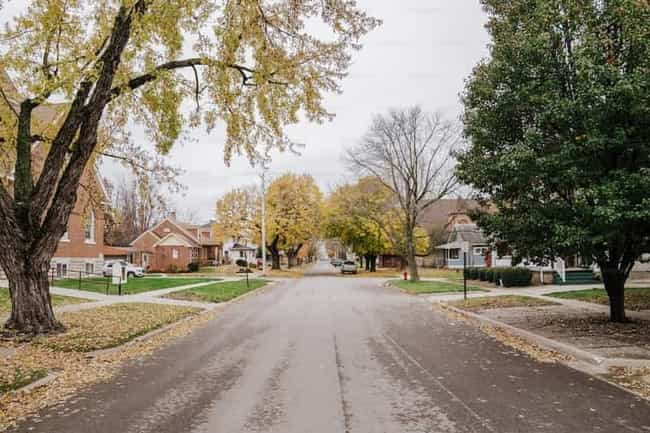
Three things set it apart from the rest of our service area.
The base. Mountain Home is the largest community in Elmore County and the primary off base town for Mountain Home Air Force Base, which brings a steady cycle of arrivals and departures to the local housing stock. That produces a rental market with constant turnover, which means a lot of the work here is between-tenancy: fast, documented, and needing to be right first time because the next family arrives on a fixed date.
Elevation. Mountain Home sits higher than the Treasure Valley floor, and altitude affects gas appliance combustion. Equipment needs the manufacturer’s high-altitude provisions applied, and it matters more here than in Boise or Meridian.
Dry desert conditions. Hot dry summers, cold winters, and a lot of airborne dust.
Meridian Plumbing is a licensed plumber in Mountain Home, Idaho, and this page covers what plumbing, heating, cooling and electrical work actually looks like here.
Mountain Home is the largest community in Elmore County and the primary off-base town for Mountain Home Air Force Base. Mountain Home is the largest community in Elmore County and the primary off base town for Mountain Home Air Force Base, which brings a steady cycle of arrivals and departures to the local housing stock.
That has a direct effect on the property market and therefore on the work. A large share of the housing here is rental, and military families move on a schedule rather than at their convenience. When a tenancy ends and another begins on a fixed date, plumbing and HVAC work has to happen inside a defined window, with clear documentation for the landlord or property manager.
We are set up for that. Between-tenancy work benefits from being thorough rather than reactive: checking the water heater’s age and condition, verifying the furnace and air conditioner actually work before someone moves in during a cold snap or a heatwave, testing smoke and carbon monoxide alarms and checking their expiry dates, clearing slow drains before they become a tenant’s emergency, and confirming there are no leaks quietly damaging cabinets.
Beyond the rental market, Mountain Home has the same range as any town: owner-occupied housing of varying ages, and rural properties on private wells across the surrounding Elmore County countryside.

Talk to a technician who works on Treasure Valley homes every day.
Call (614) 756-0643Fast, documented turnover work for rentals, plus the full range for owner-occupied and rural properties.
Water heaters, drains, sewer lines, leaks, gas lines and whole-home repiping.
See plumbing servicesFurnaces, boilers, heat pumps, radiant floors and carbon monoxide safety testing.
See heating servicesAC install and repair, mini splits, air handlers, evaporator coils and filters.
See cooling servicesBreaker panels, outlets and switches, EV chargers, generators, smoke detectors.
See electrical servicesHave a licensed tech diagnose it and quote the repair up front.
Call (614) 756-0643
This is a genuinely technical point that gets overlooked, and Mountain Home is where it matters most in our service area.
Air is thinner at elevation, which changes the air-to-fuel ratio in gas combustion. An appliance set up for sea level and installed at altitude receives proportionally less oxygen for the same gas flow, which pushes combustion toward the incomplete end. Manufacturers publish high-altitude instructions for equipment installed above roughly 2,000 feet, and those instructions can include derating the input and changing burner orifices.
Mountain Home sits meaningfully higher than the Treasure Valley floor, so this applies with more force here than in Boise or Meridian.
When high-altitude provisions are applied correctly, nothing is noticeable and the appliance works exactly as intended. When they are skipped, the consequences are real: poor combustion, sooting, nuisance lockouts, reduced efficiency, and elevated carbon monoxide production. That last one is why we take it seriously rather than treating it as a technicality.
It is worth knowing if you have had gas equipment installed by someone unfamiliar with the region, or if a furnace or water heater has never performed quite right since installation. Combustion analysis will show whether the appliance is actually burning cleanly, which is measurement rather than guesswork.
Source: Mountain Home, Idaho
Schedule service anywhere from Star to Mountain Home.
Call (614) 756-0643Mountain Home is drier and more exposed than the Treasure Valley floor, and that has practical consequences for equipment.
Dust is the main one. Desert conditions and open ground mean a great deal of fine particulate is airborne, particularly in wind. That loads air filters far faster than the packaging assumes, blankets outdoor condenser coils so they cannot reject heat, and works past the filter onto indoor coils and blower wheels. The consequence is the same as in the agricultural parts of the valley: a slow, continuous loss of efficiency and capacity, plus a compressor working harder than it should all summer.
The practical answer is unglamorous: clean the condenser coil annually and check filters monthly through the summer. Both are cheap, both are frequently skipped, and both directly extend equipment life.
Temperature range is the other factor. Hot dry summers put a long, hard cooling season on air conditioners, while winters are cold enough that freeze protection genuinely matters. Pipes in unheated garages, crawl spaces and exterior walls are at real risk in a cold snap, and the single cheapest prevention is disconnecting garden hoses before the first hard freeze.
Rural properties across Elmore County are frequently on private wells, where testing is the owner’s responsibility and treatment should follow test results rather than assumptions.
Source: Boise climate averages
| Situation | What tends to happen | What helps |
|---|---|---|
| Rental turnover | Faults surface at the worst moment, just after a family moves in | A full check between tenancies: water heater, furnace, AC, drains, alarms |
| Gas appliance at altitude | Poor combustion if high-altitude setup was skipped | Combustion analysis to verify it is burning cleanly |
| Desert dust | Coils foul and filters load far faster than expected | Annual coil cleaning, monthly filter checks in summer |
| Cold snap | Pipes freeze in garages, crawl spaces and exterior walls | Disconnect hoses in autumn, insulate exposed runs |
| Private well | Nobody tests it unless the owner does | Annual laboratory test, treatment matched to results |
| Power outage on a well | No water at all, not reduced pressure | Backup power, generator or a portable through an interlock |
The recurring theme in Mountain Home is that maintenance skipped here costs more than it would elsewhere, because the dust load and the temperature range are both harder on equipment.
Ask for an upfront price before any work starts.
Call (614) 756-0643
Idaho enforces the Uniform Plumbing Code rather than the International Plumbing Code, and the electrical side runs on the National Electrical Code, both administered through the Idaho Division of Occupational and Professional Licenses.
The City of Mountain Home handles permits inside its own boundary, and Elmore County’s building department covers the surrounding rural area, including properties well outside town toward the reservoir and canyon country to the south. For rental turnover work specifically, permits are less often needed than for a full replacement, but any water heater, furnace or panel replacement still typically requires one regardless of who owns the property.
We handle the paperwork either way and factor the extra travel distance into the schedule honestly, rather than promising an inspection turnaround we cannot guarantee at this distance from our base.
Source: Idaho DOPL plumbing board
Same day and next day appointments are available across the valley.
Call (614) 756-0643Property managers around the base do not usually call about a single broken fixture. They call because they need a vendor who can turn a unit around by a fixed date, document what was found and fixed, and send the invoice to an office rather than a departing tenant.
That is a different skill from emergency plumbing, and it is the reason we treat between-tenancy work as its own service rather than a smaller version of a repair call. A water heater that is merely old but not yet failed gets flagged during a turnover inspection rather than left to fail on the next tenant’s first cold morning.
Given how far Mountain Home sits from the rest of our coverage area, that kind of planned, documented work is also simply more efficient to schedule than a string of individual emergency calls would be.
Book a licensed Meridian technician for this job.
Call (614) 756-0643We cover Mountain Home and the surrounding Elmore County area.
ZIP codes covered: 83647. Mountain Home sits in Elmore County, Idaho.
Mountain Home is the furthest point in our service area, so scheduling matters more here than it does in the valley towns. We plan Mountain Home work rather than treating it as a same-hour call, and it is worth getting in touch with as much notice as you can, particularly for planned work like between-tenancy checks or equipment replacement.
For landlords and property managers, that predictability works in your favour. Turnover work scheduled in advance, done thoroughly, and documented clearly is far more useful than reactive call-outs, and it is cheaper than dealing with a water heater that fails the week a new family moves in.

Get this looked at before it turns into a bigger repair.
Call (614) 756-0643Because Mountain Home is at the edge of our area, planned work is easier to schedule than same-day emergencies. Give us as much notice as you can.
The property, the problem or the scope, and any deadline you are working to, such as a tenancy start date.
Mountain Home is the furthest point we cover, so we give you an honest window rather than an optimistic one.
The technician establishes what is actually wrong before quoting, including combustion checks on gas equipment.
Nothing proceeds until the cost is agreed. For managed properties we can send the quote to whoever authorises the spend.
Job finished, tested, and written up clearly, which matters for rentals and managed properties.
Request a visit and we will confirm your appointment window.
Call (614) 756-0643We prioritise genuine emergencies here as everywhere, but it is worth being straightforward: Mountain Home is the furthest point in our service area, so an emergency response takes longer to reach you than it would in Meridian or Boise. We will tell you honestly what we can do rather than promise a window we cannot meet.
That makes preventive work more valuable here than anywhere else we cover. A water heater replaced on a plan costs less and causes less disruption than one that fails on a Sunday. A furnace serviced in autumn is far better than a no-heat call in January when the drive is longer. For landlords, a thorough between-tenancy check prevents the emergency that would otherwise arrive the week a family moves in.
If you have a burst pipe, shut off your main water valve immediately. That single action limits the damage more than anything we can do in transit.
Talk to a technician who works on Treasure Valley homes every day.
Call (614) 756-0643All 32 services below are available in Mountain Home. Each page explains what actually goes wrong, how it gets diagnosed and what changes the price.
Have a licensed tech diagnose it and quote the repair up front.
Call (614) 756-0643We work across Ada, Canyon and Elmore counties. If you are just outside Mountain Home, ask anyway, because coverage depends more on the day’s schedule than on a hard boundary.
Every trade we cover in Mountain Home is available in each of those towns too. Browse the complete list of services, or go straight to plumbing, heating, cooling or electrical. To understand how we diagnose and price work before starting, see how we work.
Schedule service anywhere from Star to Mountain Home.
Call (614) 756-0643Yes, though it is the furthest point in our service area, so we schedule it rather than treating it as a same-hour call. That means planned work such as equipment replacement, between-tenancy checks and seasonal maintenance is easier to arrange than an immediate emergency response. We will give you an honest window rather than an optimistic one, and we would rather tell you that up front than let you down.
Yes, and Mountain Home is where it matters most in our service area. Thinner air at altitude changes the air-to-fuel ratio in gas combustion, and manufacturers publish high-altitude instructions for equipment installed above roughly 2,000 feet, which can include derating the input and changing burner orifices. When those provisions are applied correctly there is no issue. When they are skipped, the results are sooting, nuisance lockouts, poor efficiency and elevated carbon monoxide production. Combustion analysis will show whether your appliance is actually burning cleanly.
Yes, and it is a significant part of what we do in Mountain Home given the rental market around the base. Turnover work benefits from being planned rather than reactive: checking the water heater’s age and condition, verifying the furnace and air conditioner actually run, testing smoke and carbon monoxide alarms and their expiry dates, clearing slow drains, and confirming there are no quiet leaks. We document the work clearly, and we can send quotes to whoever authorises the spend rather than to the tenant.
Desert dust. Open ground and dry conditions mean a great deal of fine particulate is airborne, especially in wind, and it blankets the outdoor condenser coil that your air conditioner uses to reject heat. A fouled coil means longer run times, weaker cooling and a compressor working against elevated pressure through the whole cooling season. Filters also load much faster than the packaging assumes. Annual coil cleaning and monthly summer filter checks are the two cheapest things that meaningfully extend equipment life here.
If you are on a private well, yes, annually. Nobody tests a private well but the owner, and treatment decisions without a test are guesswork. A full laboratory test covering bacteria, nitrate, iron, sediment and hardness tells you what, if anything, you need. It also gives you a baseline, so if something changes in future you have something to compare against.
Start with the cheapest and most effective step: disconnect garden hoses before the first hard freeze. A connected hose traps water in the tap and stops it draining back, and it is the single most common cause of burst hose bibs. Beyond that, insulate exposed pipe in garages, crawl spaces and unconditioned areas, and during a cold snap open cabinet doors under sinks on exterior walls so room air can reach the pipes. If a particular hose bib freezes repeatedly, replacing it with a frost-proof sillcock is a permanent fix.
More so here than anywhere else we cover, precisely because of the distance. A furnace serviced in autumn is much better value than a no-heat call in January when the drive is longer and the schedule is tighter. A water heater replaced on a plan costs less and disrupts less than one that fails unexpectedly. For rental properties, a thorough between-tenancy check is far cheaper than an emergency the week a new family moves in. The economics of prevention improve the further you are from the technician.
Elmore County’s building department, rather than the City of Mountain Home, for anything outside the city boundary. That covers a large share of the surrounding area, including properties well out toward the reservoir and canyon country. We confirm which office applies to your address before filing, whether the job is inside town or well outside it.
Yes, and that is the normal arrangement for a lot of the turnover work we do here. We can send the quote and the final documentation to whoever authorises the spend, whether that is a property manager, an owner living elsewhere, or a base housing office, rather than requiring the outgoing or incoming tenant to handle it.
At minimum, the water heater’s age and visible condition, whether the furnace and air conditioner both actually run and heat or cool properly, whether drains are clear, and whether smoke and carbon monoxide alarms are present and within their roughly ten year service life. Catching an ageing water heater or an expired alarm during a scheduled turnover is far cheaper than dealing with either failing on a new tenant’s first week.
We serve off-base housing and civilian properties throughout Mountain Home and the surrounding area. On-base housing typically has its own maintenance arrangement through the base housing office, so if you are asking on behalf of on-base housing, check with that office first. For everything off base, including the rental market that serves military families, we are a regular part of the coverage.
Have a licensed tech diagnose it and quote the repair up front.
Call (614) 756-0643We schedule Mountain Home work properly rather than promising windows we cannot meet. Planned maintenance and turnover checks are especially worth arranging in advance.