EV charging stations
The most common reason panels need assessment in newer valley homes.
Learn moreYour panel is the one component every circuit in the house depends on. When it is undersized, obsolete or one of the known-defective brands, everything downstream inherits the problem.
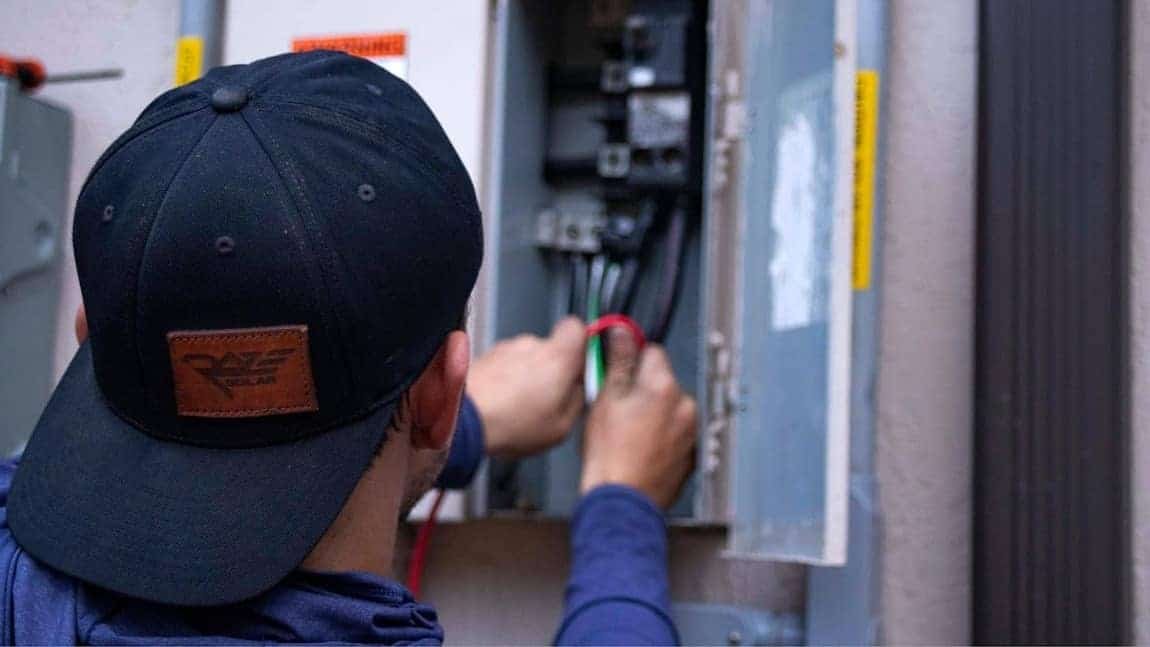
Usually for one of three reasons. Capacity, when you are adding load the service cannot carry, such as an EV charger, a heat pump, a hot tub or a shop. Space, when the panel is physically full and there is nowhere to land a new circuit. Safety, when the panel is a type with a documented failure history.
That third category matters most. Certain panel brands installed through the mid twentieth century have well documented problems with breakers failing to trip on an overload. A breaker that does not trip is the failure of the one protection standing between a fault and a fire.
Age alone is not a reason. A sound 100 amp panel serving a house whose loads it comfortably handles is not a problem.
The panel takes the utility service and divides it into the branch circuits that feed your house, with each circuit protected by a breaker sized to the wire behind it. That last point is the one homeowners most often misunderstand: a breaker protects the wire, not the appliance. Fitting a larger breaker to stop nuisance tripping removes the protection on a wire that cannot safely carry the extra current, which is how fires start.
Capacity limits show up when you add load. A home built with a 100 amp service in an era of gas heating and few electrical loads can be genuinely short once you add a heat pump, an EV charger, an induction range and a shop. Determining whether your service can carry a new load is a load calculation, which is a defined method under the electrical code rather than an opinion.
Space limits are separate from capacity. A panel can have adequate amperage and no physical slots left. Tandem breakers, where two circuits share one slot, can help but only where the panel is rated for them, and panels have a maximum circuit count that is not negotiable.
Known-defective panels are the safety category. Certain brands common in mid-century construction have documented histories of breakers failing to trip under fault conditions. Where we find one, we will tell you plainly and explain the options. Insurers and home inspectors flag these too, so it frequently surfaces at the point of sale.
Deterioration is the fourth reason: corrosion from moisture, overheating at connections, burnt bus bars and evidence of arcing all shorten a panel’s life regardless of its brand.
Have a licensed tech diagnose it and quote the repair up front.
Call (614) 756-0643Several of these mean stop using the circuit and call rather than monitoring the situation.
Schedule service anywhere from Star to Mountain Home.
Call (614) 756-0643Panel work is permitted, inspected work that involves coordinating with the utility. There is no informal version of it.
Load calculation first. Before recommending a service size we calculate the actual demand using the method the electrical code defines, accounting for square footage, fixed appliances, heating and cooling equipment, and any new loads you are planning. Upgrading to 200 amp because it sounds like a safe default is not a calculation, and sometimes the honest answer is that your existing service is fine and you need a subpanel rather than a service upgrade.
Panel replacement means transferring every circuit to a new panel, and it is the right moment to correct problems that have accumulated: double-tapped breakers, missing bonding, circuits sharing neutrals improperly, and breakers that do not match the wire they protect.
Service upgrades go further, involving the service entrance conductors, the meter base and coordination with Idaho Power, since the utility has to disconnect and reconnect. That coordination sets the schedule as much as our work does.
Subpanels are frequently the more sensible answer. If your service capacity is adequate but the panel is out of space, or you are adding a shop or garage, a subpanel provides circuits without the cost and disruption of a full service upgrade.
Modern protection. Current code requires arc fault protection in many living areas and ground fault protection in wet locations, kitchens and outdoors, the same devices covered on our switches and outlets page. A panel replacement brings those protections in, and while AFCI breakers occasionally reveal existing wiring faults that had gone unnoticed, that is the device working as intended.
Ask for an upfront price before any work starts.
Call (614) 756-0643Three different jobs that get conflated. The right one depends on what is actually limiting you.
| Your situation | What you need | What it involves |
|---|---|---|
| The panel is full but the service is adequate | A subpanel | A new panel fed from the existing one, providing additional circuit space |
| The service cannot carry the load you are adding | A service upgrade | New service conductors, meter base and panel, coordinated with the utility |
| The panel is a known-defective type | Panel replacement | New panel on the existing service, with all circuits transferred |
| Adding a shop or detached garage | A subpanel at the building | A feeder run to the outbuilding with its own panel and grounding |
| One circuit keeps tripping | Diagnosis, not a panel change | Finding the actual fault or overload on that circuit |
| Adding an EV charger | A load calculation first | It may fit on the existing service, or need load management, or need an upgrade |
We will tell you when you do not need a service upgrade. Adding a subpanel or, for an EV charger, a load management device is frequently a fraction of the cost and solves the actual problem.
Same day and next day appointments are available across the valley.
Call (614) 756-0643Safety issues are prioritised. Planned upgrades are scheduled around utility coordination.
A safety concern, a capacity need, or an addition you are planning. Burning smells and buzzing panels are treated as urgent.
We look at the panel, the service, the grounding and bonding, and calculate the actual demand.
Including honestly telling you if a subpanel or load management solves it more cheaply than a service upgrade.
Panel work is permitted, and a service upgrade requires the utility to disconnect and reconnect.
Circuits transferred and labelled, grounding and bonding verified, inspection scheduled and passed.
Book a licensed Meridian technician for this job.
Call (614) 756-0643Idaho enforces the Uniform Plumbing Code rather than the International Plumbing Code, and the electrical side runs on the National Electrical Code, both administered through the Idaho Division of Occupational and Professional Licenses. Electrical work here is performed to the National Electrical Code and licensed through DOPL, and panel work is permitted and inspected in the jurisdictions we serve.
The housing split in this valley predicts what we find behind the cover.
Meridian has grown more than 260 percent from its year-2000 population and is now Idaho’s second largest city, with about 60 percent of its housing units built after 2000. Most Meridian, Eagle, Star and Kuna homes were built with 200 amp services and modern panels, and they are generally in good shape. What drives panel work there is capacity and space rather than safety: adding EV chargers, hot tubs, shop subpanels and heat pumps to houses designed before those loads were common.
Older Boise, Nampa and Caldwell neighbourhoods are a different picture. Nampa’s median home construction year sits right around 2000, but roughly one in ten houses there predates 1950, which puts two very different plumbing eras inside the same city limits. Pre-1970 homes there can still have 60 or 100 amp services, fuse boxes, and in some cases panel brands with documented breaker failure histories. Those are genuine safety findings rather than capacity inconveniences, and they come up regularly at the point of sale because home inspectors and insurers both flag them.
There is one more valley-specific driver: outbuildings. Shops, detached garages and pole buildings are common across the rural fringe around Kuna, Star and Middleton, and feeding one properly means a subpanel with its own grounding electrode system rather than an extension cord habit.
Source: Idaho DOPL plumbing board
Get this looked at before it turns into a bigger repair.
Call (614) 756-0643Quoted in writing after assessment. Panel work has more variables than most electrical jobs.
Request a visit and we will confirm your appointment window.
Call (614) 756-0643The service size is the output of a load calculation, but it helps to know what each size actually supports before that conversation.
| Service size | Typical fit | Watch for |
|---|---|---|
| 100 amp | Older, smaller homes with gas heat and modest appliance loads | Tight or inadequate once EV charging, a heat pump or a hot tub is added |
| 150 amp | A middle ground seen in some remodels, less common than 100 or 200 | Still limited for a home planning several large electric loads at once |
| 200 amp | The standard for new construction across the valley since the early 2000s | Comfortable for most single-family homes including one EV charger |
| 400 amp | Larger homes, homes with extensive electric heating and cooling, or a shop plus an EV charger plus a hot tub | Costs meaningfully more in service equipment and sometimes conductor size from the utility |
A bigger service is not automatically the right answer. If a load calculation shows 150 amp of demand, paying for 400 amp of equipment buys headroom you may never use.
Talk to a technician who works on Treasure Valley homes every day.
Call (614) 756-0643Confirm the electrician is licensed in Idaho and ask who is pulling the permit, since panel work is permitted in the jurisdictions we serve and the permit is what triggers the inspection that verifies the job was done correctly. Idaho enforces the Uniform Plumbing Code rather than the International Plumbing Code, and the electrical side runs on the National Electrical Code, both administered through the Idaho Division of Occupational and Professional Licenses. Idaho electrical licensing similarly requires documented supervised experience and a state exam before someone can hold a journeyman or contractor licence. Ask for a written price that states the service size the load calculation supports, not just a number chosen in advance.
A verbal estimate with no load calculation behind it is a common shortcut, and it is worth pushing back on. Ask specifically what method was used to size the service, and ask to see the calculation if you want it. A contractor who cannot explain how they arrived at 200 amp rather than 150 or 100 is guessing.
Ask whether the quote includes the permit and inspection fee, or whether that is billed separately once the jurisdiction sets it. Both are normal, but you should know which before the invoice arrives. Also ask what happens if the work uncovers a defect behind the existing cover, such as corroded conductors or improper bonding, since that is common enough on older panels that it should have an agreed process rather than a surprise change order.
Have a licensed tech diagnose it and quote the repair up front.
Call (614) 756-0643A new panel is close to maintenance-free, but a few habits extend its life and keep it functioning as intended.
Schedule service anywhere from Star to Mountain Home.
Call (614) 756-0643It depends on whether you need a subpanel, a panel replacement on the existing service, or a full service upgrade with new conductors and meter base. Those are three quite different jobs. The service size the load calculation calls for, whether the service is overhead or underground, and what we find behind the existing cover all affect it. We quote in writing after assessment, and we will tell you if a subpanel or load management solves your problem more cheaply than a service upgrade.
Some findings are urgent: a burning smell, buzzing or crackling from the panel, scorch marks, melted insulation, or a panel that is warm to the touch. Stop using the affected circuits and call. Separately, certain panel brands installed through the mid twentieth century have documented histories of breakers failing to trip under fault conditions, which defeats the entire purpose of the protection. Home inspectors and insurers flag these, so they frequently surface at the point of sale. What you should not do is open the panel cover yourself, because the service conductors inside remain live even with the main breaker off.
Only if a load calculation says so. Upgrading to 200 amp because it sounds like a sensible default is not a reason, and plenty of homes are perfectly well served by 100 amp. What drives a genuine need is total demand: heat pumps, EV chargers, induction ranges, hot tubs and shops all add up. Sometimes the answer is that your service is adequate and you simply need a subpanel for more circuit space, which is a much smaller job.
A breaker trips because something is drawing more current than the circuit should carry, or because there is a fault. It is doing exactly what it exists to do. The right response is finding out why, not fitting a larger breaker. That last point matters a great deal: a breaker protects the wire behind it, so a larger breaker on the same wire removes the protection on a conductor that cannot safely carry the extra current. Common causes are genuine overload from too much on one circuit, a failing appliance, a loose connection, or a short somewhere in the wiring.
Often yes, and it starts with a load calculation rather than an assumption. A Level 2 charger is a substantial continuous load, and whether your service can carry it depends on your existing demand. If capacity is tight there are options short of a service upgrade, including load management devices that prevent the charger and other large loads from running simultaneously, or charging at a lower amperage. We work through those before recommending an upgrade, because a service upgrade is a considerably larger expense.
Yes, in the jurisdictions we serve. Panel work is permitted and inspected, and for good reason: it is the point where the utility service meets your house, and errors there affect every circuit in the building. Permits also matter practically, since unpermitted electrical work causes problems at the point of sale and with insurance claims. We pull the permit and schedule the inspection as part of the job, with fees passed through at cost.
A subpanel adds circuit space by feeding a second, smaller panel from your existing service. It solves the problem of a full panel but it does not add capacity, because the total available power is unchanged. A service upgrade increases the actual capacity coming into the house, which involves new service entrance conductors, a new meter base and utility coordination. If your panel is full but your service is comfortably sized for your loads, a subpanel is the cheaper and entirely appropriate answer.
A straightforward panel replacement on an existing service is often a single day, though the power to the house is off for part of it while circuits transfer. A full service upgrade takes longer because it depends on the utility’s schedule for disconnecting and reconnecting the service, which we do not control. Permitting and inspection add time on top of the physical work, since the inspection has to be scheduled and passed before the job is considered complete.
Yes, for part of the day. Every circuit has to be transferred from the old panel to the new one, and that cannot happen with power live. We plan the work to minimise how long you are without power and let you know roughly what to expect before the day, but a total outage of a few hours during the job itself is normal for this kind of work.
It can. Some insurers decline to write or renew coverage on homes with certain panel brands that have documented histories of breakers failing to trip, and others ask about panel age and type during underwriting. This comes up often enough at renewal or at the point of a home sale that it is worth knowing what panel you have before it becomes an issue with a policy.
A double tap is two conductors landed under one breaker terminal designed for one. Most breakers are not listed for two wires under a single terminal, and the connection is prone to loosening, which creates heat and an eventual fault. It is one of the more common defects found behind an older panel cover, and correcting it is a routine part of a panel replacement.
Schedule service anywhere from Star to Mountain Home.
Call (614) 756-0643We calculate the load properly and tell you honestly whether you need a subpanel or a full service upgrade. If you smell burning near the panel, call rather than investigating.